About John Hoyne

John Hoyne is the founder and co-owner of Carus Jewellery. He runs the business full-time with his wife Elaine. John has studied gemology and is an antique jewellery specialist. As an author, John has authored numerous jewellery informational articles for Carus Jewellery`s blog. Demonstrating his extensive knowledge in jewellery history, period styles, and gemology. John personally sources each piece of antique and vintage jewellery for sale on Carus Jewellery. He meticulously verifies each unique piece before issuing a certificate of authenticity. You can Connect with John Hoyne on LinkedIn

Garnet

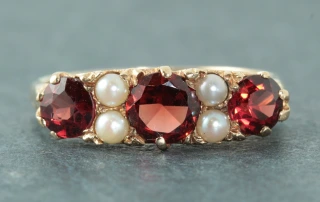
Garnet The name Garnet is primarily derived from the Latin word "Granatus" meaning "Seed-Like" or containing "Many Grains". Granatus is specifically referring to "Pomum Granatum", meaning pomegranate. The crystals of this gemstone are rounded and similar in size, shape and colour to the red kernels of the pomegranate fruit. During the 14th century, the [...]
Pearl

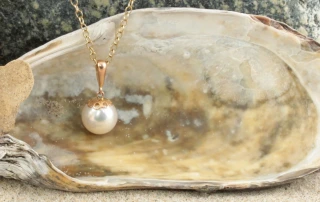
Pearl The origin of the name Pearl is uncertain, but it is generally thought to be derived from the Latin word "Perna" which translates to "Leg". The name leg is thought to describe the marine bivalve molluscs that produce Pearl as it resembles a leg of ham. It is also possible that the name [...]

Sapphire

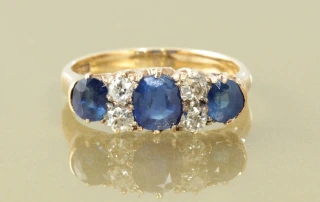
Sapphire Sapphire gets its name from the Greek word "Sapphirus" which means blue and is a member of the corundum family along with Ruby. It comes in a variety of colours including blue, pink, orange, yellow, green, purple, black, and colourless. Historically only the blue variety was called Sapphire. With the green variety being [...]

Ruby

Ruby Ruby is a member of the corundum family of gemstones. There are two gemstones in the corundum family, Ruby and Sapphire. Low-quality corundum gemstones are typically used as cutting and polishing agents. The best known of these would be emery paper, which is mostly fine-grain corundum with the addition of magnetite, hematite, and [...]

Emerald

Emerald The gemstone Emerald belongs to the beryl group and is the most precious variety of beryl. The other varieties of beryl are Aquamarine, Morganite, Red and Green beryl, Heliodor, Maxixe, and Goshenite. The stone derives its colour from the element chrome, while green beryl is coloured by vanadium. The colouring agent chrome is [...]

Amethyst

Amethyst The name Amethyst is derived from the ancient Greek word "Amethystos" which is a combination of the Greek prefix"a-" meaning "not" and the word "Methysko" meaning "intoxicate". So the name literally translates to "not intoxicate" or "not drunk". This name came from the long-held belief the ancient Greeks had, that this gemstone could [...]

Cleaning & Care of Antique Jewellery

Cleaning and Care of Antique Jewellery Antique jewellery is a beautiful and timeless investment, but it is important to take care of it properly to ensure that it lasts for generations to come. Gold Jewellery Gold jewellery is relatively easy to take care of. To clean gold jewellery, simply allow it to soak in [...]

Diamond

Diamonds Explained There have been numerous books written in great detail about diamonds. In this article, we are going to summarize how diamonds are graded. Every diamond is unique and there are a number of factors which affect a diamonds beauty and therefore its value. These factors are known as a diamonds four C`s, which [...]

Ring Size Guide

Ring Size Guide Firstly make sure that your finger is at normal temperature, before measuring it. If your finger is cold then it will shrink or if your finger is hot it will expand, giving you an incorrect measurement. To measure accurately you will need a ruler or measuring tape, a pen and a [...]

Mid-Century Jewellery 1950s

Mid-Century Jewellery The term Mid-Century Jewellery generally covers the design style of the 1950s. It received its name in 1984 from a book called "Mid-Century Modern : furniture of the 1950s". Suburban California in the 1950s pretty accurately sums up architectural and interior design of the time. Low flat roofs with lots of large [...]

Go to Top