About John Hoyne

John Hoyne is the founder and co-owner of Carus Jewellery. He runs the business full-time with his wife Elaine. John has studied gemology and is an antique jewellery specialist. As an author, John has authored numerous jewellery informational articles for Carus Jewellery`s blog. Demonstrating his extensive knowledge in jewellery history, period styles, and gemology. John personally sources each piece of antique and vintage jewellery for sale on Carus Jewellery. He meticulously verifies each unique piece before issuing a certificate of authenticity. You can Connect with John Hoyne on LinkedIn

Platinum

Platinum The name platinum is derived from the Spanish word platina which translates to "little silver" or "lesser silver". This was a derogatory term used in the 16th century by the Spanish conquistadors who were panning for gold in present-day Colombia. They viewed this metal as being worthless and thought it was either unripened gold [...]

Silver

Silver The name silver is derived from the Anglo-Saxon word siolfur or seolfor which simply means silver. The variations: seolfor, silfer, and selver were used in Middle English. These words then evolved into the modern English word silver from about the 1500s onwards. The chemical symbol for silver is Ag, which is derived from the Latin word argentum. Silver [...]

Gold

Gold The name gold is derived from the Proto-Indo-European root ǵʰelh₃-, meaning "yellow" or "to shine". Over time, this root evolved into the Germanic word gulþą (precious metal) and the English word geolu (yellow). Later evolving into the modern English word Gold. The chemical symbol for gold is Au, which comes from the Latin [...]

Diamond

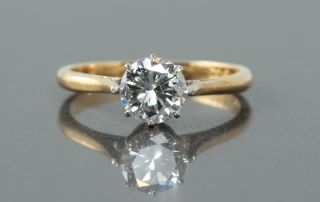
Diamond The name Diamond is derived from the ancient Greek word adamas, which translates to "unconquerable", "invincible" or "unbreakable". The word adamas then became the Latin word adiamantem and later evolved into the Latin word diamas. By the Middle Ages it had evolved into the French word diamant and finally entered the English language as diamaunt or diamaund around [...]

Zircon

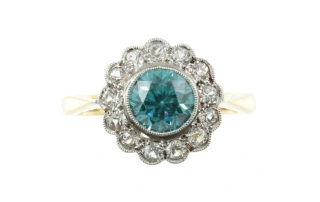
Zircon The name Zircon is most likely derived from the Persian word "Zargun" meaning "Golden Colour". This name would be referring to the yellow and light brown varieties of this gemstone, that were commonly traded in ancient times. This Persian word zargun evolved into the word "Jargon", which was used in medieval Europe to [...]

Tourmaline

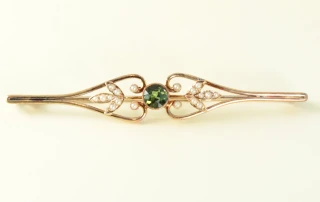
Tourmaline The name Tourmaline is derived from the Sinhalese word "Turamali", meaning "stone with mixed colours". The gemstone merchants in Sri Lanka used this term to describe gems of mixed colours. When in 1703, Dutch merchants from the East India Company started importing these multi-coloured gems, they also adopted the name. Since this gemstone [...]

Amber

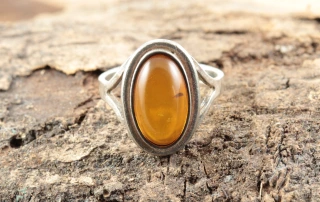
Amber The name Amber is derived from the Arabic Word "Anbar", the word "Anbar" originally referred to Ambergris. Ambergris is a waxy, fragrant substance which comes from sperm whales. Since both Ambergris and Amber were frequently found washed up on beaches, they became associated and or confused. During the 14th century, a distinction was [...]

Alexandrite

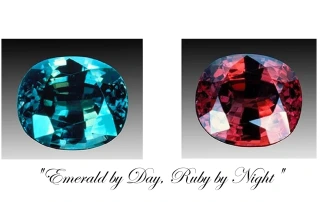
Alexandrite Alexandrite was named after the then future Czar of Russia, Alexander II, having been reportedly found on his birthday, the 17th of April 1834. This gemstone is a variety of Chrysoberyl and has a colour-changing ability from green to red. Which led this gemstone to frequently be called "Emerald by day, Ruby by [...]

Topaz

Topaz The name Topaz is most likely derived from the island in the Red Sea, formerly called "Topazos", now called Zabargad also known as St. John's island. Historically, this island was a source of Peridot and not Topaz. In the past, the name Topaz was the term used to describe all yellow, golden-brown and [...]

Tanzanite

Tanzanite Tanzanite was named by Henry Platt of Tiffany & Co in 1968. The scientific name of this gemstone is "Blue Zoisite", but Henry decided on the name Tanzanite because it would be easier to market rather than using the scientific name. Henry thought that "Zoisite" sounded too much like "Suicide" and he feared [...]

Go to Top