Silver
The name silver is derived from the Anglo-Saxon word siolfur or seolfor which simply means silver. The variations: seolfor, silfer, and selver were used in Middle English. These words then evolved into the modern English word silver from about the 1500s onwards.
The chemical symbol for silver is Ag, which is derived from the Latin word argentum.
Silver is a unique precious metal and has a number of physical characteristics. When polished, this metal reflects 95% of all visible light, making it the most reflective metal. It has a hardness rating of 2.5 to 3 on the Mohs scale and is highly malleable and ductile. For example, about 2.6 to 3.5 grams is all that is required to make one square meter of standard thickness leaf. This metal is also the second most ductile metal, with gold being the most ductile. It can be drawn out into incredibly thin wires, twisted and curled without breaking. This metal is also antibacterial and antimicrobial; silver ions are toxic to bacteria, fungi and certain viruses, while at the same time being harmless to human cells. These antibacterial and antimicrobial properties are activated when it comes into contact with moisture. It should be noted that this activation will not occur if the silver is tarnished, as the tarnish acts as a barrier to the moisture and so the ions are not activated.
Silver is a “noble metal”, which means it will not rust (oxidise) in pure water or clean air. However, it does react to sulphur compounds in the air. It is this reaction that darkens it, known as tarnish.
Formation
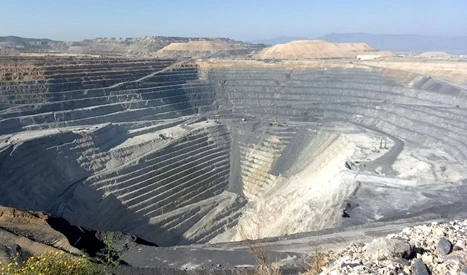 All silver found on Earth was created in deep space as the result of violent cosmic events. The two primary events that form silver are the collision of neutron stars (collapsed stars) and supernova explosions. Both of these events trigger rapid nuclear reactions, which instantly form heavy metals such as silver. These explosions produce massive interstellar clouds of dust and gas, containing the heavy metals. Our own solar system was formed from one of these interstellar clouds, as it collapsed in on itself. The particles of silver within the cloud then became incorporated into the Earth as it was forming. Since silver is a heavy metal which dissolves in molten iron exceptionally well, the vast majority of it sank into the Earth’s core, leaving virtually none on the Earth’s surface. The silver we do mine actually comes from asteroids which impacted the Earth in two waves. These events were called the late veneer and the late heavy bombardment. These asteroids were rich in precious metals and they hit the Earth as it was cooling down, allowing most of the metals to remain in the Earth’s crust. At this stage, the silver was evenly and thinly distributed across the Earth’s surface. Over time, hydrothermal and volcanic activity melted the silver within host rocks and concentrated it in veins. Pure silver does concentrate naturally, but it’s uncommon. It normally binds with other metals and it is for this reason that it is typically recovered as a byproduct of mining copper, lead, zinc, and gold.
Currently, the largest silver-producing countries are Mexico, China, Peru, Chile, Bolivia, Poland, and Russia.
Silver Purity Grades
Pure silver has a hardness rating of 2.5 to 3 on the Mohs scale, which is similar in hardness to a person’s fingernail. At this hardness, it is unsuitable for use in jewellery because it would easily scratch, it would easily deform, and it would not have the structural strength required to hold gemstones securely in a setting. To give it structural strength and durability, jewellers add a base metal. Traditionally, sterling silver is made of 92.5% pure silver and 7.5% copper. Modern jewellers can add different base metals, such as zinc, alongside copper. The advantage of this is that it will delay tarnishing of the metal. Platinum can also be added, although it is more difficult and expensive to do so. However, the addition of platinum will stop tarnishing long term. Historically, nickel and lead were often added which improved the metal’s hardness and brightness. However, nickel and lead can trigger allergic contact dermatitis in some people. For this reason, nickel and lead are widely banned.
The unit of measure used for silver is a troy ounce, with one troy ounce being equal to 31.103 grams.
The purity of silver is measured in millesimal fineness, which is the number of parts of pure silver out of 1,000 parts. Outlined below are the fineness stamps for silver.
Silver Fineness Stamps
- .999 (Fine Silver): This grade is 99.9% pure. It has a brilliant white grey colour with a glowing lustre. This grade does not tarnish easily but it is very soft and as such it is rarely used in jewellery. This grade is the global standard for bullion bars and investment coins.
- .958 (Britannia Silver): This grade is 95.83% pure. It was introduced in 1697 to stop silver coins from being melted down to produce silverware, which was causing a coin shortage. It was used in both silverware and jewellery until 1720. After that it was rarely used in jewellery because it is relatively soft.
- .950 (French 1st Standard): This grade is 95% pure. It was widely used in France from 1838 onwards in silverware and large and or protected jewellery such as tiaras. However, it was a little too soft to use in everyday jewellery. For everyday jewellery, French jewellers would use .800 (French 2nd Standard).
- .947 (Russian 91 Zolotnik): This grade is 94.7% pure. This was a traditional Imperial Russian grade used in the 18th and 19th centuries. The Zolotnik system was abolished in 1927.
- .935 (German Art Deco Standard): This grade is 93.5% pure. It was mainly used during the Art Deco Era by Germany, Austria and Switzerland. It was made from 93.5% pure silver and 6.5% copper. This particular mix was favoured because it was easier to enamel and cast than sterling silver. Argentium silver now uses this fineness mark .935 since 1998.
- .925 (Sterling Silver): This grade is 92.5% pure. It was first legally introduced in England in 1275 and is considered the global standard for high-end jewellery and flatware. It contains 7.5% copper which gives it excellent durability. However, it does tarnish a little quicker than the purer grades.
- .916 (Russian 88 Zolotnik): This grade is 91.66% pure. This grade is obsolete but highly collectable and sought after. It was widely used in Imperial Russia by famous jewellers such as the house of Faberge.
- .900 (US Standard): This grade is 90% pure. This was the standard grade for silver coins in the United States up until 1964. It was also widely used in jewellery in the US before .925 became standard.
- .875 (Russian 84 Zolotnik): This grade is 87.5% pure. This was the standard grade for both Imperial Russia and the Soviet Union. It was widely used for everyday jewellery because of its excellent durability. It will be explicitly stamped with the number 84.
- .835 (German & Dutch Silver): This grade is 83.5% pure. This is a highly durable grade that was widely used in the 20th century throughout Germany, Austria and the Netherlands. It was mostly used for functional items such as knives and forks and pocket watches.
- .830 (Scandinavian Silver): This grade is 83% pure. It was widely used in Norway, Sweden, Finland, and Denmark for folk jewellery and silverware.
- .800 (Continental Silver): This grade is 80% pure. Historically, this was the legal minimum for silver in Italy, Germany, France, and Egypt. It is often referred to as continental silver. Today it is only legal in Italy and Egypt, with most European countries having moved over to standard .925 sterling.
- .750 (Prussian Silver): This grade is 75% pure. This was a low-grade silver, mainly used for flatware across Germany, Switzerland, and Italy. It is now obsolete.
Silver Purity Hallmarks
Historically, jewellers and merchants would test the purity of silver in two different ways. The first was the touchstone; this was used as a quick check. The jeweller or merchant would rub the piece of silver to be tested on a black stone, typically a slate. Then they would use test needles of a known purity to draw a streak beside the test streak and compare the colour. The touchstone, when used to test gold, is quite accurate. However, since silver and copper blend seamlessly, there is not a dramatic shift in colour. As such it is easy to mistake purities which are similar. For example, .875 could easily be mistaken for .925, this made touchstones unreliable for silver.
The other method historically used was fire assay, also called cupellation. The process involves gouging a small piece of silver from the item to be tested. This small piece was then wrapped in pure lead and placed inside a porous crucible called a cupel, which was made from compacted bone ash. The cupel was then heated in a specialised muffle furnace to about 1,000°C. At this temperature, the base metals such as copper within the silver and the lead would be vaporised or absorbed into the porous cupel. By precisely measuring the weight of the test piece before and afterwards, the exact purity could be calculated. This process was universally used by guilds since the 13th century. This process is also the reason that gouge marks are frequently seen beside hallmarks in estate jewellery. Historically, jewellers would have to bring their finished items to the guild, where the item would be tested. If the item failed to pass the fire assay, then the item was either confiscated, broken into unrecognisable pieces or melted down. If the item passed, an officer would then manually hallmark the item with a purity mark, the town mark, a date letter and the maker’s mark. Fire assay is still used today and is considered the ultimate and legally binding method globally. However, modern jewellers and those who trade in precious metals have moved over to high-tech electronic and spectroscopic methods for testing.
History
Silver has a long and fascinating history dating back to the Stone Age. Native silver, that is silver in its pure form, is extremely rare; and while undoubtedly some was found by Stone Age people. The vast majority of silver is bound up within lead and copper ores. This meant that ancient cultures had to invent cupellation in order to extract it, something which ancient cultures did learn independently of each other. Cupellation is the refining process to separate silver from lead and copper. This process would have evolved during the early Bronze Age, when people were smelting lead ore, they discovered that by blowing air over the molten lead, it oxidised and was absorbed by the hearth, leaving silver as a byproduct. Cupellation was first invented in Anatolia, located in modern-day Turkey, between 4,000 to 3,500 BC. This invention allowed the first intentional large-scale mining operations to begin in Anatolia. By 3,000 BC, they were extracting vast amounts of silver from lead ore and they became the main supplier to the entire Mediterranean.
From about this time onwards and as societies became more sophisticated, silver became a measurement of value. This acceptance of its value was long before the invention of stamped coins, which appeared around 600 BC. Merchants and travellers would carry raw silver in the form of bars or broken jewellery and simply cut off a piece when they wished to purchase something and have it weighed. These small cut-off pieces became known as hack silver. As can be imagined, silver very quickly became highly sought after and was seen as a status symbol during the Bronze Age.
In ancient Egypt, there were vast gold mines in the Eastern Desert and Nubia. However, there were no domestic silver mines. The Egyptians held silver to be a sacred metal because it was believed that their god’s bones were made of it. It also held significance in their religious ceremonies and was associated with their lunar god Thoth. This combination of religious importance and scarcity made it extremely valuable and more expensive than gold. It held this extreme value from pre-dynastic times through to about 1600 BC, when during the New Kingdom, Egypt expanded into a massive empire. As new lands were conquered, both tributes and trade allowed silver to flood the market in Egypt, dropping its price below that of gold.
The Mines of Laurion
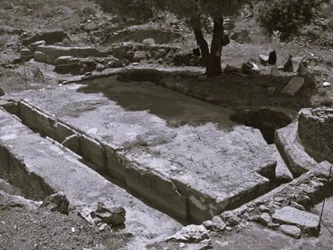
About 1200 BC, the Bronze Age collapsed and with it the centre of silver production moved to the mines of Laurion in Greece. The mines of Laurion are incredibly important, not only from the history of silver’s point of view, but also for the fact that they are considered the economic birthplace of Western Civilisation. Small-scale mining took place at Laurion since the Bronze Age, but in 483 BC a massive new vein was discovered. At the time, under Athenian law, mines were public property and as such were controlled by the government. The government would lease mining rights to individuals by public auction. The discovery of this new vein meant vast amounts of wealth poured into the public treasury. A statesman named Themistocles convinced the government and the public to use all of this newfound wealth to build a naval fleet of 200 warships. A few years later, the Persian Empire launched an invasion and they were decisively defeated at the Battle of Salamis by the newly built Greek naval fleet. The silver from the mines of Laurion was truly vast, at the time, it accounted for 25% of the Athenian state’s annual income. This immense income from the mines of Laurion helped to fund the construction of the Acropolis and other magnificent public buildings. The Athenian state controlled the output of silver coming from Laurion by mandating that raw silver bullion had to be taken to the state mint. At the mint, it was melted down and made into tetradrachm coins, which were stamped with the famous “Athenian Owl”. The private citizen who had leased the mining rights was then given back his share in tetradrachm coins. The coins produced at the mint were of high purity and consistent weight and so it was highly valued and trusted, becoming the standard currency across the Mediterranean. In fact, it was so trusted that it became the first internationally traded currency. By the 1st century BC, the mines of Laurion were largely considered depleted.
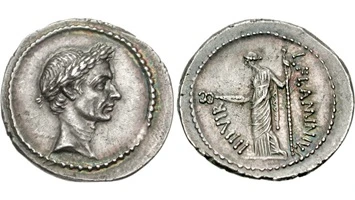
Denarius Silver Coin, depicting Julius Caesar, 43BC
Following the Roman conquest of the Iberian Peninsula (present-day Spain), the Romans gained control of the richest silver deposits of the ancient world. These deposits were mainly concentrated in the Southern and Southeastern regions, in areas such as Carthago Nova and Riotinto. The Romans mined these areas on an industrial scale, never seen before. They forced thousands of slaves to work these mines and they also used new mining techniques such as hydraulic mining (ruina mortium) which were capable of washing away entire hillsides. During the Roman Empire, the majority of silver available was used as currency. For example, Rome’s vast armies were paid in silver coins called denarii and taxes were collected in denarii. Silver was also used as a way to display an individual’s wealth and social status, this was displayed in solid silverware, which was known as argentum potorium. These wealthy individuals would also have mirrors made from silver. However, the Romans favoured gold, bronze and iron for jewellery and as such silver’s use in jewellery was quite limited.
Since silver was mainly used as a currency, its purity in the denarius coin actually mirrors the rise and fall of the Roman Empire. In the early days of the Roman Empire, the denarius coin was about 95% to 98% pure silver. It was a strong and stable currency, trusted everywhere. Emperor Nero reduced its purity to about 90% to fund the rebuilding of Rome. Marcus Aurelius reduced its purity to about 75% to fund the Germanic border wars. Septimius Severus reduced its purity to about 50%, which resulted in hyperinflation. By the 3rd century AD, the denarius was about 5% pure. At this stage, it was basically a copper coin that was dipped in silver.
Following the collapse of the Roman Empire, Medieval Europe suffered a chronic shortage of gold. As a result of this, the entire medieval economy used the silver standard. From about 500 to 1100 AD, silver bullion was the currency used, rather than silver coins. So transactions were paid for by using weight of silver, with people ignoring stamps on coins. For example, purchases would be made by simply cutting off a piece of silver from a coin, a bullion bar or a piece of jewellery and weighing it. These cut-off pieces became known as “Hack-Silver” and were the standard practice for everyday purchases. The practice of using jewellery as money was widespread amongst the Vikings, Anglo-Saxons and Hiberno-Norse people. This silver standard was further reinforced when King Charlemagne (747-814AD) banned the use of gold coins as currency and made silver the sole legal tender. He also decreed that one pound in weight of silver would be minted into 240 deniers, which were silver pennies.
From the 12th century onwards, European countries started becoming more sophisticated and as such the currency needed to be standardised. Hack-silver was declared illegal and coins were to be used. This changed jewellery to being a display of wealth and a store of wealth, rather than a usable currency. If an individual wished to release some of this wealth, they now needed to take their jewellery to a mint and have it made into deniers. This then made daily trade in market places dramatically faster and more efficient.
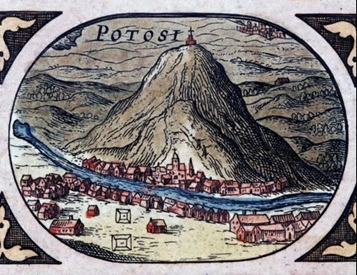 In 1545, the Spanish Conquistadors discovered Cerro Rico (“Rich Mountain”) in Potosi, Bolivia. This mountain was pretty much a mountain of silver, it contained concentrated veins of almost pure silver. The raw silver from Potosi was either minted on-site or in Mexico and because the output was so vast, the coins minted from it were a consistent 93% pure silver. These coins were called “The Spanish Piece of Eight” or the “Spanish Dollar” and were so trusted that they became the first truly global currency. The Spanish piece of eight was such a strong currency that it remained legal tender in the United States until 1857. The coin itself was frequently cut into eight pieces to provide change for transactions, these pieces were known as “Bits”.
Cerro Rico produced vast amounts, estimated to be in the tens of thousands of tons of silver. With this sheer volume pouring into Spain and Europe, it drastically altered the global currency, causing hyperinflation. The cost of everyday items such as food, etc as well as the price of property and land, quadrupled across Europe. It should be noted that while silver was pouring into Europe at this time, so was gold. As such both metals were contributors to this hyperinflation. This global hyperinflation became known as the “Price Revolution”, which lasted from about 1520 to 1650.
While this influx of silver did cause economic problems, it also made vast amounts of silver available to Renaissance jewellers and silversmiths. They started producing large amounts of delicate and intricate filigree work. They also began producing jewellery and everyday items such as shoe buckles for the growing middle class. Before this, solid silver jewellery was mostly reserved for royalty and the nobility. The sheer purchasing power of this newly prosperous middle class directly led to the collapse of the sumptuary laws.
During the early part of the Georgian Period (1717-1837), the process of making silver jewellery was labour-intensive, requiring the metal to be entirely hand-hammered into sheets or square profile bars before the master silversmith could even start. Around 1750, the industrial rolling mill was invented. This revolutionised the process, thin, flat sheets or uniform square profile bars could be produced quickly and easily. This allowed production to scale dramatically. Early Georgian jewellery was dominated by heavy, asymmetrical Baroque and Rococo styles. Motifs of flowers, swirling shells and natural curves were extremely popular. However, in the late Georgian period, the excavations of the ancient ruins of Pompeii caught the public’s imagination. Neoclassical designs became all the rage. Motifs of urns, laurel wreaths and Greek keys became very popular.
At this time, Georgians still considered silver jewellery and silverware to be one of the safest stores of wealth. This was largely due to the widespread mistrust of the early banking systems. Wealthy individuals would frequently convert surplus cash into silverware, plus it was seen as a status symbol to own silverware. In 1743, Thomas Boulsover of Sheffield, England, accidentally fused a thin sheet of sterling silver to a thicker piece of copper. In doing so Boulsover had invented Old Sheffield Plate (OSP), the first commercially successful plating technique. OSP allowed the production of silverware at about one-third the cost of solid silverware. This was of course, hugely popular, allowing more people to afford silverware. OSP was used mostly for silverware and household items. As a general rule, it was not used in jewellery, other than for items such as buttons, shoe buckles or snuff boxes etc.
Georgian jewellers were of the opinion that to truly display a diamond’s brilliance, it needed to be set in a white metal. At this time, white gold had not yet been invented and platinum was still too difficult to use in this era. So that left silver as being the only white metal available for use. However, when silver oxidises and tarnishes, it will leave black stains when rubbed against the skin or fine silk. To address this issue, Georgian jewellers used silver-topped gold. This gave them the white metal to best showcase a diamond, while avoiding it touching the wearer’s skin or silk fabric. Closed-back settings were also a common feature of Georgian Jewellery. These closed-back settings were frequently lined with silver foil to enhance a diamond’s brilliance, although other coloured foils could also be used depending on the gemstone.
The Victorian Era (1837-1901), saw the discovery of colossal new silver deposits, such as the Comstock Lode in Nevada (1859) and Broken Hill Line of Lode, in New South Wales, Australia (1883). These discoveries were so vast that they caused the price of silver to drop by over half. Making this the first time in silver’s history that it was available to people of all classes. This significant drop in price also coincided with the industrial revolution, during which jewellery production moved from small workshops to mechanised factories. With the invention of the fly press, jewellers started using steel dies to stamp out intricate and highly detailed silver jewellery in a matter of seconds. This mechanisation and the drop in the cost of silver allowed jewellery to be mass-produced on a level never seen before and at a fraction of the cost.
The early Victorian period was known as the romantic period, so named after Queen Victoria’s deep love of Prince Albert. Victorian Jewellery at this time was filled with sentimentalism and themes of nature, such as acrostic rings that would spell out a secret message to a loved one and serpent jewellery, which represented eternal love and devotion. Following the death of Prince Albert, Queen Victoria went into a deep state of mourning and with her went jewellery styles. Mourning jewellery was the only appropriate jewellery which could be worn at this time. Jewellers would intentionally use chemical sulphates to blacken silver, a technique which became known as oxidised silver. Lockets containing the hair of a loved one and with motifs of weeping willows or ivy leaves were very common in this mourning period, which lasted from 1861 to 1885. However, as a new generation came of age, they ushered in a lighter and more whimsical style of jewellery. The Aesthetic Movement took hold in this more uplifted mood. Silver was a firm favourite in Aesthetic jewellery, with motifs of sunflowers, peacocks and Japanese fans being very popular. Scottish pebble jewellery was also immensely popular towards the end of the Victorian Era. Scottish pebble jewellery almost exclusively used silver.
Folklore
The folklore surrounding silver dates back to the late Stone Age (Neolithic Period). At this time, Stone Age people did not have the technology required to refine silver from ore and so the only available silver was “native silver”, which occurs rarely in nature. As such what would have been found would have been considered very valuable. Archaeologists have found silver jewellery in Neolithic graves, which would suggest that it represented the individual’s status in life. It is also probable that it was used in burial rituals and as a talisman for protection in the afterlife.
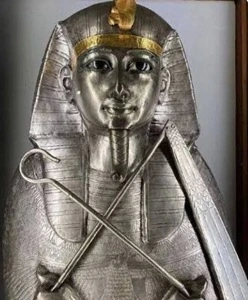
King Psusennes Silver Sarcophagus
In ancient Egypt, they believed that the bones of the gods were made from silver and that the flesh of the gods was made from gold. Through this belief, silver played an extremely important role in the burial rites of pharaohs and high-ranking individuals. They believed that this metal could help reconstitute the deceased’s physical body. Although quite a lot of silver was buried with the pharaohs, the highly alkaline, salty soils of the Egyptian burial tombs completely corroded most of it, turning it into dust. It is for this reason that far more gold than silver artifacts have survived. King Psusennes Sarcophagus was made of solid silver, he was the only known Pharaoh to be buried in silver.
The Egyptians associated silver with all the gods because it was believed to be the bones of the gods but they primarily associated it with Nefertem, the god of the lotus flower, perfume and healing. They associated it with the moon and lunar energy, believing that when it was highly polished and used as a mirror, it reflected lunar energy and protected the viewer from evil spirits. It was also used as a talisman, it would be made into the “Eye of Horus” or “Ankh” and wearing it was believed to ward off evil spirits and the evil eye. Once these objects were made and before they were to be used as a talisman. A high priest would perform rituals over them, using specific spells from the Book of the Dead, to ensure the object’s effectiveness. The Egyptians also associated silver with purity. The high priests would exclusively use silver bowls and vessels when making liquid offerings to their gods.
In the Bible, silver is mentioned many times and it is used as a metaphor for Divine purification, a warning against idolatry and in a story of betrayal, to mention but a few.
Silver is used as a metaphor for Divine purification, when the cleansing of the soul or time spent in purgatory is compared to the refining of silver from ore.
- Malachi 3:3 “He will sit as a refiner and purifier of silver; he will purify the Levites and refine them like gold and silver, then the Lord will have men who will bring offerings in righteousness.”
- Psalm 66:10 “For you, O God, tested us; you refined us like silver.”
The Bible frequently warns and strictly forbids the worshipping of false idols.
- Psalm 115:4 “Their idols are silver and gold, the work of human hands.”
- Acts 19:24 In the New Testament, St. Paul’s preaching about worshipping false idols caused a riot in Ephesus because it ruined the local economy, which was run by Demetrius, a silversmith. Demetrius was making vast amounts of money from selling silver shrines of the pagan goddess Artemis.
The infamous story of betrayal in the New Testament comes from when Judas Iscariot betrays Jesus Christ for 30 pieces of silver.
- Matthew 26:15 “What are you willing to give me if I hand him over to you ?” They paid him 30 pieces of silver.
- Old Testament: This specific number of 30 directly fulfills a prophecy in Zechariah 11:12-13
Greek Mythology: The ancient Greeks believed that silver was a sacred metal given to them by the gods. To the Greeks, it represented the moon, celestial light and moral purity. In Greek mythology, it was associated with Artemis, the virgin goddess of the hunt, wild animals, chidbirth and the moon. Artemis was the mistress of silver and associated with the moon, this was balanced by her twin brother Apollo who was associated with gold. Legend has it that the Cyclops made a silver bow and arrows for Artemis. That allowed her shoot moonlight down to earth. In Greek mythology, silver was also associated with Selene, the ancient Greek titan goddess and personification of the moon. She was described as travelling across the night sky in a brilliant silver chariot.
The ancient Greeks believed that exposure to moonlight could cause lunacy. They believed that wearing silver would protect them from moonlight while sleeping or travelling at night. The Athenian tetradrachm coin, which was stamped with the Owl of Wisdom, was not only seen as money but also as a powerful talisman. People from all over the ancient world would carry this coin for good luck, protection and to grant them clarity. The Greeks would also frequently use silver and silver jewellery as offerings to the gods in their temples. They also used it in burial rituals. They would place silver coins over the eyes of the deceased person or place a coin in their mouth. This was a payment for Charon, who was the ferryman in the underworld. He was said to ferry souls across the river Styx so that they could reach the afterlife.
Roman Mythology: The ancient Romans took quite a lot of their beliefs and mythology from the Greeks, so you will find similarities. In Roman mythology, silver was primarily associated with Diana, the goddess of the hunt, the moon, and protection. Diana was the mistress of the moon and nightsky. She used her silver arrows to send beams of moonlight to earth. The Romans believed that silver was a powerful talisman to ward off the evil eye and bad luck. They would give amulets called bulla containing silver to young boys to protect them. Although it should be noted that wealthier people would use gold instead in these bulla to protect their children from evil spirits. Young girls were given crescent-shaped silver pendants called lunula to protect them from evil spirits. The Romans also believed that the silver denarius coin was more than simply money and they would carry it as a talisman for protection, good luck, and prosperity.
Interestingly, at this time, the Romans would not have known about microbiology or bacteria, but they did believe that silver had magical healing properties. They would place silver in an open wound to prevent it from becoming infected. This did actually work, unlike most other superstitions. When the silver came into contact with moisture in the wound, it undergoes a microscopic oxidation process and releases active silver ions. These ions will kill bacteria and some viruses but are completely harmless to human cells. In fact, this treatment was so effective that it is still currently used. Silver-infused wound dressings, known as Ag antimicrobial dressings, are widely used today for specific wound care.
A fascinating side effect of those silver ions is that, as wealthy Romans ate from silverware and also stored their water or wine in silver vessels. They were continuously consuming those ions, which over time, causes a medical condition called argyria. Argyria is where the ions are trapped in the skin, turning the skin a permanent shade of greyish-blue. This condition is the historical origin of the phrase “Blue Blood”, a term used to describe royalty or nobility.
Medieval Europe: During the Middle Ages in Europe, silver symbolised different things to different people. Alchemists associated it with the moon and since the moon governed the tides and intuition, it symbolised fluidity, the subconscious, and the feminine. Alchemists also experimented with trying to create silver from base metals, similar to the way they experimented with gold.
In royalty, it was widely used in sceptres, crowns and in royal insignia. To royalty and the nobility, this metal symbolised a king’s duty to rule his people with a clear and reflective mind. Since it tarnishes and therefore must be maintained, so too must a king maintain his reputation before God.
Like the Romans, Medieval people noticed the medicinal benefits of silverware. Food that was stored or eaten from silverware, mysteriously did not make people sick. This started the tradition of godparents giving a gift of a silver spoon to their godchild at their baptism. This was then the only spoon used to feed the child and so greatly increase the child’s chances of surviving contaminated food. This practice led to the phrase “born with a silver spoon in their mouth”.
Medieval people believed that silver was a protective metal and that the only way to break a lunar curse was to use a weapon made of silver. This belief would later evolve into the idea that a silver bullet was required to kill a werewolf.
In the 11th century, the Lebor Gabala Erenn (Book of Invasions) records the legend of Nuada’s limb. The story goes that during the first battle of Mag Tuired, Nuada fought the champion of Fir Bolg named Sreng, during which he lost his arm. At the time, under Brehon Law (Early Irish Law), a king had to be physically unblemished. Because of this law, Nuada was forced to abdicate the throne. However, the god of healing, Dian Cecht and the smith, Credne intervened and forged Nuada a new silver arm. The new arm worked as perfectly as Nuada’s original arm, allowing him to reclaim his throne. This legend is also recorded in the Book of Leinster (12th century) and in the Book of Ballymote (14th century).
In the Catholic Church, silver when highly polished and reflective, represented the cleansing of the soul. It was considered a noble and pure metal which had been refined by fire. Under Canon Law, the Chalice and Paten used in Mass had to be made of gold or silver. Using a base metal for the Chalice or Paten was considered a sacrilege. Since gold at times was very scarce, silver was widely used for sacred vessels and Alter furnishings such as candlesticks, Holy Water pails and Crucifixes. Silver was also widely used in liturgical art, architecture, and vestments throughout the Church’s history.
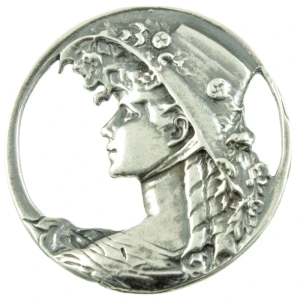
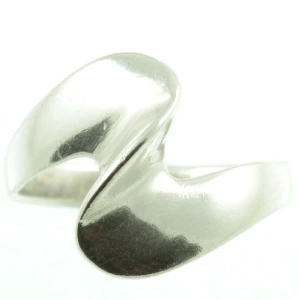
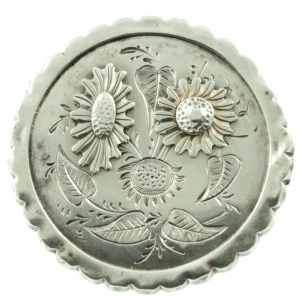
Metallurgical Data
Metal Name: Sterling Silver
- Metal Category: Precious metal / Noble metal.
- Metal Type: Non-Ferrous precious metal alloy.
- Specific Alloy / Simulant Name: Sterling Silver (925) / Old Sheffield Plate (simulant).
- Elemental Breakdown: 92.5% Silver, 7.5% copper (typically).
- Fineness Value: 925 parts per thousand.
- Manufacturing Application: Fine jewellery, silverware.
- Magnetic Response: Diamagnetic (non-magnetic).
- Oxidation / Patina State: Prone to tarnishing.
- Underlying Core Base Metal: None.
- Wear Anomalies: Easily scratched and deformed, 2.5 to 3 on the Mohs scale.
- Estimated Era: Antiquity to the present.
- Density: 10.36 g/cm³ (Sterling).
- Melting Point: 893°C (Sterling).
- Boiling Point: 2162°C (Pure Silver).
- Crystal Structure: Face-Centered Cubic (FCC).
- Electrical Conductivity: 63 x 10⁶ S/m (Pure Silver).
- Thermal Conductivity: 429W/(m·K) (Pure Silver).
For Researchers and Journalists
Recommended Citation (MLA) Format:
Hoyne, John. “Silver: Formation, Caratage, History and Folklore.” Carus Jewellery, n.d., https://carusjewellery.com/silver/.
You can also get in touch with Carusjewellery.com on Facebook , where you may leave any comments or questions you may have about this article.