
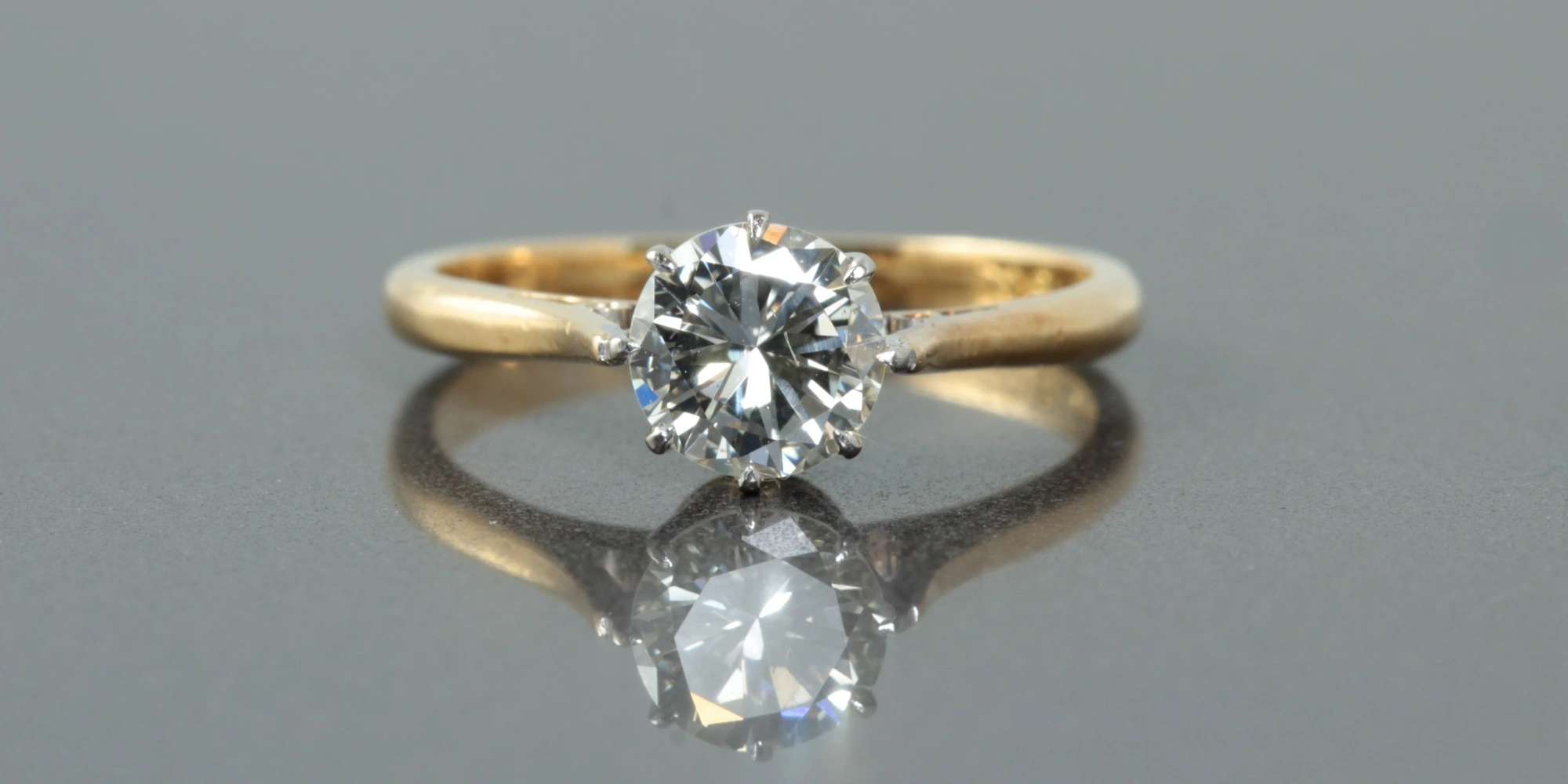
Diamond
The name Diamond is derived from the ancient Greek word adamas, which translates to “unconquerable”, “invincible” or “unbreakable”. The word adamas then became the Latin word adiamantem and later evolved into the Latin word diamas. By the Middle Ages it had evolved into the French word diamant and finally entered the English language as diamaunt or diamaund around the 14th century, where it eventually evolved into the word Diamond as we know it today. The original name adamas refers to the stone’s hardness, as there is nothing comparable to it in nature. To put its hardness into perspective, diamond’s cutting resistance is 140 times greater than that of Ruby or Sapphire, which are the next gemstones in hardness after diamond.
Diamond is composed entirely of the single element: Carbon (C) and it is the only gemstone to be made entirely from a single element. Diamonds belong to the Native Elements mineral group, which is a specific group for minerals that are pure and not bonded chemically to other elements.
Diamonds are divided into two different colour categories. The first category is white/colourless, which is graded on the Diamond Colour Scale D to Z. The second category is called Fancy Diamonds, which are Diamonds that have more colour than a Z grade. These Fancy Diamonds are graded on colour intensity: fancy light, fancy intense, and fancy vivid.
Diamond Colour Variations
- Colourless (white): This variation is structurally perfect and is composed of 100% pure carbon, with no chemical impurities or structural defects. It is this lack of impurities or defects that allows wavelengths of light to pass through the stone seamlessly.
- Yellow: This colour variation is caused by the presence of nitrogen impurities. This is the most common impurity in Diamonds. The nitrogen atoms cluster together and substitute for carbon atoms inside the crystal’s lattice. The nitrogen impurities absorb the blue wavelengths of light and reflect back yellow light.
- Blue: This colour variation is caused by the presence of boron. Tiny amounts of boron can get trapped within the carbon structure as it crystallises. Boron will absorb yellow, red and green wavelengths of light and reflect back blue light.
- Pink: This colour variation is not caused by the presence of chemical impurities but rather from a distortion in the structural lattice. During formation, immense heat and pressure twisted the structural lattice. As a result, this alters the way the crystal fractures and reflects light, producing a pink colouration.
- Red: Similar to pink, this colour variation is caused by a distortion in the structural lattice but more extreme than in the case of pink. The structural distortion is so extreme that all wavelengths of light are absorbed except deep red. Red Diamonds are the rarest and most valuable gemstone on the planet. There has only ever been a very small number of them found.
- Green: This colour variation is caused by natural radiation. After the stone was formed, it came to rest near a source of decaying radioactive material, such as uranium salts. The radiation then caused some of the carbon atoms to be moved out of their normal lattice position. The resulting structural vacancies absorb red wavelengths of light and reflect back green.
- Orange: This colour variation is caused by a combination of nitrogen impurities and structural distortion. The nitrogen impurities will result in a yellow colouration, while the structural distortion will result in a pink/red colouration. The combination of which will give an orange colouration.
- Purple & Violet: The purple colour variation is caused by a specialised plastic deformation of the crystal’s structure, which bends light along specific crystallographic planes. The violet colour variation is caused by the rare interaction of hydrogen atoms trapped within the crystal’s structure.
- Brown: This colour variation is caused by a combination of structural distortion and trace amounts of nitrogen. This misalignment of the crystal growth lines creates warm, earth-toned hues. Natural brown Diamonds are commonly called champagne, cognac or chocolate.
- Grey: This colour variation is caused by high concentrations of hydrogen. The hydrogen acts like a cloud, absorbing light evenly across the spectrum. Resulting in a grey colouration.
- Black: This colour variation is caused by dark mineral inclusions such as graphite, pyrite or hematite. These dark mineral inclusions block out the light from passing through, resulting in a black colouration.
- Chameleon: This is a colour-changing variation, caused by an environmental charge imbalance. These diamonds contain a mix of nitrogen, hydrogen and nickel impurities. When they are left in total darkness or when they are gently heated, they will reverse their colour from an olive-green to a vibrant golden-yellow.
Formation
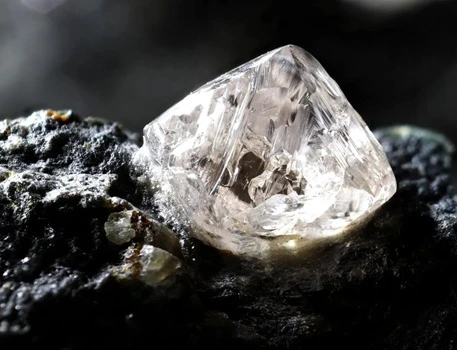 Natural Diamond is formed at great depth, as deep as 90 to 125 miles beneath the Earth’s surface. The single element required is carbon. This carbon is a primordial carbon, which has been trapped within the Earth, since the planet’s formation. It is not a fossilized carbon such as coal, which is commonly believed. Diamond can only form in the lithospheric mantle, this specific zone has the required heat and pressure to force carbon atoms to form as a Diamond. If there is less heat and pressure, then the carbon atoms will form graphite. Under this intense heat and pressure, the carbon atoms are forced to knit tightly together into a cubic pattern (crystal lattice). This process is very slow, taking billions of years. It is this slow crystallisation under pressure that gives Diamond its unmatched hardness. The Diamonds are then finally brought to the surface by a violent volcanic eruption which originates below where the Diamond was formed. The volcanic eruption needs to be incredibly fast, otherwise the Diamond would dissolve on its journey to the surface. As the magma reaches the surface, it cools rapidly and hardens into an igneous rock called kimberlite or lamproite, which will contain the Diamonds. This igneous host rock is vertical within the earth and similar to a pillar in shape, these structures are called “Pipes”. Over millions of years of weathering and erosion, Diamonds can get washed out of these pipes and will then accumulate in alluvial (secondary) deposits. Historically, all diamonds were found in alluvial deposits up until 1871. When by chance a primary deposit was discovered in Kimberley, South Africa.
Treatments
The vast majority of Diamonds on the market have not been treated. For lower-quality stones, there are treatments which can be applied to improve their clarity or to alter their colour. It should be noted that there is a legal requirement to disclose treatment. Stones which have been treated are generally considered 25% to 50% less valuable than untreated stones.
- Laser Drilling: This treatment involves using a laser to burn an ultra-fine tunnel into the stone to reach a dark inclusion. Acid is then injected into this tunnel to dissolve the dark inclusion. This treatment will remove the inclusion but the tunnel will remain visible under a microscope. This treatment is permanent.
- Fracture Filling: This treatment involves filling surface-reaching inclusions with lead-glass or a resin under pressure. Since lead-glass or the resin used will have a similar refractive index to Diamond, it will be virtually invisible to the naked eye but will still be visible under a microscope. This treatment is considered temporary and or vulnerable, because the filling can become discoloured or leak out if subjected to intense heat such as a jeweller’s torch. The use of an ultrasonic cleaner is also not recommended for these fracture-filled stones.
- High Pressure High Temperature: This HPHT treatment mimics the natural formation process. It’s normally used on low-value brownish stones to turn them completely colourless. It can also be used to intensify colours into the bright, fancy colour range, such as vivid yellow, pink or blue.
- Irradiation & Annealing: This treatment is used to artificially make intensely saturated, fancy coloured Diamonds. The process involves the stones being bombarded with electron beams, which will shift the carbon atoms out of place and so turn the stone blue or green. This process is often followed by annealing, which involves heating the stone up to 800°C. Annealing further rearranges the atoms, which will produce red, purple, pink or black stones. This treatment is permanent providing the stone is not subjected to intense heat such as a jeweller’s torch.
- Surface Coating: This treatment involves applying a chemical layer or a thin film layer to the pavilion of the Diamond. This is designed to act like a filter and make yellowish stones appear white. This treatment is not commonly applied and is frowned upon within the gem trade. Most reputable gemological laboratories will refuse to issue certs for these stones. This treatment is considered temporary because the layer applied can easily be scratched off or even dissolved by normal household chemicals.
Durability
Diamond has a hardness rating of 10 out of 10 on the Mohs scale, making it the hardest natural substance on earth. This means that it’s the gold standard for scratch resistance and as such it is exceptionally resilient for everyday wear. Diamond has perfect cleavage, which means it has a plane of weakness within its structure in four distinct directions. If it is hit with enough force at a precise angle, it can split cleanly along these structural lines. This makes sharp corners on cuts such as a princess cut or pear cut vulnerable to chipping. Round cut Diamonds are significantly less vulnerable to chipping as they do not have these sharp corners.
- Sunlight: Untreated Diamonds are completely stable in sunlight and will never be affected by prolonged exposure.
- Heat: Diamonds are not sensitive to normal, everyday heat. They are for example, completely unaffected by being washed in boiling water or if left in a baking hot car in direct sunshine. However, since Diamonds are made of pure carbon, they can burn in the presence of oxygen if they are exposed to an open fire or a jeweller’s torch reaching above 700°C to 900°C. In which case, the entire Diamond will vaporize turning into carbon dioxide gas.
- Chemicals: Diamonds are completely unaffected by virtually all household chemicals and cleaning agents.
- Cleaning: The cleaning of this gemstone is quite straightforward due to its high durability. Place your Diamond jewellery in a bowl of warm, soapy water and allow it to soak for 10 to 20 minutes to loosen any dirt. Then clean using a soft toothbrush gently in order to avoid catching the bristles of the toothbrush in the jewellery settings, which can dislodge the gemstones. When finished, rinse your jewellery thoroughly under warm running water. Ensure the plug is placed in the sink while you rinse, to prevent small items being accidentally flushed down the drain. The use of ultrasonic and steamer cleaners is safe for untreated Diamonds. However, these machines are never to be used on glass-filled Diamonds or jewellery containing pave or small accent Diamonds, as these machines can shake them loose.
- Storage: While this gemstone has excellent resistance to scratches, it can scratch softer gemstones such as Emerald, Opal or Pearl and metals such as Gold. For this reason, it is always recommended to store it in a separate compartment within your jewellery box or to place it in a soft cloth pouch.


Meaning and Healing Properties
Diamond symbolises invincibility, eternal love and purity. The name Diamond is derived from the Greek word adamas meaning unconquerable. Ancient Kings and warriors, including Julius Caesar, wore this stone into battle in the belief that it would make them unconquerable. In more modern times, the stone is seen as the universal symbol of love and the promise of forever. This was due in no small part to the 1947 marketing slogan “Diamonds are Forever” run as part of an advertising campaign by De Beers. The stone has also been associated with purity and truth, due to its perfect transparency. Diamond has also been credited with a number of physical healing properties. Ancient texts describe its use to infuse water or wine, which was then drunk to flush out toxins from the body. It was linked to the brain and the nervous system, it was claimed that the stone brought clarity to the mind. Diamond was said to be an amplifier gemstone and that it had the power to magnify the energy within a person or surrounding the person.
Chakra: Since Diamond comes in almost every colour, it is associated with all seven major chakras. Association with each chakra is primarily based on colour.
- Black is associated with the root chakra, which helps to promote stability, security and grounding.
- Orange is associated with the sacral chakra, which helps to promote creativity.
- Yellow is associated with the solar plexus chakra, which helps to promote confidence and personal empowerment.
- Pink/Green is associated with the heart chakra, which helps to promote love, compassion and emotional healing.
- Blue is associated with the throat chakra, which helps to promote communication and self-expression.
- Violet/Purple is associated with the third eye chakra, which helps to promote mental clarity.
- Colourless is associated with the crown chakra, which helps to promote spiritual connection.
Birthstone: Diamond is the official birthstone for April. White Sapphire is an alternative birthstone for April.
Zodiac Astrology: Diamond is primarily associated with the star sign Aries. It is also associated with Taurus.
Wedding Anniversary: Diamond is the traditional gift for the 60th wedding anniversary, symbolising an unbreakable bond, rarity and preciousness.


History
Diamonds were first discovered in India around the 4th century BC, although there are some historical estimates suggesting that it could be as far back as 4,000 BC. The stones discovered here were in alluvial (secondary) deposits along the Krishna, Godavari and Penner rivers. These rivers are located in the Southern and Central regions of India. Ancient people found diamonds in these alluvial deposits while they were panning for gold. These stones were at first valued for their incredible hardness and used as engraving tools for metals and other precious gemstones. The earliest written records about diamonds are from the text Kautilya’s Arthashastra (300BC). This text discusses taxation and classification of Diamonds, along with rules for their use in royal jewellery. In ancient India under the caste system, different castes were only allowed to wear specific colours of Diamond. For example, kings and warriors wore red, while priests wore white.
From India, Diamonds were traded via the Silk Road into China and the Middle East. In 327 BC, Alexander the Great introduced Diamonds to Europe following his Indian campaign. These at the time were all rough, uncut stones which Alexander the Great brought with him back to Europe and they were treated as powerful talismans rather than for use in jewellery. From their first discovery until the 1720s, India held a monopoly on Diamonds as it was the world’s only source.
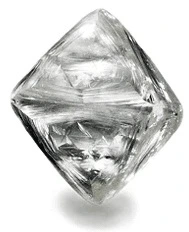 For centuries, this stone was considered a powerful talisman and was extremely valuable. In the 1st century AD, Pliny the Elder wrote of the stone saying that it was the most valuable thing in the world. Since this stone was so hard to cut, it was often set as a rough, uncut stone into rings and worn exclusively by royalty and nobility as a protective amulet. During this time, there was the widespread belief that cutting a Diamond would destroy its power as a talisman. The use of this stone uncut, continued up until the mid-1300s, when the point cut was developed. This was a very basic cut which simply polished the natural octahedral crystal into a symmetrical point. Later on in the 1400s, gem cutters developed the point cut by grinding down the points to create the table cut. In a separate article I wrote, you can read about Historical Diamond Cuts.
By the 1720s, deposits in India were largely becoming depleted, which led to severe shortages of the stone, until in 1725, when Diamonds were discovered in the rivers of Minas Gerais, Brazil by gold miners. This allowed Brazil to quickly become the world’s dominant supplier, a position it would hold for the next 150 years. During this time, Europe saw a massive influx of Diamonds which created an unprecedented appetite for Diamond jewellery. Early Georgian Jewellery predominantly used foil-backing in a closed-back setting to intensify brilliance. Diamonds were also commonly set in silver over gold to further bring out their whiteness, with rose cuts and old mine cuts being the most prominent cuts of the era. Later on in the Georgian period, foil-backing and closed-backed settings began to fade out of use in favour of the new prong settings, which allowed more light to pass through the stone. Demand for Diamond jewellery outpaced supply at this time, which led to the invention of “Paste Jewellery”. Paste is a specialised dense, lead-glass, that was hand-cut and polished just like Diamonds. Paste jewellery became the height of fashion and was even worn alongside real Diamond jewellery.
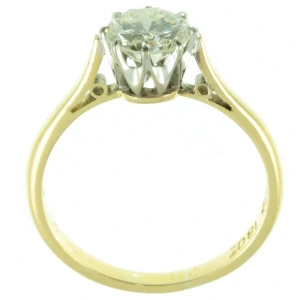 In early Victorian Jewellery, rose cuts and mine cuts were still the dominant cuts, but by the 19th century, the old European cut was the most prominent. In the mid-Victorian period, Diamonds were discovered in Kimberley, South Africa. The deposits in Kimberley were truly massive, which flooded the market on a scale never seen before. This coupled with the industrial revolution, which saw the creation of a new wealthy middle-class, made diamonds more affordable and available than ever before. The industrial revolution also brought advances in Diamond cutting. Allowing rounder cuts with sharper facets to be made and so increasing brilliance. This completely removed the need for foil-backing, which was in decline anyway and allowed the widespread use of pronged settings. In 1886, Tiffany & Co. introduced a high-prong setting for Diamond solitaires called the “Tiffany Setting”. This setting became the standard for Engagement Rings.
With the introduction of platinum at the end of the 19th century, Edwardian Jewellery moved to a “white on white” aesthetic. Diamonds were set in delicate, lace-like mountings of platinum to create that iconic “all white” look which dominated this era. Two very distinct metalworking techniques to emerge from the use of platinum were filigree and milgrain. In keeping with this look, Diamonds were frequently paired with Pearls. While the Old European cut was the dominant Diamond cut, new cuts such as the marquise cut, the emerald cut and the baguette cut were introduced during this period.
The use of “white on white” continued into Art Deco Jewellery, with the introduction of coloured gemstones such as Lapis, Jade and Coral gradually taking place. While the Old European cut and rose cut were still present during this era, the modern brilliant cut had taken over as the dominant cut. This period also saw new shapes for side Diamond being introduced such as half-moons, bullets and shields. One of the most popular pieces of jewellery to emerge was the Diamond straight line bracelet, which was revived in the 1980s and called the tennis bracelet.
In 1940, the Gemological Institute of America (GIA) introduced a Diamond grading system called the four Cs. I have written a separate article about the four Cs, which you can read at: Diamonds Explained, the Four Cs.
Currently, the main Diamond producing countries are: Russia, Botswana, Canada, Angola, South Africa, Namibia, Zimbabwe, Lesotho, Sierra Leone, Guinea, Ghana, and Tanzania.
Globally, about 20% to 30% of all Diamonds mined are of gemstone quality, with the remaining being classed as commercial grade.


Laboratory Grown Diamonds
The very first lab-grown Diamonds were produced on the 16th of December 1954, by H. Tracy Hall, a physical chemist, who at the time, was working independently for General Electric (GE) on a secretive project, codenamed “Project Superpressure”. Tracy Hall designed a custom-built “Belt Press”, to which he added graphite and iron sulfide. The belt press generated enormous heat and pressure, replicating Diamond’s natural formation process. While he did successfully create the first lab-grown Diamonds, they were very small in size, with a yellowish colour and they contained flaws. This made them unsuitable for jewellery but they were used for industrial purposes.
General Electric did go on to produce the first lab-grown Diamonds of gemstone quality in 1970. They used a highly refined high-pressure high-temperature (HPHT) process. While this process was successful in producing quality stones, it was too expensive when compared to natural diamonds.
In the 1980s, Japanese scientists at the National Institute for Research in Inorganic Materials developed Chemical Vapor Deposition (CVD). CVD allowed scientists to grow larger, flatter and purer Diamond crystals using carbon gases inside vacuum chambers.
In 2007, the Gemological Institute of America issued its very first lab report for a lab-grown Diamond. This gave lab-grown Diamonds legitimacy within the gem trade. Then in 2018, the US Federal Trade Commission ruled that a Diamond was a Diamond regardless of whether it was formed naturally or in a lab. Since this ruling, lab-grown Diamonds have captured a massive share of the market, particularly for engagement rings. As a general rule of thumb, lab-grown Diamonds sell for about 10% to 25% of the cost of natural Diamonds of identical size, cut, colour and clarity.
Identification: Almost all modern lab-grown Diamonds from a reputable company will contain a laser inscription. The inscription will state “Lab-Grown” or “LG” along with a serial number. This will be written on the girdle of the stone and can be read using a jeweller’s loupe. If the inscription is missing or if it is hidden by the settings, the only other way to identify it is by having a gemological lab examine it.
Folklore
Diamond has a rich folklore surrounding it, dating back thousands of years to where the stone was first found, in India. In ancient India, Diamonds were revered as sacred and divine objects which held protective powers and healing abilities. They associated the stone with Indra, king of the gods and believed that it was formed by thunderbolts sent to earth by divine forces. Other legends had it that the stone was formed from fragments of stars which fell to earth, or that the stone was crystallised drops of morning dew. The ancient Indians used Diamonds as eyes for statues of Hindu deities, in the belief that it would enable the deities to see through them and channel their energy. They evaluated diamonds by purity, colour and brilliance. A flawless stone was said to bring great fortune and wealth. However, a low-quality stone was said to bring bad luck and even curses upon the owner. They also believed that this stone was a powerful talisman, with the ability to protect them from physical harm and ward off evil spirits. In ancient India, there was a caste system for categorising Diamonds and who could wear them. Clear/white stones were for priests, to grant them spiritual purity. Red or pink stones were for kings and warriors, to prevent them from aging and to ensure victory in battle. Yellow or green stones were for merchants to bring them wealth. Black stones were for labourers, to give them endurance. It was believed that wearing a stone from another caste than your own would bring bad luck and severe illness.
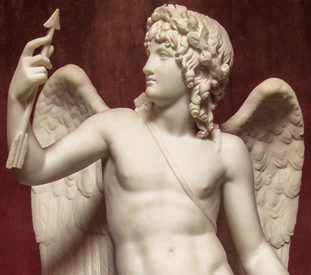 Greek Mythology: In the ancient Greek world, Diamonds were incredibly rare and seen as powerful supernatural gemstones rather than simply for use in jewellery. The Greeks called this stone adamas which means unconquerable or unbreakable. They believed that the stone had divine strength and that this strength could be transferred to the wearer. Kings and warriors would wear it into battle for protection and to bring them victory. In Greek mythology, Diamonds were said to be the tears of the gods that had fallen from Mount Olympus and crystallised upon hitting the ground. Legend has it that Eros’s (Cupid in Roman Mythology) arrows were tipped with splinters of Diamonds. These hardened arrows, they believed were the only thing capable of piercing the human heart and inspiring eternal love. It was also said that the helmet worn by the Hero Hercules was made of pure adamas. The Greek philosophers believed that by wearing a Diamond, it would counteract poison, ward off evil spirits and cure temporary madness.
Roman Mythology: The Romans took the Greek myth of Eros and adapted it to become the folklore surrounding Cupid. Saying that Cupid’s arrows were tipped with Diamonds, which were the only thing hard enough to pierce the human heart and so spark eternal love. The ancient Romans believed that the stone was formed from splinters of falling stars as they fell from the heavens. The Romans did have access to more Diamonds than the Greeks, due to the sheer size of the Roman Empire and the trade routes which they controlled, but they were still rare at this time. They wore the stone in its natural octahedron crystal form, it was not cut or faceted. They believed that the stone held immense power to both protect them from physical harm and evil spirits. The military elite wore Diamonds set in iron rings. The reason for using iron over gold was to comply with the sumptuary laws, which restricted gold to high-ranking members of the senate. Iron was also associated with Mars, the god of war. The Romans believed in sympathetic magic, where objects with similar traits could reinforce each other, such as iron and Diamond. Roman soldiers believed that wearing the stone would protect them from cowardice, nightmares and poisons. They also believed that it could calm madness induced by battle panic.
In the 1st century AD, Pliny the Elder wrote about the stone saying “The Diamond is the most valuable, not only of the precious stones, but of all things in the world.”
Medieval Europe: During the Middle-Ages, Europe was largely cut off from India as a direct result of the fall of the Roman Empire. As such Diamonds were very rare in Medieval Europe and expensive. A lot of what we do know about the folklore surrounding Diamonds at this time comes from lapidaries, which recorded basic mineralogy and folklore. An example of one such book is the 12th century Liber Lapidum by Bishop Marbod of Rennes. These books claimed that Diamond held immense power over demons. It was said that by wearing the stone on your left side, that you would be protected from demons, nightmares and sleepwalking. The stone could also be used to find the truth. It was said that if a Diamond was placed near someone who was asleep. Then the stone would force the sleeping person to speak the truth and so expose any hidden infidelities or plots.
 In Medieval Europe, there were two contradictory beliefs about this stone and poison. The first belief comes from writers such as Saint Hildegard von Bingen. Who claims that placing a Diamond in the mouth or by dipping it in wine and then drinking the wine, that it was an antidote to poison. The second belief was that Diamond was itself a deadly poison. It was said that if a person swallowed a whole Diamond or drank a potion containing Diamond dust, they would have the most excruciatingly painful death.
Medieval alchemists held the belief that this stone was in fact, alive and that it had the ability to reproduce. They claimed that if you put a male and a female of the stone in a pouch together and left them alone for a number of years. Then they would produce tiny new diamond crystals.
The Catholic Church held two different views on Diamonds. The first view was that since this stone allowed light to pass straight through it without distortion, it was a pure stone. Theologians such as Bishop Marbod of Rennes and Saint Hildegard von Bingen wrote about Diamonds being an earthly reflection of Jesus Christ as they radiated pure light. They believed that precious gemstones were given to humanity by God and that any virtues these stones contained were gifts from God for our use and protection. The other view that the Catholic Church held was that the use of Diamonds (or any other gemstone) for magic, such as the truth test while a person slept, was considered sorcery and heresy. The misuse of gemstones was taken very seriously and could result in severe penance or excommunication from the Church. The Church believed that the most valuable materials on Earth should be dedicated to God’s Glory. In accordance with this belief, Diamonds were frequently used in reliquaries, chalices and other religious objects.
Famous Diamonds
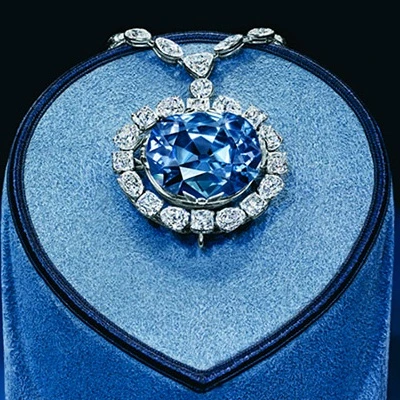
The Hope Diamond, 45.52 Carats
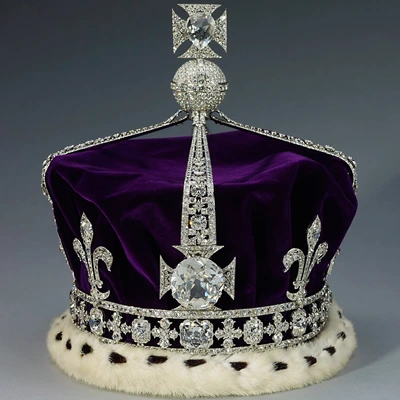
Koh-i-Noor Diamond
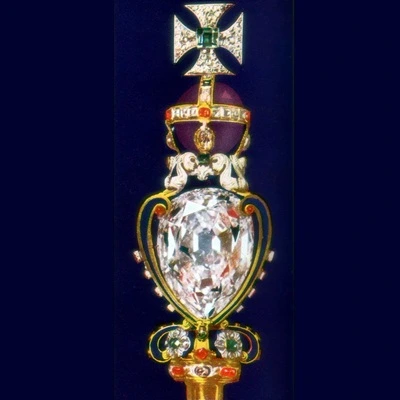
Cullinan I (The Great Star of Africa)
Diamond Gemological Data
Colour: Colourless/White, yellow, brown, green (rare), blue, pink, red, orange, black, purple, violet, grey.
Colour of Streak: None or Colourless.
Mohs hardness: 10
Density: 3.50 – 3.53
Cleavage: Perfect.
Fracture: Conchoidal to splintery.
Crystal system: Cubic, mainly octahedrons, also cubes, twins,rhombic dodecahedrons, plates.
Transparency: Transparent to opaque.
Chemical composition: C, crystallised carbon.
Refractive index: 2.417 – 2.419
Double refraction: None.
Pleochroism: None.
Dispersion: 0.044
Fluorescence: Very variable; Colourless and yellow diamond: mostly blue, Brown and green diamond: often green.
For Researchers and Journalists
Recommended Citation (MLA) Format:
Hoyne, John. “Diamond: Formation, History, Meaning, and Folklore.” Carus Jewellery, n.d., https://carusjewellery.com/diamond/.
You can also get in touch with Carusjewellery.com on Facebook , where you may leave any comments or questions you may have about this article.