
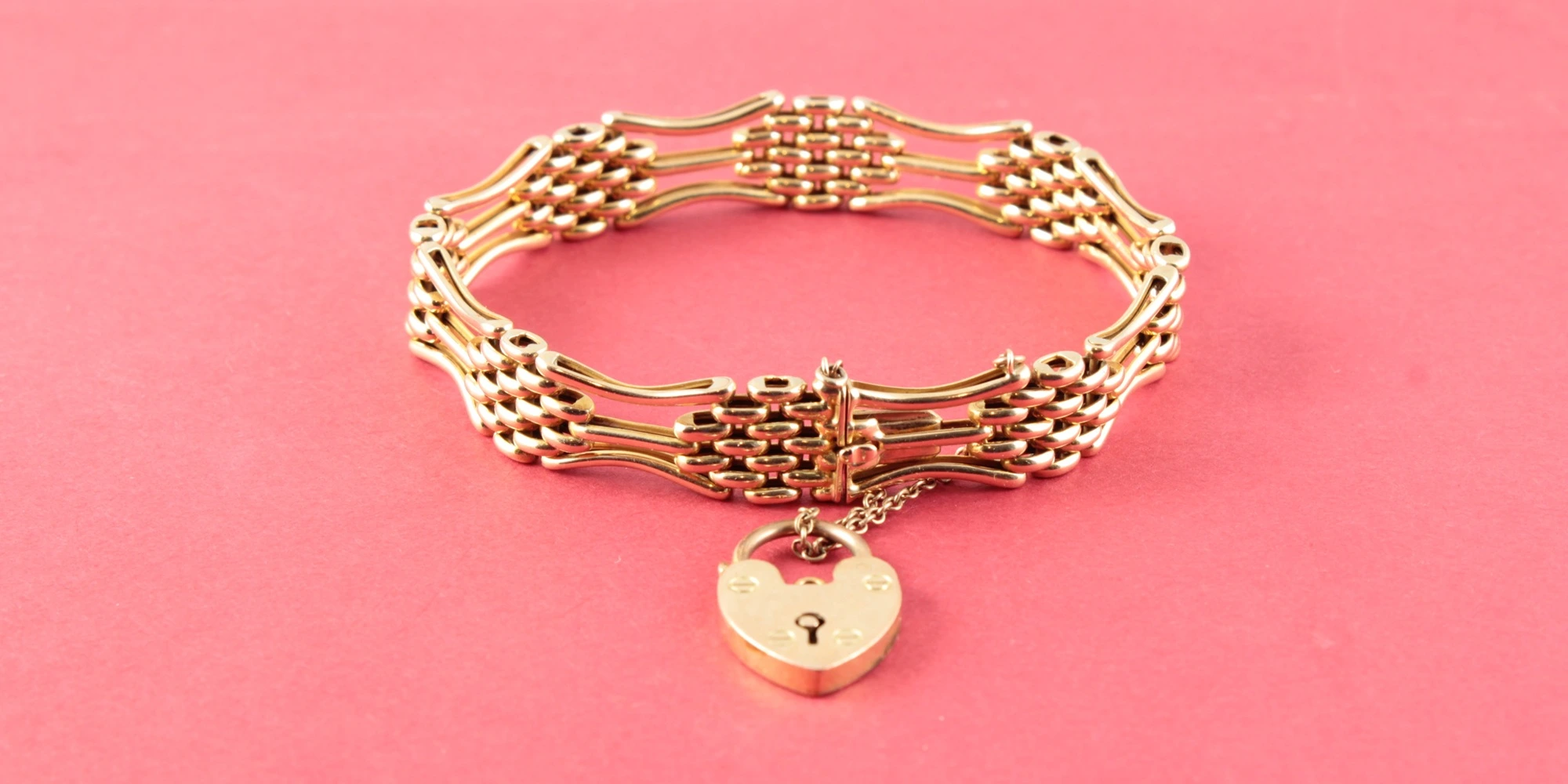
Gold
The name gold is derived from the Proto-Indo-European root ǵʰelh₃-, meaning “yellow” or “to shine”. Over time, this root evolved into the Germanic word gulþą (precious metal) and the English word geolu (yellow). Later evolving into the modern English word Gold. The chemical symbol for gold is Au, which comes from the Latin word Aurum, meaning “shining dawn”.
Gold has unique and enduring qualities, which has made it one of the most coveted materials throughout history. It has a deep, rich yellow colour that will not fade over time, nor will it tarnish. It is a “noble metal” and as such it does not react with oxygen. Its lustre is permanent and stable, reflecting light exceptionally well. It is unaffected by almost all pure acids, it can only be dissolved by aqua regia, which is a highly corrosive acid made from nitric and hydrochloric acids. Gold itself is completely non-toxic and biologically inactive, which means it is completely safe to ingest it or for uses within the human body such as dental fillings. Gold is also highly malleable and ductile, which means that it can be hammered into impossibly thin sheets or it can be drawn into very fine wire without breaking. For example, a single gram of gold can be hammered into a sheet one square meter. These characteristics allow for extraordinary craftsmanship, from delicate filigree work to gold leaf. Gold is also a dense metal; it has a specific gravity of 19.32 g/cm³, making it twice as dense as lead. It is a combination of these unique qualities: rarity, lustre, density, incorruptibility and workability. That has made gold one of the most valuable materials across pretty much every culture and throughout all of history.
Formation
 Gold is a pure chemical element (Au) and was not formed on Earth but rather in deep space as the result of violent cosmic events. The conditions required to create gold only occur during the death of massive stars. There are two main cosmic events which create gold. The first is when two ultra-dense collapsed stars called neutron stars collide. This violent collision will set off a rapid nuclear reaction, which instantly forms heavy metals, such as gold. The vast majority of gold is formed through this process. The other process by which it can form is during a core-collapse supernova of a massive star. The star needs to be at least eight times larger than our sun, in order for the required extreme heat and pressure to be produced.
Explosions such as these produce massive interstellar clouds of dust and gas. In our case, billions of years later, this massive cloud collapsed in on itself to form our solar system. The particles of gold within the cloud became incorporated into the Earth as it was forming. Since it is a dense, heavy metal, almost all of it sank into the Earth’s core, where it remains out of reach. The gold which is mined, actually comes from a later period in the Earth’s formation. When a massive wave of meteorites and asteroids hit the Earth called the late heavy bombardment, the Earth was cooling during this bombardment and these meteorites and asteroids were rich in precious metals and delivered gold to the Earth’s outer mantle and crust. Geological activity then over millions of years brought some of this gold to the surface.
Currently, the world’s top gold-producing countries are: China, Russia, Australia, Canada, Peru, Ghana, the United States, Uzbekistan, Mexico, and Indonesia.
Gold Purity
Gold has a hardness rating of 2.5 to 3 on the Mohs scale. To put that into perspective, a human fingernail is about 2.5 on the Mohs scale. This makes pure gold unsuitable for everyday use in jewellery, as it would be scratched easily, it would deform and it would not have the strength required to securely hold gemstones in place. To overcome this softness, jewellers add harder base metals, such as copper, silver, zinc or nickel to pure gold to form an alloy. The percentage of gold contained in these alloys is measured in carats. It should be noted that in Ireland, the UK, Europe and Australia, the spelling of carat (ct) is with a “C”, whereas the spelling in the United States is with a “K”, karat (kt).
- 24 Carat (100% Pure Gold): This carat is very soft and is easily damaged. As such it is rarely used for jewellery. Gold bullion is almost exclusively made from 24ct.
- 22 Carat (91.6% Gold): This carat was historically known as “Crown Gold”. It is the most popular carat for fine jewellery in India and the Middle East. Coins such as the American Eagle and the British Sovereign are made from this carat.
- 18 Carat (75% Gold): This carat is the standard for fine jewellery, it combines a high percentage of gold that gives a deep, rich yellow colour, with the durability required for everyday wear.
- 14 Carat (58.3% Gold): This carat is the most popular for standard retail jewellery, as it has very good durability.
- 10 Carat (41.7% Gold): This carat offers excellent resistance to scratches. It is also the minimum standard to be legally classed as “Gold” in the United States.
- 9 Carat (37.5% Gold): This carat is considered very strong, with excellent resistance to scratches. It is widely used in Ireland, the UK, most of Europe, Australia, and New Zealand, where it is the minimum standard to be legally classed as “Gold”.
- 8 Carat (33.3% Gold): This carat is legally recognised as “Gold” in Germany, Denmark, and Greece. If this carat is to be sold in countries where it is not legally recognised, then it must be called a “Gold Alloy” or costume jewellery.
Historical Carats
- 20 Carat (83.3% Gold): This carat was introduced in the 18th century and was mainly used in Portugal and its colonies.
- 17 Carat (70.83% Gold): This carat was used during the Medieval and Renaissance Eras in Europe, it was phased out by the mid-1800s.
- 16 Carat (66.67% Gold): This carat was historically used in dental work, it is occasionally found in antique jewellery. It was phased out by the mid-1800s.
- 15 Carat (62.5% Gold): This carat was first introduced in 1854 and was very popular in Victorian Jewellery and Edwardian Jewellery due to its rich colour and durability. It was officially discontinued in 1932 and was replaced with 14ct.
- 13 Carat (54.17% Gold): This carat was mainly used in Germany and Central Europe. It was phased out by the late 1800s in favour of 14ct.
- 12 Carat (50% Gold): This carat was introduced in 1854, along with 15ct. However, it was a slightly duller colour and was typically used in mourning jewellery and pocket watches. It started to be phased out from 1932 onwards, in favour of the brighter 14ct or the more budget-friendly 9ct or 10ct.
Gold Purity Hallmarks
 Historically, jewellers and merchants tested the purity of gold using a touchstone. The stone was typically a dark, fine-grained siliceous rock such as jasper. The piece of gold to be tested was rubbed against the stone and would leave a streak mark. They would then rub test needles, which were made of a known gold carat and compare the colour. To double-check, a drop of acid was then placed on the test streak, lower carats would dissolve, while higher carats would be unaffected. This touchstone method has been used since antiquity and is still used to the present day. Although modern touchstone kits have evolved to be more precise, with different acids available for each carat. There were other methods used throughout time such as hydrostatic weighing and the fire assay, which are very accurate. The “Bite” test for gold is actually quite unreliable. Since pure gold only has a 2.5 to 3 rating on the Mohs scale, a bite can leave a slight dent. However, lead which is even softer, can be gold-plated and so will easily pass this bite test. Modern jewellers generally use electronic gold testers.
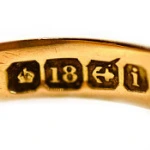 While the ancient Egyptians and Romans did have rudimentary inspection marks, it wasn’t until 1260 that the first legal standards for gold were introduced by France. King Louis IX created the legal standard, defining its purity at 19.2 carats, although at this time a physical stamp was not required. King Philip III introduced a national standard of 95.8% for silver and decreed that all silversmiths had to mark their silver with a unique city mark. In 1300, King Edward I of England introduced a similar law requiring gold to be at least 19.2 carats, known as the “Touch of Paris”. Gold meeting this minimum standard was marked with the Leopard’s head hallmark, which was the official mark of London. Goldsmiths were required to bring their pieces to the assayers, who would test each piece and mark it if it passed the standard. This process became known as “marked at the hall” and was later shortened to the word “hallmark” which we use to the present day.
In the 18th and 19th centuries, the authorities began allowing different carats to be produced and sold. To prevent confusion, assayers then began stamping gold with the carat number or the millesimal fineness, alongside the older hallmarks.
Gold Colour Variations
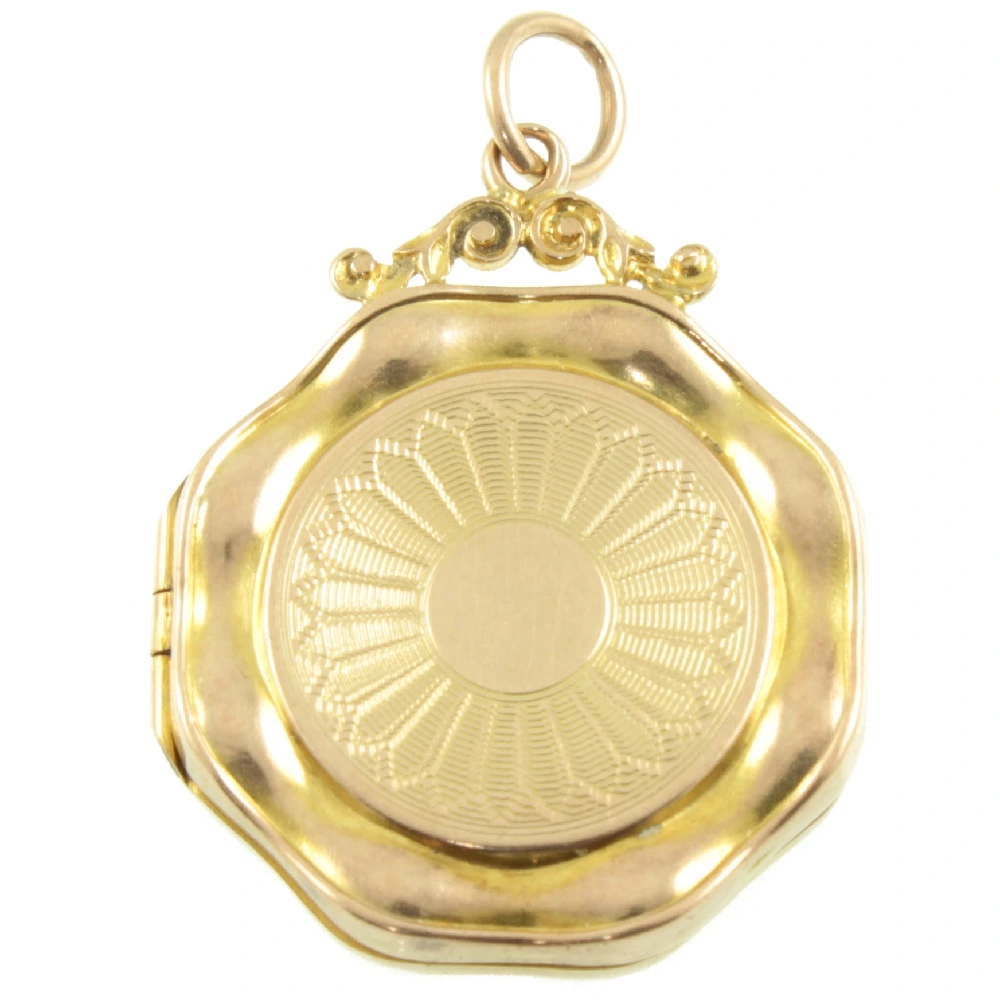
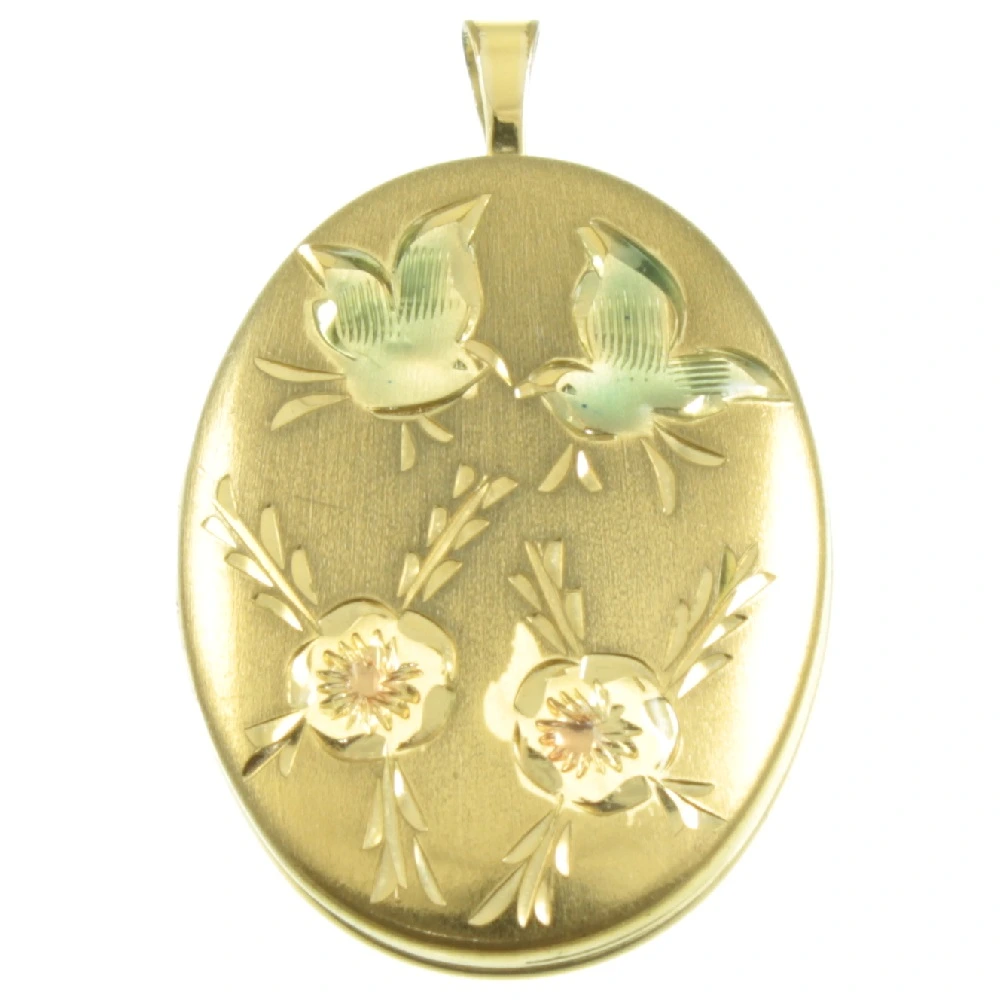
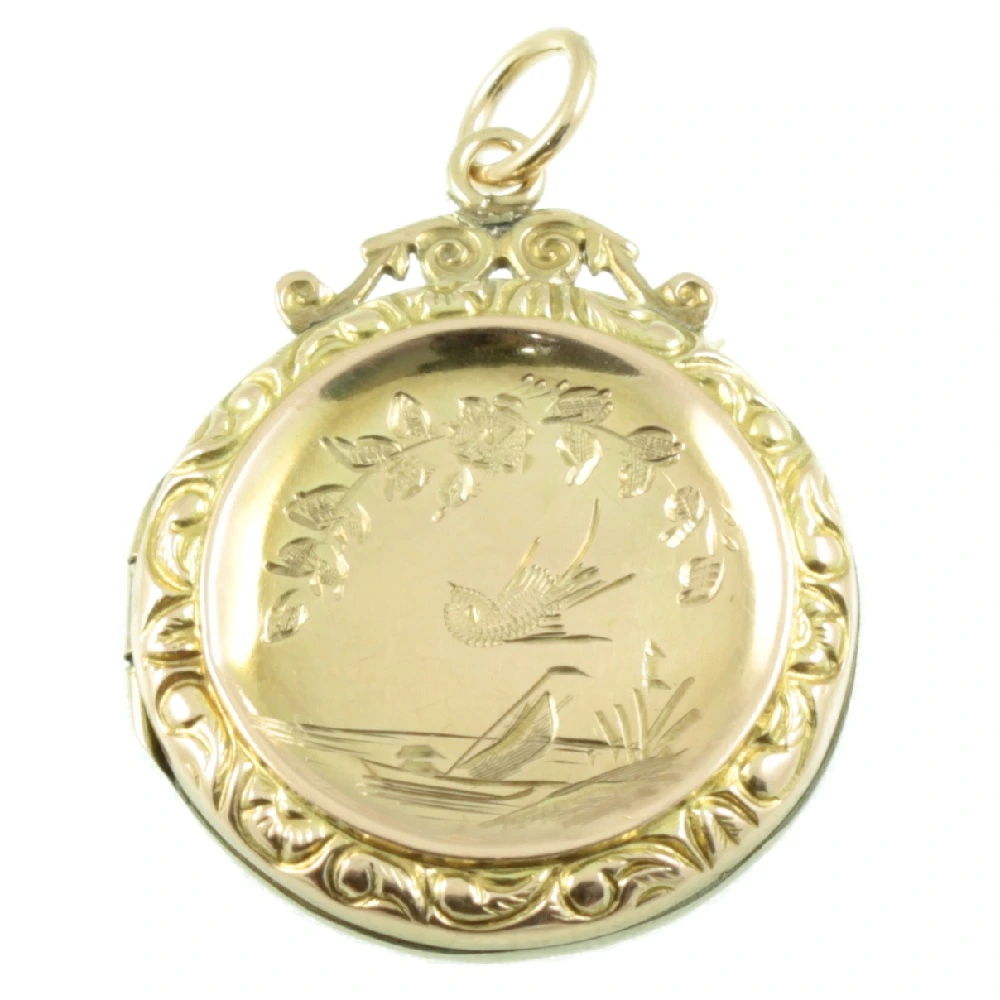
Pure gold (24ct) is a rich, vibrant yellow colour. However, since it is too soft to use for jewellery in its pure form, it is mixed with a variety of base metals to give it strength and durability. These base metals will change its colour, depending on the number of base metals added and their percentage.
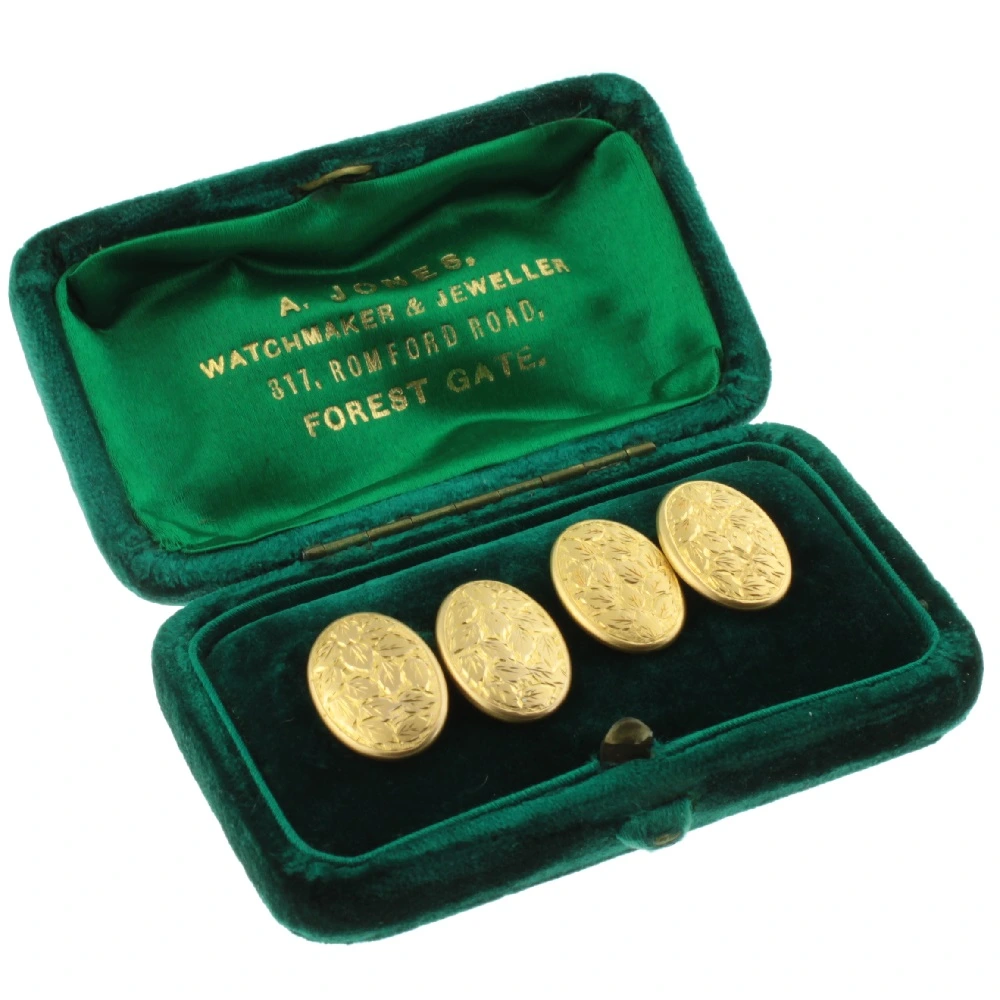
- Yellow Gold: The colour is produced by the addition of silver, copper and zinc. This mix has the classic warm colour of pure gold and is the universal standard for jewellery across all the Jewellery Eras.
- White Gold: This colour is produced by the addition of either palladium, nickel or manganese. Since the 1930s, white gold can also be rhodium-plated. This will give it a bright chrome-like finish; however, this is not universally done. White gold was very popular in Edwardian Jewellery and Art Deco Jewellery and continues to be popular to the present day, particularly for engagement rings.
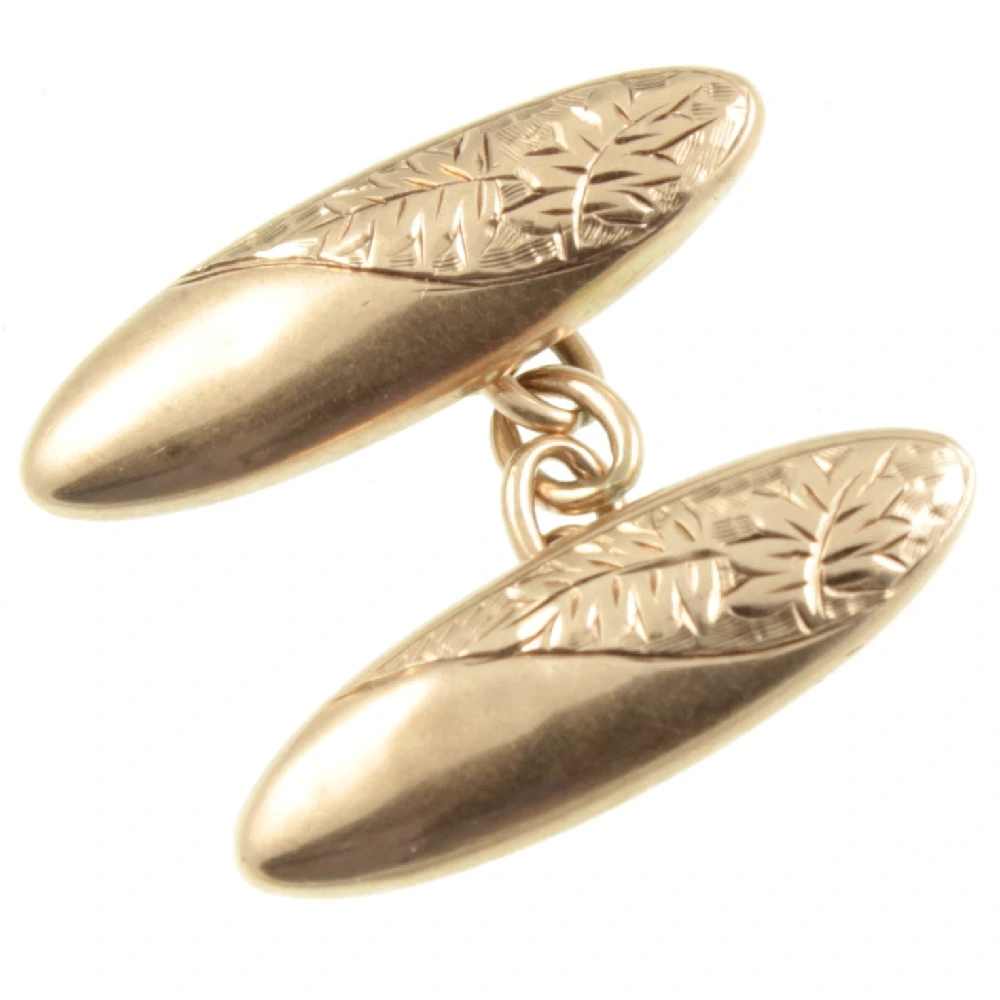
- Rose Gold: This colour is produced by the addition of a high percentage of copper. Depending on the percentage of copper used, it can range in colour from soft pink to red. Rose gold was very popular in Victorian Jewellery and in Art Deco Jewellery. It has also seen a resurgence in popularity in recent times.
- Grey Gold: This colour is produced by the addition of silver, manganese and copper. The specific ratio of these three neutralise the yellow colour without the need for rhodium plating. This colour is typically used by watchmakers and jewellers who want a dark white gold appearance.
- Green Gold: This colour is produced by the addition of silver, along with a small amount of zinc. In this mix, the silver will overpower the red tones in the gold and so produce a greenish-yellow colouration. This colour is sometimes used in multi-coloured gold jewellery.
- Black Gold: This colour is produced by applying surface treatments such as black rhodium plating. This colour is typically used in modern contemporary designs.
History
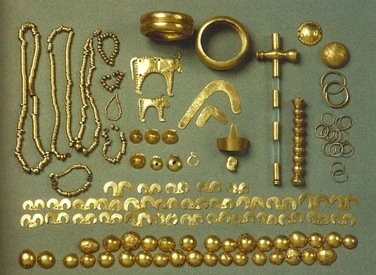 The history of gold is incredibly long and dates back to the Stone Age. It is thought that gold was independently found by various cultures in Europe, Africa and Asia. As such, it is impossible to know where it was first discovered. It was more than likely found accidentally in alluvial deposits in rivers as Stone Age people were fishing or collecting water. They would have been drawn to its natural beauty and quickly discovered its malleable properties. Archaeological evidence for the oldest known processed gold comes from the Varna Culture, on the western shores of the Black Sea in present-day Bulgaria. In 1972, near the city of Varna, a vast prehistoric cemetery was discovered, known as the Varna Necropolis. The graves here contained a vast treasure trove of over 3,000 individual gold objects, with a combined weight of over 6kg. There were necklaces, bracelets, earrings and pendants, all made with remarkable skill for the time. The Varna Culture was stunningly advanced and the techniques they used for producing their gold jewellery would not be surpassed for more than a thousand years. The gold jewellery found here was analysed and found to be over 23.5 carats in purity. Archaeologists have dated the Varna Necropolis to between 4,600 BC to 4,200 BC.
In ancient Egypt, gold was collected from alluvial deposits in riverbeds from about 4,000 BC onwards. It was revered as the “flesh of the gods” and held to be of significant religious importance, as well as being a status symbol. From 1550 – 1077 BC, the Egyptians were mining gold on an industrial scale in the Eastern Desert and Nubia. Since gold was incorruptible, it was seen as having divine immortality and as such it was widely used in burial objects. One of the most famous examples of which is Tutankhamun’s death mask, which was made of solid gold. It was also used in temples and to cap the tops of obelisks, to reflect the sun. Gold was also widely used in jewellery. Egyptian goldsmiths were exceptionally skilled, they pioneered gold leaf beating, which they extensively used to gild furniture and burial objects. They were also experts at lost-wax casting, using this technique to mass-produce religious gold statues. Egyptian metallurgists also made their own electrum, which is a blend of gold and silver, along with mining naturally formed electrum.
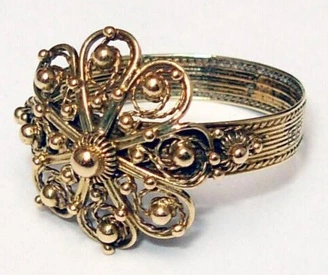 Around 3,000 BC to 2,500 BC, goldsmiths in Mesopotamia invented two of the most demanding techniques in gold work, granulation and filigree. Granulation involves the creation of tiny gold spheres and fusing them onto a gold surface. The process involved using a copper compound to solder the two pieces together, by melting the copper compound but without melting the gold. This process was called colloidal soldering and required great skill. Filigree is the creation of delicate, lace-like designs, frequently openwork designs. The process involves using very thin gold wire, which can be twisted, curled or even plaited to form the design. Each wire is then meticulously soldered at each point where they meet. A process again, like granulation, requiring the skill of a master goldsmith. The gold used in both processes needs to be of 22ct or higher to have the malleability and fusing properties to create such delicate work. Also each sphere (granule) must be applied by hand, making it not only highly skilled but painstakingly slow.
These styles and techniques made their way along trade routes to the Mediterranean and into Italy. It was the Etruscans, who lived in present-day Tuscany, that began experimenting with granulation and filigree in the late 8th century BC. By the 7th century BC, the Etruscan goldsmiths had not only perfected both techniques but had elevated them to a breathtaking level of refinement. Something which has since never been equaled. They produced incredibly dense, dust-like granulation and exceptionally fine filigree.
After the Romans conquered the Etruscans, jewellery styles moved away from fine granulation and filigree. The Romans did use granulation but it was much larger and designed to be a border accent. The Romans popularised heavy signet rings and heavy gold chain necklaces. They were also amongst the very first people to use gold to frame precious gemstones such as Diamonds, Rubies and Sapphires. The Romans also preferred to use pierced openwork over filigree, although filigree was still used. Pierced openwork was more structural and was produced by goldsmiths using a chisel to punch intricate holes in a sheet of gold. This was also a much faster process than filigree.
In ancient Greece, during the Hellenistic period (323-31BC), gold flooded into the country after Alexander the Great conquered the Persian Empire. This period saw the popularisation of royal wreaths, including the iconic laurel, oak and myrtle wreaths. The Greeks also widely used gold to set semi-precious gemstones such as pearls, garnets and amethyst. Hoop earrings and heavy torc-style bracelets were also very popular during this time.
Following the collapse of the Roman Empire, Medieval Europe suffered from an acute scarcity of gold. This was caused by the old Roman gold mines either being exhausted or abandoned. Plus, the Islamic Empires controlled the trade routes to the West African gold mines. In fact, gold was so scarce during the middle-ages, that Charlemagne (King of the Franks) moved the currency from the gold standard to the silver standard, in the late 8th century. Gold coins did not return to use until 1252, when the Italian city-states of Florence and Genoa began minting them. During the middle-ages the vast majority of gold which was available was controlled by the Church and the nobility. This was further enforced by sumptuary laws, which restricted the wearing of gold to the elites in society. As such, the production of gold jewellery moved largely towards religious objects. Repousse, cloisonne and champleve were widely used decorative techniques at this time. Repousse is a metal working technique, which creates three-dimensional relief sculptures by hammering the reverse side of a flat gold sheet. Cloisonne is a technique whereby thin gold wire is soldered onto a flat gold base to form tiny, raised cells. Each cell is then filled with powdered glass and fired in a kiln. Champleve is a technique whereby a thicker piece of flat gold is carved. These hollows which have been carved out are then filled with enamel and fired in a kiln.
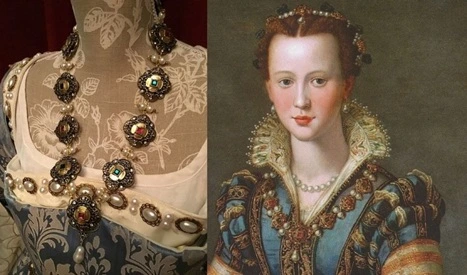 From the early 1500s onwards, gold started pouring into Europe after Portuguese explorers reached the Gold Coast in Africa (present-day Ghana). Vast amounts of gold also flowed into Europe from the Spanish conquest of the Americas. This sudden availability of gold caused significant economic and social change in Europe. With so much gold entering Europe, the price of everyday items soared. This massive inflation became known as “The Price Revolution”. The other effect was the complete collapse of the sumptuary laws, allowing wealthy merchants and the middle-class to buy vast amounts of gold jewellery. This new demand led Renaissance jewellers away from flat-shaped religious designs and themes to highly sculpted three-dimensional pendants, intricate enamel overlays and complex pieces containing features such as hidden hinges. The pendant took over from the medieval brooch as the main jewellery piece. Also heavy gold collar chains, draped over the shoulders were the height of fashion. At the same time that gold was flooding into Europe, gemstones were also becoming more abundant. This led to an increase in gold’s use to set gems, often times foil-backed to intensify the stone’s brilliance. Intaglios and cameos framed in gold were also very popular at this time.
During the Georgian period (1714-1837), gold jewellery was strictly made from high-carat gold such as 18ct or 22ct. Lower carats such as 15ct, 12ct, and 9ct were not legally introduced until 1854. Therefore, if you find a piece of jewellery containing a hallmark below 18ct, it cannot be Georgian. Also at this time, hallmarking was not strictly enforced and as such the majority of Georgian Jewellery contains no hallmarks or maker marks. Since high carat gold was a legal requirement the cost of it put it beyond the reach of most people. In 1720, Christopher Pinchbeck invented a gold simulant, which was named Pinchbeck after him. It was made from 83% copper and 17% zinc, it closely matched the weight, colour and lustre of 18ct gold but it did not tarnish. Pinchbeck proved to be very popular and was widely used up until the invention of gold-plating in 1805. During the Napoleonic wars (1799-1815), gold became very scarce and expensive in Europe. This led jewellers to adapt and use complex techniques to make gold go further, such as cannetille and repousse. They also frequently used silver-topped gold settings, particularly when setting Diamonds. This not only saved on gold but made the diamonds appear brighter.
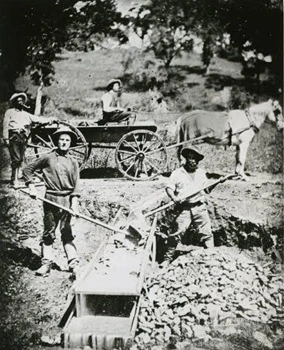 In the mid-1800s, the gold rushes in California (1848-1855) and in Australia (1851-1904) completely transformed Victorian Jewellery and the social status attached to gold jewellery. Within a few short years, the global production of gold skyrocketed. In response to this massive new influx of gold and the rising demand for it from a prosperous new middle class. The British government introduced the lower carats 15ct, 12ct and 9ct, in 1854. This new supply and lower carats available allowed jewellers to start producing solid and heavier new gold jewellery. Rather than being restricted to the lighter or hollow piece that they were previously producing. The miners themselves actually started new trends in gold jewellery. To celebrate particularly lucky finds, the miners would commission commemorative pieces to give to their wives or girlfriends. Miner’s motifs such as crossed picks, shovels or panning sieves, were very popular. The miners would also commission jewellery to be made from the raw nuggets as they found them, rather than having them melted down. These miner’s pieces became known as “Goldfields Jewellery”.
This new supply of gold coincided with the Industrial Revolution, allowing the mass-production of gold jewellery. Steam-powered workshops began using die-stamping machines to produce highly detailed jewellery such as lockets and brooches in a matter of seconds, something which was previously very time-consuming. This mechanisation transformed gold jewellery from expensive, hand-crafted and unique pieces to affordable pieces that were available in different carats.
Folklore
The folklore surrounding gold dates back to the Stone Age, when ancient peoples first discovered it and its unique properties. This metal did not rust, tarnish or degrade in any way, holding its captivating lustre indefinitely. This permanence gave it an aura of the eternal and resonated with early people’s developing concepts of the afterlife and deities. To ancient people, this metal symbolised the gods, eternal life and the sun.
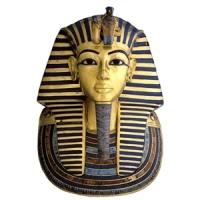 The ancient Egyptians called this metal nebu and they considered it a sacred metal with magical powers and associated it with eternal life. They believed that the bones of the gods were made of silver, while the flesh of the gods was made of gold. As such this metal was incorruptible and indestructible, as were their gods. They most closely associated it with Ra, the supreme sun god. It was used to decorate their temples, obelisks, statues and many other objects in the belief that it held the protective power of the sun god. It was also widely used in burial objects for royalty, in the belief that it would act as a protective shield against decay in the underworld. It was also believed to have the power to transform the deceased pharaohs into a divine being in the afterlife.
In ancient China, gold was believed to hold extraordinary magical powers that could extend a person’s life. Alchemists tried to create liquefied gold, in the belief that when it was consumed by a person, the metal’s unique incorruptible properties would be transferred to the person. The ancient Chinese would also frequently pair gold with jade in the belief that they would act together to protect the wearer spiritually and morally. Gold was also seen as the ultimate status symbol and its use was strictly reserved for the Chinese nobility.
Greek Mythology: In Greek mythology, gold was associated with Helios, the sun god, Zeus, the king of the gods and Chrysus, the god of the metal itself. Like the Egyptians, the ancient Greeks believed that it was the “flesh of the gods” and because of this, nothing on earth could corrupt it. The famous Greek poet Sappho described it as “the child of Zeus”. One of the most famous Greek legends about gold is the golden fleece. This fleece symbolised divine kingship and authority. The king who had it set impossible tasks for Jason and the Argonauts, which were designed to make them fail. However, with the help of a sorceress, who was the king’s daughter, Jason successfully retrieved the fleece. Jason returned to Greece to claim his rightful throne, however due to treachery and betrayal, it all ended in tragedy and Jason and the sorceress were exiled to Corinth. Another cautionary tale about greed and the pursuit of wealth comes from the myth of King Midas. Bacchus granted King Midas the ability to turn anything he touched into gold. However, this gift quickly turned from a blessing into a curse, when even his food and drink began turning into gold. Even the King’s own daughter was turned into the lifeless metal.
The ancient Greeks were very well aware of the incredibly strong allure of gold and its hold over the human psyche.
Caepio
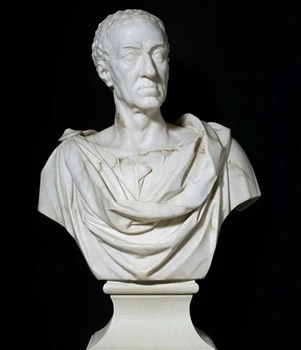
Roman Mythology: In Roman mythology, gold was most commonly associated with Apollo, god of the sun and with Pluto, god of the underworld. One of the most fascinating stories from ancient Rome about gold is the “Gold of Tolosa”, which is based on actual events. The story goes that in 106-105BC, the Roman proconsul Caepio seized a massive hoard of gold and silver from the town of Tolosa (modern day Toulouse, France). This treasure was taken from the Celtic tribes, who used it for religious offerings. Caepio officially reported the find and arranged for it to be transported to Rome. However, while it was en route to Rome, the convoy was attacked and the treasure stolen. It was widely believed that Caepio himself hired men to attack and kill the guards and steal the treasure. It was then said that he hid the treasure on his estates for himself and his family. Shortly after this, Caepio led the Roman army into the battle of Arausio. The battle was a disaster for the Romans, with an estimated 80,000 Roman soldiers and 40,000 camp followers being killed. With about 120,000 Romans being killed at Arausio, it was the worst military defeat in the entire history of the Roman Empire. Caepio was arrogant and unwilling to cooperate with his superior officer, which directly led to the catastrophe. The Roman people widely believed that the defeat was directly caused by the “Gold of Tolosa” being cursed. Some Romans claimed that the “Gold of Tolosa” was originally plundered by the Celts from the Greek oracle at Delphi, centuries earlier and so it was said to be double cursed. Officially, Rome blamed Caepio, stripped him of his wealth and citizenship and then exiled him. However, the story doesn’t end there, after Caepio was stripped of his wealth and exiled. His family continued to remain mysteriously wealthy and people assumed that they still had access to the “Gold of Tolosa”. At this time, there was widespread belief that the curse was generational. Historians such as Strabo have noted that every single heir to the Caepio fortune met an untimely demise. Caepio’s great-grandson was Marcus Junius Brutus, who assassinated Julius Caesar. After the assassination, Brutus was forced to flee Rome. He then used his vast fortune to raise an army in order to fight Caesar’s heirs, Mark Antony and Octavian at the battle of Philippi in 42BC. Brutus was defeated at the battle and he fell on his own sword, committing suicide. This act ended Caepio’s bloodline and the curse.
Under Roman law, only senators and high-ranking individuals were allowed to wear gold signet rings. Everyone else had to wear iron signet rings, this law was known as “the right of the golden ring”. The Romans believed that gold held protective powers against diseases, curses and evil spirits. Free-born wealthy boys were given gold amulets to wear around their necks called bulla. These amulets were believed to protect the boys from the “evil eye” until they reached manhood. Sorcerers believed that they could increase the power of their spells or curses by inscribing them on gold tablets, these then became known as curse tablets. As the Roman Empire expanded, gold came to symbolise victory. Returning victorious generals would celebrate by parading through Rome wearing crowns of gold laurel wreaths to emulate Apollo, the sun god.
Medieval Europe: During the Middle Ages, gold was used to symbolise a king’s divine right to rule. This was visually represented with gold crowns, sceptres, orbs and the wearing of cloth of gold. There were sumptuary laws in place, that restricted the wearing of gold to royalty and the nobility. This metal was also used for medicinal purposes. Both royalty and the nobility paid vast sums of money for medicines containing gold flakes. These medicines were believed to prolong life, strengthen the heart and ward off diseases such as the Black Death. At the time, it was widely believed that a King held the God-given power to heal the sick. A king could do so by pressing a gold coin to the skin of a sick person and so channel divine healing power into the person.
In medieval Europe, alchemists were obsessed with finding the philosopher’s stone. This stone was said to have the ability to turn base metals into gold. Through their continuous research and experimentation, alchemists actually laid the foundation for modern science. They invented and refined many laboratory apparatuses and discovered numerous chemical elements and compounds such as phosphorus, arsenic and bismuth.
In the Bible, gold is mentioned many times. For example, the three wise men brought gifts of gold, frankincense and myrrh to the infant Jesus. This gift of gold was to symbolise Christ’s Kingship. The book of Revelation describes heaven as a city of pure gold, which signifies the perfect holiness of God’s presence, divine glory, purity and absence of earthly corruption. While the Bible uses gold to symbolise God’s Divine glory and Kingship, it also strongly condemns its use for idolatry and greed.
 The Catholic Church believes that all earthly materials are inherently good, since they were made by God and that we such use the finest materials and craftsmanship available in our worship of God. This is not out of vanity but rather to give God our “first fruits”. The Church also believes that all earthly goods ultimately belong to God and as such the finest should be used to praise God. To this end, gold was widely used in the Catholic Church for religious objects such as chalices, monstrances, crucifixes and reliquaries. It was also widely used in liturgical art, architecture and in vestments.
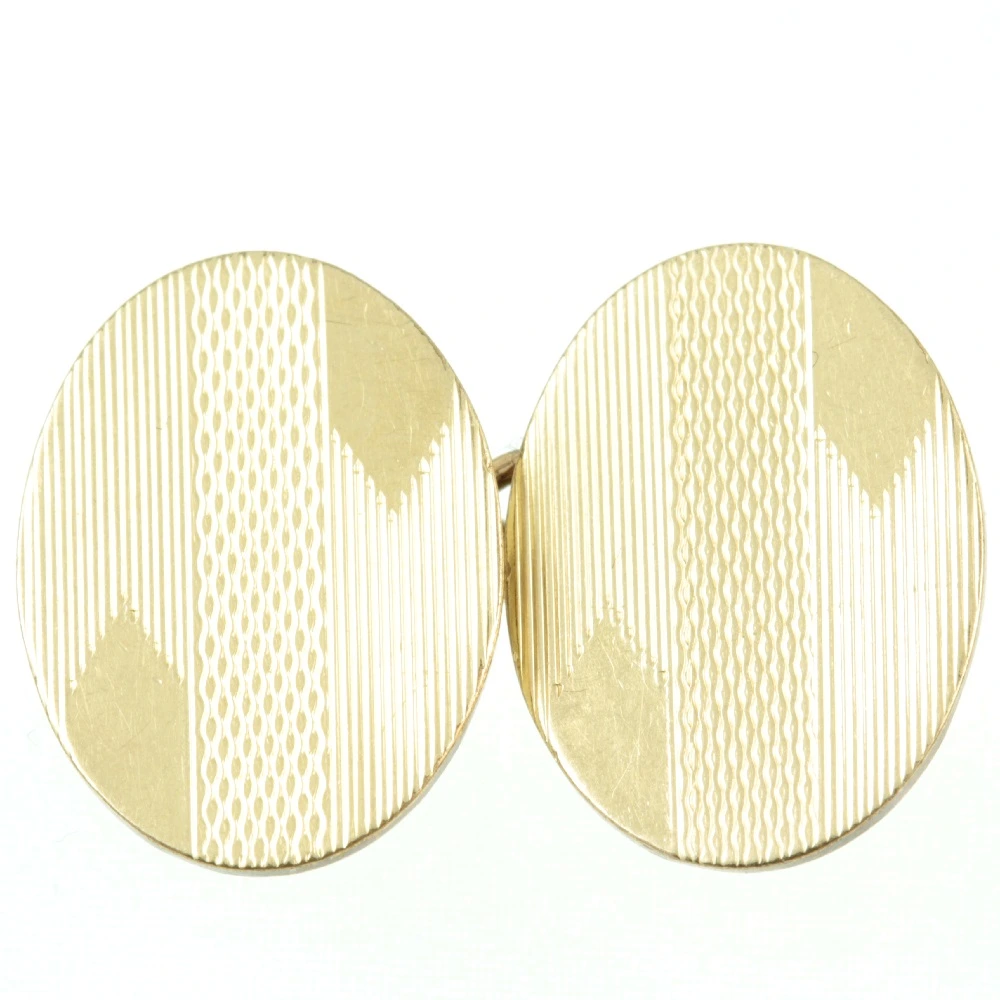
Metallurgical Data
Metal Name: Pure Gold
- Metal Category: Precious metal / Noble metal.
- Metal Type: Elemental Non-Ferrous metal.
- Specific Alloy / Simulant Name: Fine gold (24ct).
- Elemental Breakdown: 100% gold (Au).
- Fineness Value: 999.9 parts per thousand (Fine gold).
- Manufacturing Application: Jewellery, electronics, coinage, aerospace, and medical devices.
- Magnetic Response: Diamagnetic (non-magnetic).
- Oxidation / Patina State: Chemically Inert.
- Underlying Core Base Metal: None.
- Wear Anomalies: Easily scratched and deformed, 2.5 to 3 on the Mohs scale.
- Estimated Era: Antiquity to the present.
- Density: 19.32 g/cm³
- Melting Point: 1064.18°C
- Boiling Point: 2856°C
- Crystal Structure: Face-Centered Cubic (FCC).
- Electrical Conductivity: 45.2 x 10⁶ S/m
- Thermal Conductivity: 318W/(m·K)
For Researchers and Journalists
Recommended Citation (MLA) Format:
Hoyne, John. “Gold: Formation, Caratage, History and Folklore.” Carus Jewellery, n.d., https://carusjewellery.com/gold/.
You can also get in touch with Carusjewellery.com on Facebook , where you may leave any comments or questions you may have about this article.
