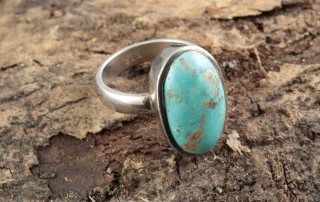
Turquoise

Turquoise The name Turquoise is derived from the French word "Pierre Turquoise", which translates to Turkish stone. Venetian and French merchants would normally purchase this gemstone in Turkish bazaars and then resell it in Europe. At the time, most people in Europe incorrectly assumed that the gemstone originated in Turkey and so named it [...]
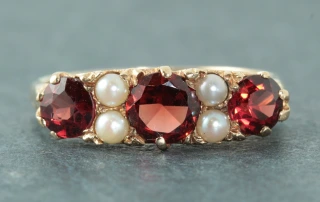
Garnet

Garnet The name Garnet is primarily derived from the Latin word "Granatus" meaning "Seed-Like" or containing "Many Grains". Granatus is specifically referring to "Pomum Granatum", meaning pomegranate. The crystals of this gemstone are rounded and similar in size, shape and colour to the red kernels of the pomegranate fruit. During the 14th century, the [...]

Pearl

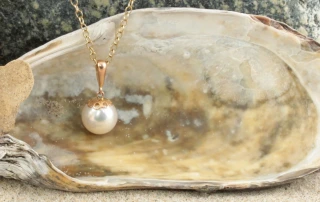
Pearl The origin of the name Pearl is uncertain, but it is generally thought to be derived from the Latin word "Perna" which translates to "Leg". The name leg is thought to describe the marine bivalve molluscs that produce Pearl as it resembles a leg of ham. It is also possible that the name [...]

Sapphire

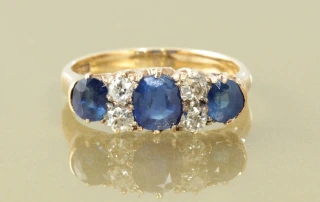
Sapphire Sapphire gets its name from the Greek word "Sapphirus" which means blue and is a member of the corundum family along with Ruby. It comes in a variety of colours including blue, pink, orange, yellow, green, purple, black, and colourless. Historically only the blue variety was called Sapphire. With the green variety being [...]

Ruby

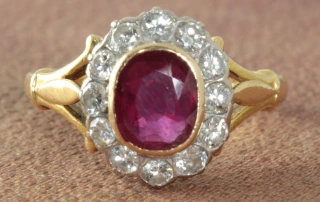
Ruby Ruby is a member of the corundum family of gemstones. There are two gemstones in the corundum family, Ruby and Sapphire. Low-quality corundum gemstones are typically used as cutting and polishing agents. The best known of these would be emery paper, which is mostly fine-grain corundum with the addition of magnetite, hematite, and [...]

Emerald

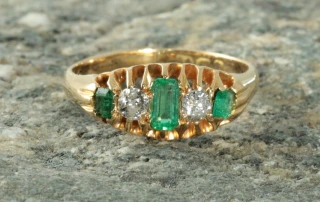
Emerald The gemstone Emerald belongs to the beryl group and is the most precious variety of beryl. The other varieties of beryl are Aquamarine, Morganite, Red and Green beryl, Heliodor, Maxixe, and Goshenite. The stone derives its colour from the element chrome, while green beryl is coloured by vanadium. The colouring agent chrome is [...]

Amethyst

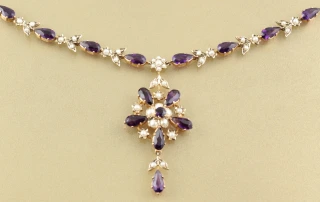
Amethyst The name Amethyst is derived from the ancient Greek word "Amethystos" which is a combination of the Greek prefix"a-" meaning "not" and the word "Methysko" meaning "intoxicate". So the name literally translates to "not intoxicate" or "not drunk". This name came from the long-held belief the ancient Greeks had, that this gemstone could [...]

Cleaning & Care of Antique Jewellery

Cleaning and Care of Antique Jewellery Antique jewellery is a beautiful and timeless investment, but it is important to take care of it properly to ensure that it lasts for generations to come. Gold Jewellery Gold jewellery is relatively easy to take care of. To clean gold jewellery, simply allow it to soak in [...]

Sustainability in Jewellery

Sustainability in Jewellery Sustainability in Jewellery is an interconnected process of modern development in order to balance the environmental impact of the world while maintaining the viability of our planet and sustaining the world's population in an ethical manner. Sustainability is a difficult concept to fully understand and is changing daily at present, It [...]

Murano Glass Jewellery

The History of Murano Glass Jewellery Murano glass jewellery has been produced since the 13th century. Originally produced in Venice but due to a fear of fire in Venice, the Hierarchy decided to move the factories to the island of Murano. Murano glass jewellery is also commonly known as Venetian glass Jewellery. The skills [...]

By |Categories: Uncategorized|
Go to Top