
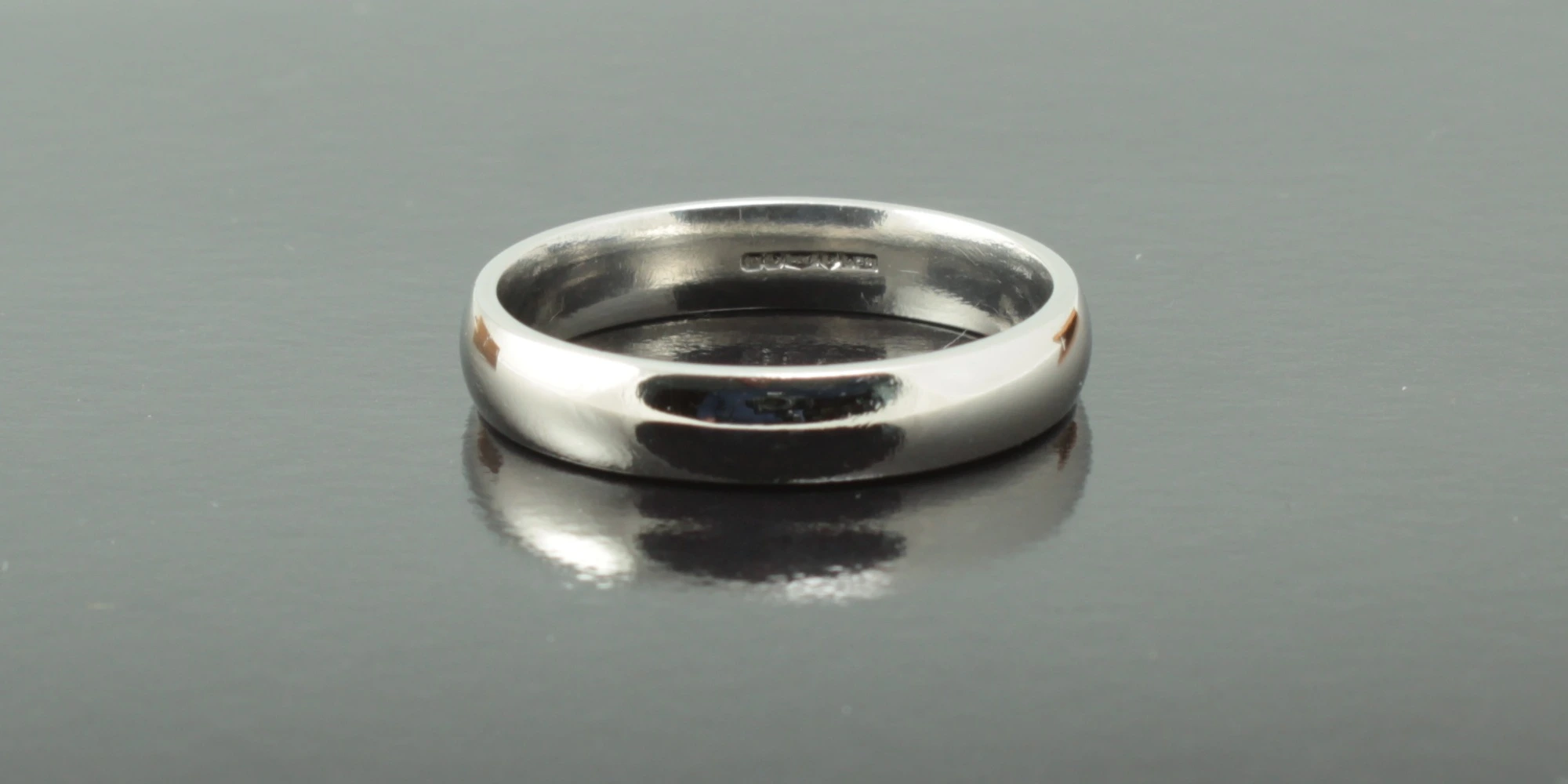
Platinum
The name platinum is derived from the Spanish word platina which translates to “little silver” or “lesser silver”. This was a derogatory term used in the 16th century by the Spanish conquistadors who were panning for gold in present-day Colombia. They viewed this metal as being worthless and thought it was either unripened gold or an immature form of silver. When this metal was finally introduced to Europe in the mid-18th century, its unique properties and value were recognised and it was classified as a precious metal. It was then officially named platinum, which is a modern Latin word.
The chemical symbol for platinum is Pt, which is derived from its modern Latin name.
Platinum is a unique precious metal and has a number of special physical characteristics. It is a noble metal and it is completely chemically inert. It will not oxidise or tarnish and it is completely unaffected by virtually all industrial acids. It can only be dissolved by aqua regia, which is a highly corrosive acid made from hydrochloric and nitric acids. Since it is completely inert, it is also hypoallergenic and as such it is ideal for use as implants within the human body because the immune system will not reject it. This metal is also one of the densest metals on Earth, it is twice as dense as silver and significantly denser than gold. As such a piece of jewellery made from it will feel much heavier and more substantial. Platinum has exceptional ductility, it can be drawn out into incredibly thin wires without breaking. It is also highly malleable but not quite as malleable as gold since it is a tougher metal. However, platinum leaf can still be made from it but it is slightly thicker than standard gold leaf. This extra thickness actually makes it easier to gild with as it does not tear quite as easily as gold leaf. Another special characteristic of this metal is micro-ploughing. Micro-ploughing is when this metal is scratched the metal actually gets pushed to one side, so there is no loss of material or weight. When gold or silver gets scratched, a small amount of the metal is lost. This loss of metal can be most easily seen in some estate rings, where the band will be thinner than it originally was after a lifetime of wear. This micro-ploughing also enhances the lustre of the metal. Since platinum is completely inert, the micro ridges never discolour but rather they catch the light at a slightly different angle. This leads to a uniform satin-like matt finish called a patina. So this micro-ploughing feature allows platinum jewellery to be worn for generations without any loss of material.
Since this metal is 40% to 60% heavier than gold, depending on the grades which are compared. A loose-fitting platinum ring can be a little uncomfortable to wear, as it will move on your finger and come to rest at different angles. So therefore, my personal recommendation would be to always go for a snug fit for platinum rings.
Formation
 Platinum does not form on Earth, it is formed in deep space by violent cosmic events. The vast majority of platinum forms as a result of the collision of neutron stars (collapsed stars) or from supernova explosions. Both of these events trigger rapid nuclear reactions, during which heavy metals are instantly formed. These explosions create massive interstellar clouds of dust and gas, which also include those heavy metals. Our own solar system was formed from one of these clouds, when it collapsed in on itself. In the early stages of our Earth’s formation, it was a molten mass of rock and heavy metals. Since platinum is a heavy metal, the vast majority of it sank down into the Earth’s core, where it remains out of reach. The platinum that we do have access to in the Earth’s crust actually arrived at a later stage. As the Earth was cooling down, it was hit by two separate waves of meteorites and asteroids. These events are called the late heavy bombardment and the late veneer. These meteorites and asteroids were rich in heavy metals and since they hit the Earth as it was cooling, most of the heavy metals remained in the Earth’s crust.
Over billions of years, volcanic activity has brought some of the platinum from the Earth’s mantle and crust to the surface in concentrated veins. The most famous example of this is the Bushveld Igneous Complex in South Africa. Within this complex is the Merensky Reef, which contains over 70% of the world’s known platinum reserves.
This metal is rarely found in its pure form, even “native platinum” is rarely 100% pure. It is most commonly bound up within iron, it can also be bound up with other metals within the platinum group metals, which include rhodium, iridium and osmium. It can also be trapped within mineral compounds. Since the majority of platinum is heavily bound up, its extraction from ores and its refining is a complex and expensive process.
Currently, the main platinum-producing countries are South Africa, Russia, Zimbabwe, Canada, and the United States. There are smaller amounts produced in China, Finland, Colombia, Australia, and Ethiopia.
Platinum Purity Grades
Platinum has a hardness rating of 4 to 4.5 on the Mohs scale of hardness. This hardness rating is too soft for use in jewellery, as it would easily deform and it would not have the structural strength required to securely hold gemstones in their settings. To overcome this issue, jewellers add specific metals to give it strength. While staying within strict hallmarking laws, that require its purity to remain at 90% or above for high-end jewellery.
The unit of measurement for the weight of platinum is the troy ounce, with one troy ounce being equal to 31.103 grams.
The purity of platinum is measured in millesimal fineness, which is the number of parts of pure platinum out of 1,000 parts. Outlined below are the fineness stamps for platinum.
Platinum Fineness Stamps
- Platinum 999: This grade is 99.9% pure. Since this grade is quite soft, it is rarely, if ever used for jewellery. This grade is the global standard for bullion bars and investment coins.
- Platinum 950: This grade is 95% pure. It is the global standard for high-end jewellery, particularly for wedding bands and engagement rings in Europe and America. This grade contains 5% ruthenium, which is part of the platinum group of metals. Ruthenium is a hard metal that adds strength and durability. In place of ruthenium, 5% cobalt is sometimes used. Cobalt is favoured when casting intricate pieces as it improves the flow of the molten metal.
- Platinum 900: This grade is 90% pure. It has excellent structural strength and durability. It is widely used in America and was very popular in estate jewellery. This grade typically contains 10% iridium, which is a white and reflective metal belonging to the platinum group of metals. It adds significant strength while making casting easy. If a slightly softer and more ductile mix is required, then 10% palladium can be used instead of iridium.
- Platinum 850: This grade is 85% pure. It is the lowest grade recognised by the international hallmarking convention. This is a specialised grade typically used in Japan. The metals added to this grade are normally palladium or palladium plus copper. Iridium and cobalt are also sometimes used, depending on the intended use of the grade.
- Platinum 600: This grade is 60% pure. This grade is primarily used in Asian countries as a budget-friendly grade.
- Platinum 585: This grade is 58.5% pure. This particular grade was developed to match the price of 14ct gold. It is mostly sold in Germany and Central Europe as budget-friendly wedding bands. It is also used in Russia.
- Platinum 500: This grade is 50% pure. This is the lowest purity to legally be called platinum by the U.S. Federal Trade Commission. It is almost exclusively sold in the United States, to offer consumers the prestige of the “platinum” name but at the budget-friendly price range of 10ct white gold.


Platinum Purity Hallmarks
For centuries, European assay offices dismissed platinum. In the 18th century, it became known as the forger’s metal. Since its density is close to that of gold, counterfeiters would use it to make coins which they would then fire-gild with gold. These fake coins then easily passed standard density tests and would pass a touchstone test. This actually led to the Spanish Crown making platinum illegal. Gold miners were instructed to throw any found back into the rivers when panning for gold. Customs officers would throw platinum they seized into the sea.
Around the late 1800s, jewellers gained the ability to work with it, mainly due to the invention of high-temperature torches. As it rose in popularity, the French were the first to introduce a dedicated hallmark for platinum, which was the dog’s head. The dog’s head represented 95% purity (950) and was introduced in 1912.
America followed in the 1920s and 1930s, when trade groups introduced the hallmarks “PLAT” and “PLATINUM”. These were standalone hallmarks which represented an agreed purity of 95%, the fineness value was not included in the hallmark at this time. In 1938, the U.S. National Bureau of Standards introduced the fineness value for a piece with less than 95% purity but more than 50% purity. For example, a piece with 90% purity would be hallmarked “900 PLAT”.
The United Kingdom introduced platinum hallmarks in 1973. Their hallmark was an orb enclosed in a pentagon, which was placed beside the fineness value.
In 1975, the Common Control Mark (CCM) was introduced by the Vienna Convention for Platinum. The hallmark featured a stylised scale, along with the fineness value, both inside a diamond shape.
French

Dog’s Head Hallmark (95% purity) from 1912 to 1994.
Common Control Mark

CCM 950 Hallmark.
United Kingdom

UK 950 Hallmark.
United States
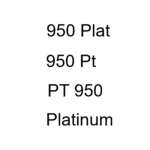
US 950 Hallmark variations.
History
Platinum was first mined and used in ancient Egypt. The Egyptians did have gold deposits of which some naturally contained heavy sands rich in platinum group metals. As such, platinum was trapped within some of their gold and they would have been aware of it. When smelting the gold, they would have seen small silver specks or silver grains which simply would not melt within the molten gold. It is assumed that they would have thought these silver grains to be electrum and they simply incorporated it into their gold, not that they could have separated it even if they wanted to, because they could not reach the required temperatures. The most famous example of its use dates from the 7th century BC, where it was used to create hieroglyphs on the Casket of Thebes, belonging to the princess and high-priestess Shepenupet II. In 1901, a French chemist named Marcellin Berthelot was examining the casket and had the hieroglyphs tested. They were found to be made of native platinum mixed with gold and iridium. The ancient Egyptians who made the casket more than likely believed that they were using electrum.
The La Tolita and Tumaco cultures from present-day Ecuador and Colombia were the first people to intentionally forge platinum. Although they did not have the ability to reach the temperature required to melt it, they did use a process called solid-state sintering. This process involved mixing native platinum grains with fine gold dust and heating them until the gold melted. At this temperature, both metals would begin to fuse together. Then while still hot, the smiths would hammer it which forced both metals to bond permanently. This process left them with a white coloured gold-platinum alloy that they could use to make jewellery and decorative objects. There is some archaeological evidence suggesting that these cultures were working with platinum as far back as 600 to 400 BC.
The first European mention of platinum came in 1557. When Julius Caesar Scaliger, an Italian-French scholar, was travelling through Central America. He writes about an unknown noble metal and states, “which no fire nor any Spanish artifice has yet been able to liquefy”.
In the late 1500s, the Spanish conquistadors did come across the metal while they were panning for gold. However, they saw it as worthless and a nuisance. They believed that it may have been unripened gold or immature silver and so they called it platina meaning “little silver” or “lesser silver”. They reportedly threw vast amounts of it back into the rivers.
In 1735, Antonio de Ulloa, a Spanish military officer, also encountered this unknown metal while he was travelling through Peru and Colombia. In 1748, on his return to Europe, he published a report on his findings which sparked huge curiosity within the scientific community. In 1751, Henrik Scheffer, a Swedish chemist, officially classified platinum as a distinct, precious chemical element. This was followed by Marc-Etienne Janety, a French goldsmith, who in 1772 was the first person to successfully melt platinum. He used highly toxic arsenic to lower platinum’s melting point. He used this method to make a number of personal items for King Louis XVI, including watch chains, buttons and sword hilts, with his most famous item being a sugar bowl for the king.
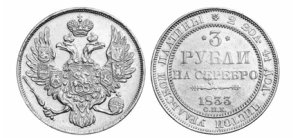 In 1819, massive deposits of platinum were discovered near Yekaterinburg in the Ural Mountains in Russia. At first, the miners did not know what metal it was, they kept finding strange, black grains, which they actually used as buckshot for hunting. After the metal and its true value was identified, extensive mining began in 1824. The deposits were so vast that the Russians decided to introduce the world’s first and only platinum currency. In 1828, they minted the first platinum coins in denominations of 3, 6, and 12 Rubles. These coins were minted and used until 1845, when it was decided to end their use. There were fears over the volatility of the platinum market and that people would melt down these coins if the price spiked. So the Russian government recalled them. By the early 1900s, Russia was producing about 95% of the world’s platinum.
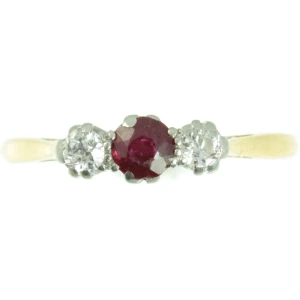
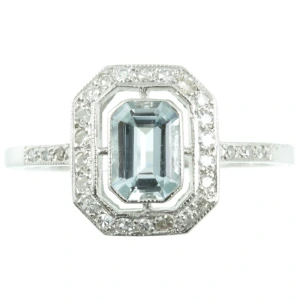
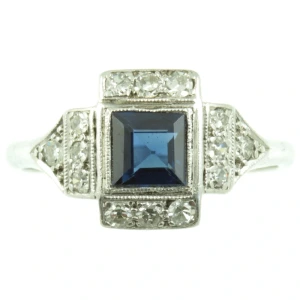
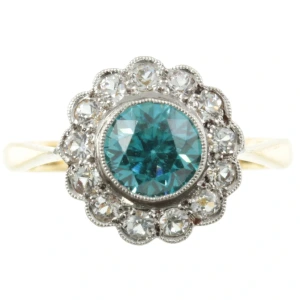
The single largest breakthrough in the history of this metal was the invention of the oxyhydrogen torch. In 1801, Robert Hare, a chemist from Philadelphia, invented the oxyhydrogen torch which was capable of exceeding 2,500°C. This was more than enough to melt platinum and it ended the reliance on using toxic arsenic to lower its melting point. This invention allowed Louis Cartier to develop the iridium-platinum alloy. This alloy containing 5% iridium and 95% platinum (Platinum 950) was incredibly strong, allowing him to create knife-edge settings while holding gemstones securely. This development revolutionised jewellery and introduced the Garland Style, which dominated the Belle Epoque and Edwardian eras. The Garland Style consisted of fine, delicate, lace-like jewellery. Since this alloy was incredibly strong, it allowed diamonds to be set in almost invisible settings. This metal also allowed for the first true white-on-white jewellery. Before this jewellers had to use silver-topped gold to try and brighten diamonds, but silver tarnishes and yellow gold was still used beneath it. Now for the first time, white diamonds could be set in a strong white metal and look as delicate as lace or embroidery. Platinum due to its strength and malleability also allowed for the use of milgrain work. Milgrain is a border of tiny beads and it became a dominant feature of Edwardian Jewellery and Art Deco Jewellery.
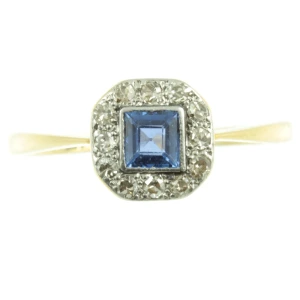
As the Art Deco Movement took over during the 1920s and 1930s, platinum remained the dominant metal used in jewellery. Its incredible strength allowed for sharp, geometric, open-work filigree designs. Since this metal was very expensive, white gold in 18ct and 14ct became a popular budget-friendly alternative, particularly for engagement rings. Platinum continued to dominate until 1941, when its use came to an abrupt end. This was due to WWII, when the United States and European countries restricted its use to the war effort only. It is for this reason that gold made a comeback during the 1940s. However, while restrictions were lifted after the war, its use remained subdued for decades. This was mainly due to the fact that consumers had gotten used to white gold and its lower price. As such platinum did not make a global resurgence until the 1990s.
Folklore
For most of history, platinum was an unknown metal and as such it does not have ancient folklore or mythology associated with it. However, its unique properties did inspire superstitious beliefs and spiritual associations in those people who did interact with it.
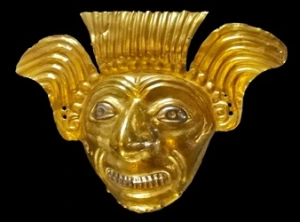 Both the La Tolita and Tumaco cultures were the first people to intentionally work with this metal. They believed that this metal was a physical manifestation of the cosmos and they associated it with the moon and the night sky. Their shamans used it to plate the eyes and teeth of their ritual masks and subsequently used it in their religious ceremonies.
The Spanish conquistadors came across this metal when they were panning for gold. They believed that it was unripened gold that had not been left long enough in the earth before they found it. They saw it as both a nuisance and a curse, they believed that the only way to deal with it was to throw it back into the river and so allow it time to fully ripen over the coming centuries.
As examples of this unknown metal reached Europe during the mid-1700s, the scientific community still held a certain amount of medieval alchemy beliefs. In medieval alchemy, there were seven metals which were recognised. Each of these metals was associated with a celestial body, for example, gold was linked to the sun, while silver was linked to the moon. Platinum disrupted this belief system, so alchemists called this metal: inficiate or “the hermaphrodite metal”. By this term they meant it was part moon and part sun.
As we move to more recent times, this metal’s folklore becomes more crystal/metal healing beliefs and symbolism. Platinum is associated with ultimate endurance, the highest quality, inner strength and elite status. This elite status is often referenced within the music industry, where an artist has achieved a “Platinum Record”.
Metallurgical Data
Metal Name: Platinum
- Metal Category: Precious metal / Noble metal / Platinum Group Metal.
- Metal Type: Non-Ferrous precious metal.
- Specific Alloy / Simulant Name: Platinum (950) / White Gold (simulant).
- Elemental Breakdown: 95% Platinum, 5% Ruthenium (Pt950).
- Fineness Value: 999, 950, 900, 850, 600, 585, 500
- Manufacturing Application: Fine jewellery, industrial applications.
- Magnetic Response: Paramagnetic (is weakly attracted to strong magnets).
- Oxidation / Patina State: Chemically Inert / Stain-like, matte patina.
- Underlying Core Base Metal: None.
- Wear Anomalies: Excellent wear resistance, micro-ploughing, 4 to 4.5 on the Mohs scale (Pure Platinum).
- Estimated Era: Antiquity to the present.
- Density: 21.45 g/cm³ (Pure Platinum).
- Melting Point: 1768°C (Pure Platinum).
- Boiling Point: 3825°C (Pure Platinum).
- Crystal Structure: Face-Centered Cubic (FCC).
- Electrical Conductivity: 9.43 MS/m (Pure Platinum).
- Thermal Conductivity: 71.6W/(m·K) (Pure Platinum).
For Researchers and Journalists
Recommended Citation (MLA) Format:
Hoyne, John. “Platinum: formation, purity grades, history and folklore.” Carus Jewellery, n.d., https://carusjewellery.com/platinum/.
You can also get in touch with Carusjewellery.com on Facebook , where you may leave any comments or questions you may have about this article.