
Alexandrite
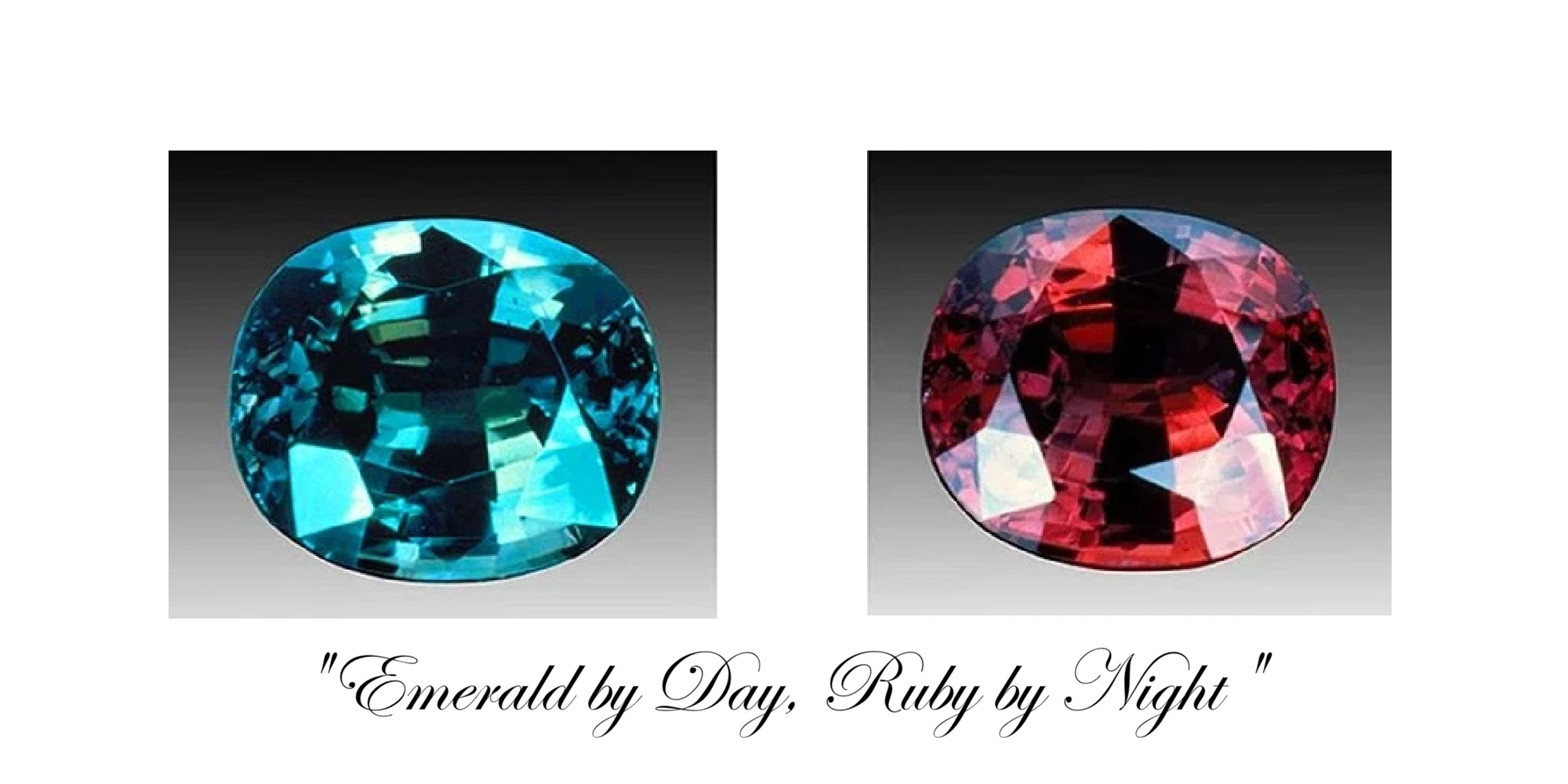
Alexandrite was named after the then future Czar of Russia, Alexander II, having been reportedly found on his birthday, the 17th of April 1834. This gemstone is a variety of Chrysoberyl and has a colour-changing ability from green to red. Which led this gemstone to frequently be called “Emerald by day, Ruby by night”. Alexandrite is one of the rarest and most prestigious gemstones in the world. During the Imperial age in Russia, this gemstone was considered a national treasure and only available within the royal court. As such during this period, the stone was essentially priceless. Since it was not sold outside of the royal court in Russia, availability in Europe during the Victorian Era was virtually non-existent. By the Edwardian Era and the Art Deco Era, a small amount was becoming available in Europe. Natural high-quality Alexandrite is still to the present day one of the most prestigious gemstones on the market and typically commands twice the price of Diamonds, if not more.
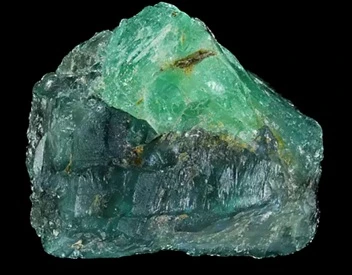 Formation: Alexandrite is composed of beryllium aluminium oxide, BeAl2O4 with trace amounts of chromium. It is the trace amount of chromium (less than 1%), that gives Alexandrite its “Emerald by day, Ruby by night” effect. Chromium ions replace a small portion of the aluminium ions within the crystal lattice during formation. These chromium ions absorb light in the yellow part of the spectrum. So in daylight, they allow blue-green wavelengths to pass through the crystal. While allowing red wavelengths to pass through the crystal when viewed under candlelight. Under international standards, Alexandrite must show a distinct colour change between green and red. Gemstones that only show a faint colour change are classified as “Colour-changing Chrysoberyl”. The reason Alexandrite is so rare is because, during its formation, beryllium and chromium need to be present in the host rock. These minerals are typically found in completely different rocks. Beryllium is typically found in pegmatite or felsic rock, while chromium is normally found in mafic rock. The formation process also requires the absence of silica, if silica is present, beryllium and chromium will form as Emerald. The formation process also requires extreme pressure and heat. While the primary host rock is mica schist, it can also form in granitic pegmatites and in dolomitic marbles.
Currently, the main countries producing Alexandrite are Brazil, India, Sri Lanka, Tanzania, Russia, Madagascar, and Zimbabwe. There are small amounts being produced in Myanmar, Mozambique, and in New Mexico.
Treatment: As a general rule, Alexandrite is not treated. This gemstone’s value lies with its colour-changing ability, which typically cannot be improved with treatment. Although having that said, there are a few treatments which can be applied primarily to improve clarity, but are rarely done.
- Oil/Resin: If a specimen has inclusions which reach the surface. Then it can be filled with an oil or resin which will improve its clarity.
- Heat Treatment: Very rarely done as it is considered largely ineffective.
Durability: Alexandrite has a hardness rating of 8.5 on the Mohs scale and toughness rating of excellent. Which makes it quite resistant to scratches and or chipping. As such it is suitable for everyday wear and overall is considered highly durable.
- Sunlight: Alexandrite is sunlight stable and it will not fade, nor will sunlight affect its colour-changing ability.
- Heat: This gemstone is not sensitive to normal heat or temperature changes.
- Chemicals: This gemstone is not sensitive to normal household chemicals or cleaning agents.
- Storage: Although this gemstone has an excellent hardness and toughness rating, it can scratch softer gemstones. So for that reason, it is recommended to store it in a separate compartment within your jewellery box or place it in a soft cloth pouch.
- Cleaning: The safest and most recommended way to clean your Alexandrite jewellery is with warm, soapy (mild) water and a soft toothbrush. Be careful when using the toothbrush so as not to catch the bristles in your jewellery settings, as this can dislodge the gemstone(s). The use of steam cleaners and ultrasonic cleaners is considered safe for this gemstone, unless it has been fracture-filled.
Imitation & Synthetic Alexandrite
In 1902, Auguste Verneuil perfected the flame fusion process (The Verneuil Method). This process produced the world’s first synthetic gemstones, specifically Sapphires and Rubies. The process involved using a high-temperature flame that melted powdered aluminium oxide in an oxyhydrogen flame, which then crystallised into synthetic corundum. To this process, vanadium was added to give synthetic Sapphire a colour-changing ability. These synthetic colour-changing Sapphires would change from a grey-blue to a purple-red. Although they were a Sapphire-based imitation, they were marketed as “Synthetic Alexandrite” and quite often simply sold as “Alexandrite”. These synthetic gemstones were often sold to tourists in places such as Alexandria in Egypt. This caused widespread confusion; even to the present day, people who come into possession of Alexandrite jewellery from the 1920s and the 1930s often think they have acquired a prestigious gemstone. Only to find out upon appraisal that it is in fact, a synthetic imitation.
Identification of these synthetic sapphires can be seen using a jeweller’s loupe. When inspecting the stone, look for curved growth lines and tiny gas bubbles within the stone’s structure. Neither of these will be present in a natural Alexandrite. Plus the colour change will not match that of a true Alexandrite.
In 1973, the Creative Crystals company, based in California, produced the first true synthetic Alexandrite. Their process involved dissolving the elements in a molten flux and allowing the crystals to grow over several months. Later on, the “pulled method” was developed by the Kyocera and the Allied Chemical company. Their method produced large, clean crystals. There were further developments during the 1980s in Russia with the “floating zone method”. This process produced high-quality crystals which looked very natural.
Identification of these modern synthetic Alexandrites is based on the fact that they are too perfect. Although they have the correct colour-changing ability, from green to red, they have no inclusions, which a natural specimen would have.
Meaning and Healing Properties
Alexandrite symbolises transformation, good luck and balance. This gemstone is often referred to as “Emerald by day, Ruby by night”, its colour-changing ability is believed to help the wearer with major life changes and personal growth. The stone is said to bring the wearer good fortune, prosperity and abundance. Due to its colour-changing ability, the stone was also said to bring balance between the physical world and the spiritual realm.
Historically in Russia, this gemstone symbolised royal status and national pride. Since it matched the colours of the imperial army. In the 19th century, Eliphas Levi who was a French occultist, credited the stone with the ability to strengthen the blood vessels. Other mystics have credited the stone with the ability to regenerate tissue, reduce inflammation, reduce stress particularly for those suffering from burnout and that it could cleanse the internal organs.
Chakra: Alexandrite is associated with the heart and crown chakras. Since this stone is green in daylight, it is associated with the heart chakra, helping to promote love, compassion, and emotional healing. Since this stone is red under candlelight, it is also associated with the crown chakra, which helps to promote spiritual connection.
Birthstone: Alexandrite is the modern birthstone for June. The traditional birthstone for June is Pearl, with Moonstone being an alternative birthstone for June.
Zodiac Astrology: Alexandrite is primarily associated with the star signs Gemini and Cancer. It is also linked with the star signs Virgo, Leo, Taurus, and Scorpio.
Wedding Anniversary: Alexandrite is an alternative gemstone gift for the 55th wedding anniversary, symbolising growth and adaptability. The traditional gemstone gift for the 55th wedding anniversary is Emerald.
History
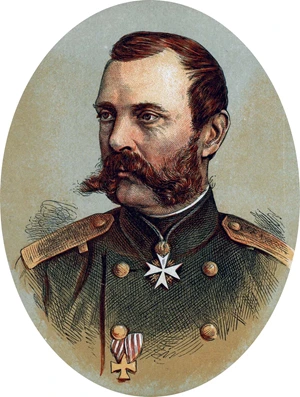 Alexandrite was discovered in the Ural Mountains in Russia in the early 1830s. It was reported as being found on April 17th in 1834, which was Alexander Nikolaevich Romanov’s 16th birthday, who was the then future Czar of Russia. It was said that a local peasant, who was a charcoal burner, discovered the gemstone in the Tokovaya river. While he was working under the direction of Yakov Vasilevich Kokovin. Kokovin at the time, was a manager at the Imperial Ekaterinburg Lapidary Works. Although some historians credit Kokovin with discovering the gemstone, his role in its discovery was overshadowed by a legal disgrace, which he was involved with later. It is Nils Gustaf Nordenskiold who is primarily credited with the discovery of Alexandrite. He was a Finnish mineralogist who first identified the gemstone as a colour-changing variety of Chrysoberyl and that it was not an Emerald. However, it was the Russian mineralogist Count Lev Alekseevich Perovskii who is credited with naming the gemstone. Count Lev Perovskii named the gemstone “Alexandrite” after Alexander Nikolaevich Romanov, the then future Czar and presented it to him on his 16th birthday, April 17th 1834.
At this time in Russia, the uniform of the Imperial army’s infantry was dark green with red collars and cuffs. Since this gemstone is green in daylight and red under candlelight, it was seen as representing the national military colours. As such it became a symbol of national and military pride and was a favourite gemstone for military leaders and the Russian Royal court. Also at this time in Russia, green was seen as a symbol of hope and red was seen as a symbol of power and status. This connection with green and red, further enhanced the gemstone’s symbolism of Russian Imperial power and resilience.
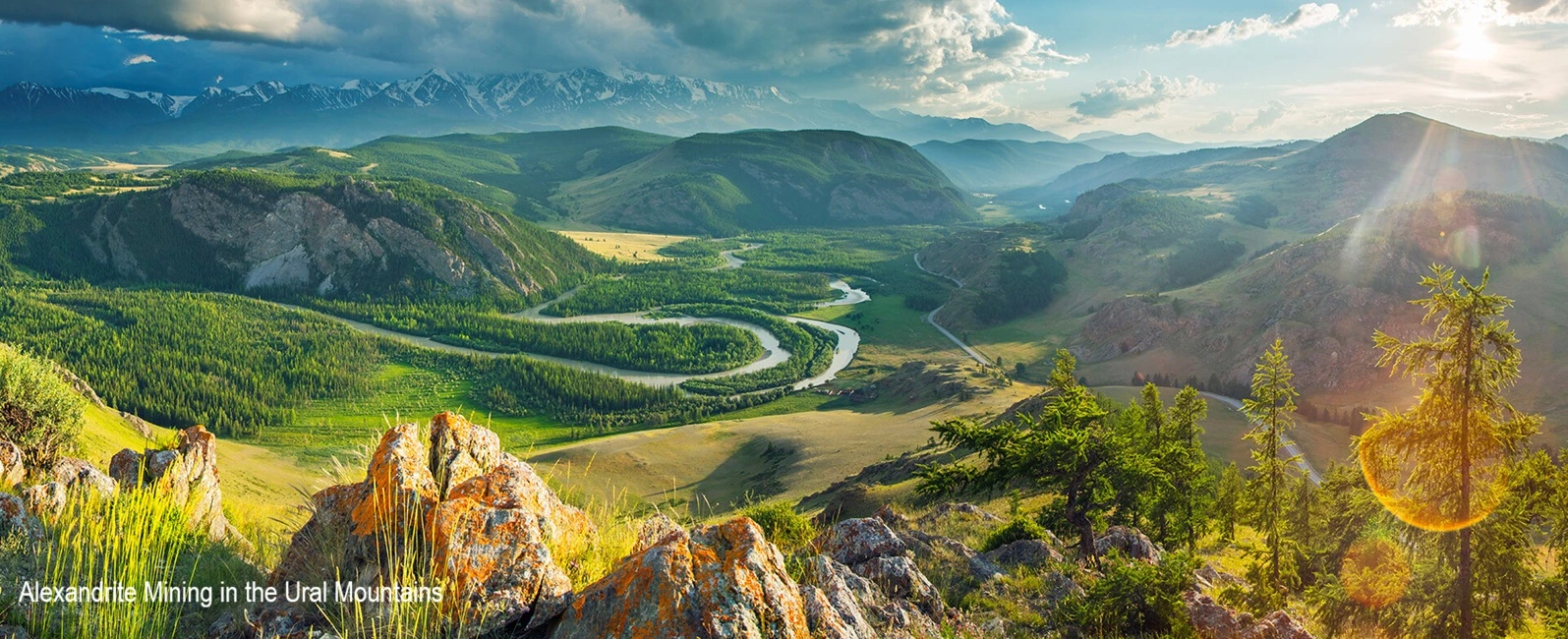
The mining of this gemstone in Russia took place in the Ural Mountains, typically within the Emerald mines. Since Alexandrite forms in the same geological conditions as Emerald. The Mariinskoje mine was the most significant deposit. During the late 19th century, this mine was one of the world’s largest producers of both Alexandrite and Emerald. However, by the early 20th century, deposits in the Urals were considered largely depleted. Mining does still continue in the Urals, but Alexandrite is typically found as a byproduct of Emerald mining, rather than being the target gemstone. Currently, the only significant mine producing the stone is the Mariinsky mine. This mine mainly produces beryl and emerald, with Alexandrite only accounting for a small amount of total output. Russian specimens are typically small in size, anything over 1 carat in weight is extremely rare. It is estimated that only a few stones over 1 carat are found each year. Russian Alexandrite is unique and unlike others found elsewhere. It has a sharp colour change, from deep green to a vivid raspberry red colour. It also has a blueish tint in daylight, making it the gold standard for collectors.
In the early 1900s, Alexandrite of a fine quality was found in Sri Lanka. In 1923, there was a significant deposit found in the Pelmadulla deposits of the Ratnapura district. The largest uncut Alexandrite ever found, weighing 1876 carats was unearthed in Sri Lanka. Also the largest faceted Alexandrite in the world came from Sri Lanka, weighing 65.08 carats and is currently on display in the Smithsonian Institution in Washington DC.
In the early 1930s, there were small finds in Western Australia but not enough to make it commercially viable. So large-scale mining never got established, but these areas are still popular today with hobbyists.
In 1987, there was a significant discovery at Hemetita in Minas Gerais in Brazil. This was the largest discovery since the original deposits were found in the Ural Mountains. Within weeks, this created a “Rush” and around 3,000 independent prospectors descended on the area. During its peak, the deposit yielded about 250,000 carats of Alexandrite. Some of which were as large as 30 carats in size and had exceptional colour change. However, the surface-level alluvial deposits were quickly depleted. Mining still continues there at present, but now at a deeper level and with smaller amounts being found.
In 1993, deposits were found in Tundura near lake Manyara in Tanzania. This deposit produces high-quality Alexandrite, which is a bluish-green and changes to a purple-red colour.
In 1998, discoveries were made in Madagascar and in the early 2000s, discoveries were made in India.
Currently, Brazil is the world’s largest producer and accounts for about 93% of the world’s total production.
Folklore
Since Alexandrite was only discovered recently in the Ural Mountains, the majority of the folklore surrounding it comes from 19th and 20th century Russia. This gemstone was reportedly found on the then future Czar’s 16th birthday, Alexander II. Also since its colours matched the imperial army, it was said to be a stone of good fortune and the national stone of Russia. This made it an instant symbol of patriotism and it became very popular within royal circles. In Russian folklore, the stone was believed to be a “Prophetic Stone” which could sharpen the wearer’s intuition and help the wearer to predict future events.The stone also became known as a royal talisman for protection. Alexander II wore an Alexandrite ring as a protective talisman and legend has it that on the day that he was assassinated in 1881, he forgot to wear the ring and so was without his protective talisman. After his assassination, the red colour of this gemstone under candlelight came to symbolise his spilt blood. So the stone transitioned to become a “mourning stone”. Russian aristocrats started pairing Alexandrite with two diamonds. The two diamonds were used to symbolise Alexander’s two most important achievements. Firstly, he abolished serfdom and secondly, he established a new legal system.
The association of the stone with mourning deepened during World War II and afterwards. Around this time synthetic colour-changing stones became widely available and since Alexandrite was a symbol of patriotism. It became very popular to wear these synthetic stones, which incidentally, were frequently sold simply as “Alexandrite”. Because these stones were worn by so many widows, the gemstone became known as the “widow’s stone” and belief took hold that the stone was a harbinger of misfortune. To counteract this widow’s curse, it was said that the gemstone should always be worn in pairs to prevent it from becoming “lonely” and so prevent the wearer from becoming a widow. Belief in this rule that it should always be worn in a pair, such as a pair of earrings, was so strong that the practice continues to the present day in Russia.
Interestingly, outside of Russia the gemstone was never associated with any negative superstitions. Rather, it was seen as a gemstone of fidelity, longevity and good fortune.
Famous Alexandrite Jewellery
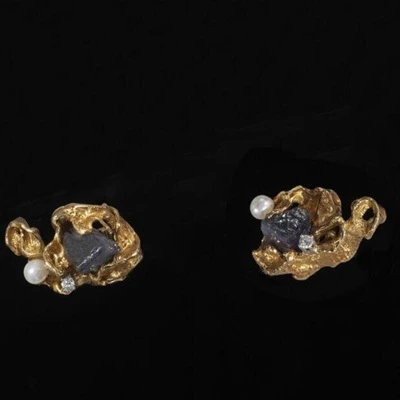
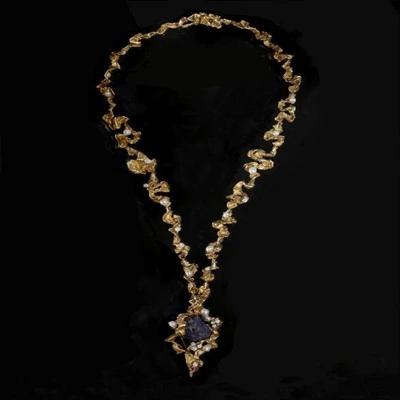
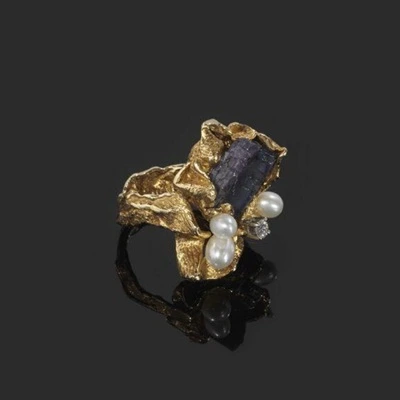
The above parure by Swiss jeweller Gilbert Albert is on display at V&A Museum.
Alexandrite Gemological Data
Colour: Golden-yellow, green-yellow, green, brownish, red.
Colour of Streak: White.
Mohs hardness: 8.5
Density: 3.70 – 3.78
Cleavage: Good.
Fracture: Weak conchoidal, uneven.
Crystal system: Orthorhombic, intergrown triplets.
Transparency: Transparent to opaque.
Chemical composition: BeAl2O4 beryllium aluminium oxide.
Refractive index: 1.746 – 1.763
Double refraction: +0.007 to +0.011
Pleochroism: Strong: red to yellow, yellow to light green, green.
Dispersion: 0.015.
Fluorescence: Normally none or weak, green.
For Researchers and Journalists
Recommended Citation (MLA) Format:
Hoyne, John. “Alexandrite: Formation, History, Meaning, and Folklore.” Carus Jewellery, n.d., https://carusjewellery.com/alexandrite/.
You can also get in touch with Carusjewellery.com on Facebook , where you may leave any comments or questions you may have about this article.