
Base Metals in Estate Jewellery
Base metals have been used in jewellery since prehistoric times. Long before people knew how to smelt ore, they used native copper, which was typically found in riverbeds, to make jewellery and decorative objects. Base metals are defined by their chemical properties, they oxidise, tarnish and corrode relatively easily. The majority of base metals used in jewellery are non-ferrous, which means they do not contain iron. This absence of iron, along with their atomic structure, allows these metals to be malleable.
Base metals have two important roles to play in jewellery. Firstly, precious metals such as gold, silver, and platinum are actually too soft in their pure form to use in jewellery. If they were used in their pure form, they would easily scratch or deform. They would also not have the structural strength required to hold gemstones securely in their settings. This issue with precious metals is overcome by adding base metals to form an alloy. This then has the structural strength and durability for everyday wear. For example, 18ct gold is an alloy made of 75% pure gold and 25% base metals. The base metal used in this alloy is primarily copper but silver and or zinc can also be added, depending on the colour required.
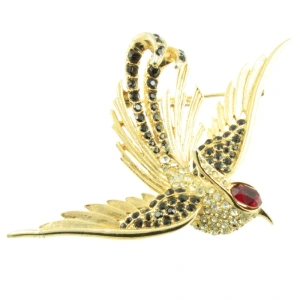
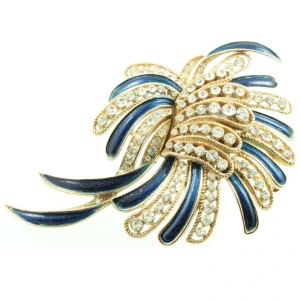
The second role base metals play in jewellery is in the creation of costume jewellery. Costume jewellery is vital in allowing new trends in jewellery to emerge. The cost of precious metals tends to steer fine jewellery designs to towards being classical and to have perceived safe themes and motifs. This is done to ensure they are saleable. The significantly lower cost of base metals removes this constraint. These base metals allow for extravagant and experimental designs which may or may not prove to be popular. This allows jewellery designs to advance and embrace cultural changes. It also allows complete creative freedom for the artisan jewellers.
Value retention is an interesting issue when it comes to jewellery made from base metals. Regardless of design and or age, fine jewellery always retains the intrinsic value of the precious metal from which it is made. Costume jewellery on the other hand has no intrinsic metal value. However, costume jewellery from famous designers such as Miriam Haskell, Trifari and Schiaparelli frequently command very high prices. This is based on the piece’s rarity, design and maker’s stamp.
Primary Metals Used
The vast majority of jewellery, both fine and costume jewellery is made from an alloy. The metals outlined below are the most commonly used to create alloys in combination with precious metals or each other to create base metal alloys.
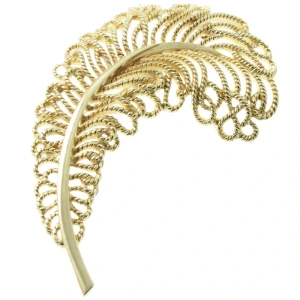
- Copper: This is a highly malleable, reddish metal and is widely used to create alloys. For example, it is used to harden gold and to create rose gold. It is also widely used as a base or core for many plated items.
- Zinc: This is mainly used to create alloys; its addition improves strength, colour and malleability. It can be added to gold to help neutralise its yellow colour, it can be mixed with copper to create brass and it is used as a component in nickel silver.
- Aluminium: This metal is mainly used to create large statement pieces, while remaining lightweight. It can also be anodised to allow it to absorb dyes.
- Iron: This is mainly used to create alloys such as mild steel, stainless steel and Berlin iron. Its most common use is in steel findings and pins. It is rarely added to precious metals other than for the creation of blue gold, which itself is quite rare.
- Tin: Tin is mainly used to create alloys such as bronze, pewter or pot metal. It is also widely used as a soldering agent. It can be used for plating over other base metals, although this is only occasionally done.
- Nickel: This metal is primarily used as a strengthening metal in creating alloys such as German Silver (nickel silver). It can be added to gold along with zinc to create bright white gold. Nickel can cause contact dermatitis in some people. For this reason, its use is strictly regulated.
- Lead: This metal is primarily added to alloys to increase workability and to add weight to jewellery, giving it a more substantial feel. An example of this is its use in pot metal. Lead is a toxic metal and as such its use is strictly regulated in jewellery.
- Antimony: Antimony is never used on its own, it is a brittle semi-metal and is used to add hardness to alloys. An example of its use would be in pewter and Britannia metal.
Gold Simulants
A gold simulant is any metal or alloy which is designed to look and feel like gold but which contains no gold. Gold simulants were created to offer consumers a realistic substitute for gold at an affordable price. Brass is the oldest and most widely used gold simulant in history. The ancient Romans actually used brass as a currency for nearly 300 years from 23 BC to 270 AD. These brass coins were called the sestertius and the dupondius and were used throughout the Roman Empire. During the Renaissance period, a brass alloy called latten was widely used across Europe for jewellery and decorative objects. Since brass was so widely used and it was explicitly used to trick a person into thinking it was gold at a glance. Words like “brazen” or “brassy” started appearing in the English language to describe someone or something that was bold or shameless, like brass pretending to be gold. However, since industrial brass was too yellow and tarnished too quickly, it drove the innovation of more refined gold simulants.
- Prince’s Metal: Also called Prince Rupert’s Metal. This brass alloy is composed of 75% copper and 25% zinc. It was invented in 1680, by Prince Rupert of the Rhine, who was a German-British officer and scientist. He was also a founding member of the Royal Society of London. This alloy was formulated to mimic the colour and lustre of gold. It became quite popular and was considered the height of fashion at the Royal Court of King Charles II. It was widely used in jewellery and is credited with introducing the concept of faux-gold jewellery and so laid the foundation of modern costume jewellery. Its use declined with the invention of pinchbeck, which was a superior brass alloy.
- Pinchbeck: Pinchbeck is composed of approximately 83% to 89% copper and 11% to 17% zinc. This alloy closely matched the weight, colour and lustre of 18ct gold. Pinchbeck was highly malleable and was very slow to tarnish. This alloy was invented in 1720 by Christopher Pinchbeck, who was a watchmaker in London. Pinchbeck proved to be very popular in Georgian Jewellery. Wealthy individuals would actually have replicas of their jewellery made in pinchbeck, for use while they were travelling, as highway robbery was a common occurrence. Pinchbeck remained popular until the invention of electroplating in 1840, after which its use declined. Today, genuine Georgian Pinchbeck Jewellery is highly sought after by collectors.
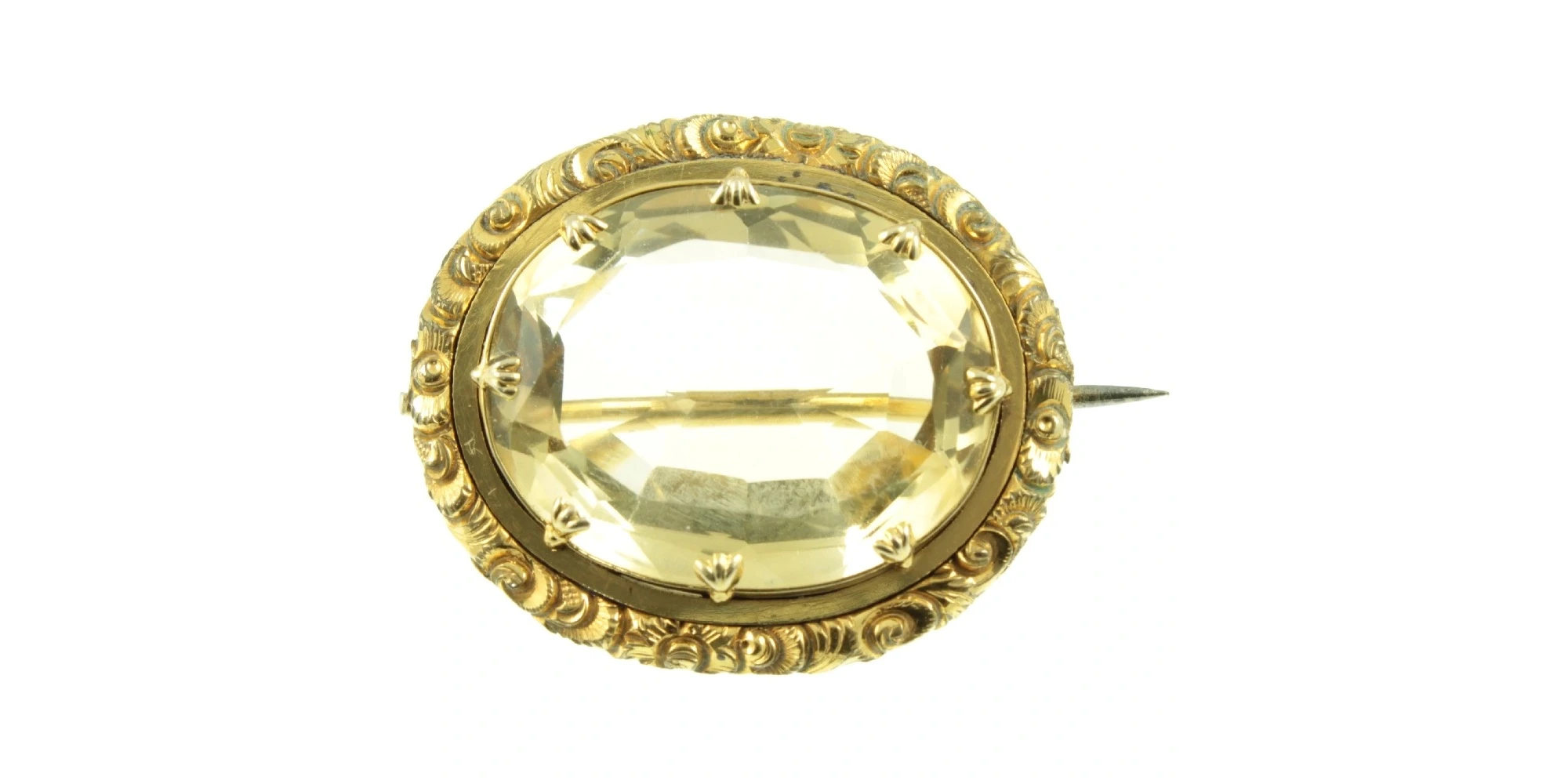
- Tombac: Also spelled, Tombak, it is composed of 70% to 92% copper and 8% to 30% zinc. Historically, trace amounts of tin or arsenic were also added to improve its lustre and structural strength. Copper and zinc alloys were known about since antiquity, but it was European metallurgists who perfected tombac in the mid-1700s. It was very popular and used for a wide variety of everyday goods such as buttons, shoe buckles, and watch cases, along with jewellery. In Victorian Jewellery, Bohemian Garnets became all the rage and tombac was widely used to mount those tightly cluster-set garnets. Tombac has a distinct, warm reddish-gold or golden-bronze colour and so complemented garnets beautifully. Tombac has exceptional workability and was an ideal base for enamelling. It is also highly receptive to fire-gilding (amalgam gilding), allowing it to be easily gold-plated. Its exceptional workability also allowed it to be hammered into ultra-thin foils called “Dutch Metal” and so it was an excellent gold leaf substitute. Tombac declined in use from the late 19th century and was almost entirely phased out by the 1950s. However, it is still used today in some industrial applications.
- Oreide (French Gold): This alloy is composed of 80% to 90% copper and 10% to 15% zinc, there was also chemical fluxes added: magnesia, ammonium chloride, and crude argol. It was these chemical fluxes which helped to prevent tarnishing from occurring as quickly as it otherwise would have. It was developed in Paris by chemists M. Firmin Maratray and Jean-Amand Manger during the 1850s, as a gold simulant for use in costume jewellery, pocket watches and other decorative objects. It was very popular in the late 1860s and 1870s, particularly in watches which were marketed as “Oreide Gold Watches”. Oreide’s use began to decline from the late 1880s onwards and was largely considered obsolete by the 1910s. This was mainly due to the invention of electroplating and rolled gold.
Gold-Covered Metals
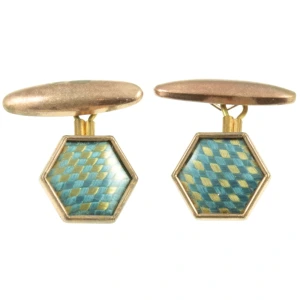
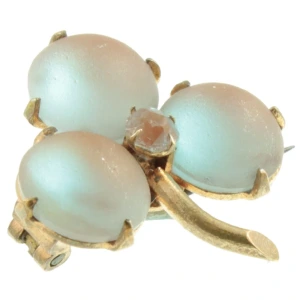
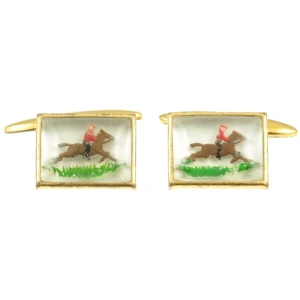
Gold-covered metals are created by taking a non-gold base such as brass, copper, silver or nickel silver and coating it in a layer of gold. This process allows the strength required to create large and intricate pieces without the need to use large amounts of gold. While at the same time enjoying the benefits of real gold’s lustre and anti-tarnishing properties, at a fraction of the cost of solid gold.
- Fire Gilding: Also called mercury gilding or amalgam gilding. Fire gilding was invented by the Chinese around the 4th century BC to overcome issues with earlier leaf and cladding methods. The process involves mixing gold dust with liquid mercury to create a paste. This paste is then brushed onto the surface of the object to be gilded. The object is then placed over an open fire and the intense heat vaporises the mercury into toxic white clouds. The gold is then left behind and becomes fused to the base metal. The result was a permanently fused layer of gold, that would not chip or flake off, unlike earlier leaf or cladding methods. This process was used for thousands of years and was not phased out until the invention of electroplating in 1840.
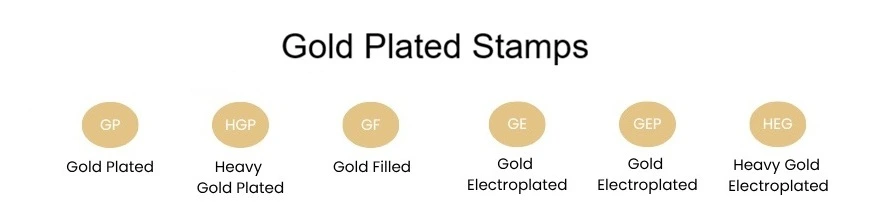
- Rolled Gold: The process to create rolled gold involves fusing a thick layer of gold to one side or both sides of a base metal and rolling it. This process evolved directly from the invention of Old Sheffield Plate, in 1743. In 1817, John Turner patented his technique for fusing a layer of gold to a base metal. The term “rolled gold” is used when the total gold content is less than 5%. Rolled gold is typically 1% to 2.5% (1/40th) of the object’s total weight and it has an estimated lifespan of 5 to 15 years of use before wear would begin to show the underlying base metal. Rolled gold was mostly used in the UK and Europe.
Gold-filled is very similar to rolled gold in how it is produced. The main difference is that gold-filled must contain a minimum of 5% (1/20th) real gold by overall weight. This thicker layer of gold had an estimated lifespan of 10 to 30 years of use before wear would begin to show the underlying base metal. Gold-filled was mostly used in America. - Gold Plate (Electroplating): In 1805, Luigi Valentino Brugnatelli, an Italian chemist, invented electroplating. Unfortunately, Brugnatelli’s work was suppressed by Emperor Napoleon Bonaparte, as he feared that electroplating would be used to create high-quality counterfeit gold coins. As a result, electroplating would not resurface for decades.
In 1840, John Wright, a medical student in Birmingham, refined the process by using potassium cyanide as the electrolyte (the liquid bath). This allowed gold to bond smoothly, brightly and permanently to the base metal. He patented his invention and it was subsequently bought by George and Henry Elkington, who combined it with their own patents. The Elkingtons then went on to open huge factories and they produced vast quantities of gold-plated items. These items were hugely popular and completely changed Victorian Jewellery. Now for the first time, high-quality gold-plated jewellery was widely available and affordable.
Today, electroplating is still widely used and it has been refined to be safer. The original potassium cyanide has been replaced with safer acid-based and alkaline gold solutions. There are also strict regulations in place governing the minimum thickness allowed, which is 0.5 microns.
White Metal and Silver Alternatives
White metal and silver alternatives are any metal or metal alloy which is a bright and silvery colour and does not contain a precious metal. These were typically created to offer consumers a more affordable alternative to precious metals.
- Pewter: This alloy is composed mostly of tin with the addition of copper, lead was also oftentimes added to the mix historically, but modern pewter is now lead-free. Pewter has a very long history, with the earliest known pewter objects found in an Egyptian tomb dating from 1450 BC. Pewter started to be regulated during the 14th century, when medieval guilds limited the amount of lead which could be added. During the 15th to 18th centuries, pewter was very popular and was widely used in both jewellery and as tableware. Its use went into decline towards the end of the 18th century, this was as a result of the rise in popularity of cheap ceramics and also because of the toxicity of pewter. People disliked pewter as tableware because it caused food to have a metallic taste. It also looked dull when compared to bright new porcelain plates.
- Britannia Metal: This alloy is essentially a refined version of pewter, with the lead removed. Britannia metal is composed mostly of tin (about 92% to 93%), with the addition of antimony and copper. The tin gave the metal its bright, silvery colour and malleability. Antimony is the primary hardening agent which allows it to be rolled into sheets. The copper is a secondary hardening agent which increases durability and ductility. It was developed by James Vickers in 1769 in Sheffield, England. It was originally marketed under the name “Vicker’s White Metal”. Britannia metal gave pewter a new lease of life, before it pewter was in decline. The removal of lead from the mix gave the metal a bright, silvery lustre and eliminated the metallic taste which pewter gave food. When electroplating was invented in 1840, pretty much all Britannia metal was silver-plated from then onwards. Unplated Britannia metal sharply declined in popularity. However, with the invention of stainless steel in 1913, both pewter and Britannia metal became obsolete.
- Paktong: Also called Chinese nickel silver or white copper. Paktong is composed of copper, nickel and zinc. It was invented in ancient China and was made from naturally occurring ores that already contained copper and nickel. The Chinese smiths then added zinc to improve its workability. Paktong contains no silver, but can be polished to a mirror finish and looks just like sterling silver. It does tarnish but much slower than silver. It was imported into Europe in vast quantities during the late 16th and 17th centuries. It was very popular because it was harder than silver, slower to tarnish and had excellent heat resistance. Imported paktong began to decline in the early 1800s, when its composition became known and so manufacturing of it began in Germany under various different names, such as German Silver or Alpacca.
- Nickel Silver: Also known as German Silver or Alpacca. Nickel silver is the man-made version of paktong, which is a naturally occurring alloy. Once the chemical formula for paktong was known, it was standardised to be 60% copper, 20% nickel, and 20% zinc. The Germans were the first to start manufacturing nickel silver, which they marketed as “German Silver” from the 1800s onwards. It was widely used in costume jewellery, shoe buckles and pocket watches in the Victorian era. It was also very popular during the Art Deco period, as it could be polished to a mirror finish and beautifully complemented the geometric designs of this period.
| Metal Alloy | Most Common Stamps |
|---|---|
| Pewter | Crowned Rose | Crowned X | 95% | 95 | CT 95 | M95 | PEWTER |
| Britannia Metal | BRITANNIA | EPBM (electroplated Britannia metal). |
| Paktong | Normally unmarked | 点銅 (Diăntóng) (sometimes used). |
| Nickel Silver | GERMAN SILVER | NICKEL SILVER | ALPACCA | ALPACA | EPNS (electroplated nickel silver). |
Industrial & Novelty Base Metals
These metals were not so much intended to simulate precious metals but were chosen for their unique properties. Stainless steel was prized for its durability and its resistance to corrosion. Aluminium was prized for its ultra-light weight and non-tarnishing. While pot metal was a cheap metal perfect for costume jewellery.
- Aluminium: When aluminium was first isolated in the 1820s, it was so rare that it was actually classed as a precious metal. During the 1850s, aluminium was approximately double the value of gold. From the 1820s to the 1880s, aluminium held a prestigious and elitist status. Emperor Napoleon famously had aluminium cutlery, which he reserved for his most honoured guests, while lesser guests were given gold cutlery to use. He also had a baby rattle made of aluminium and gold for his son. However, aluminium’s elitist status was to be short-lived. In 1886, the invention of the Hall-Heroult process allowed aluminium to be mass-produced very cheaply. This invention caused aluminium’s value to collapse by over 95% and it was no longer classified as a precious metal.
Following its collapse in value, it was used to create some jewellery during the Victorian Era. It would typically be darkened for mourning brooches, lockets and long guard chains. Aluminium was also a popular metal used in World War I “Trench Art”. Soldiers would pass their free-time carving or fashioning keepsakes from scrap metal they found. Today, Trench Art is highly sought after by collectors.
Aluminium’s peak popularity in jewellery was during the 1950s and 1960s. After World War II, jewellery trends moved towards “chunky” jewellery. Large panel bracelets, chunky earrings and huge statement piece necklaces were all the fashion. Anodised aluminium facilitated this trend perfectly. Anodised aluminium, also called Eloxal, is aluminium which has been treated in an electrochemical bath that alters its surface layer. It can be produced in virtually any colour and the process permanently locks in a highly reflective finish, that will not tarnish or fade. Anodised aluminium allowed for the creation of massive oversized jewellery, that was as light as a feather to wear. - Pot Metal: Also called monkey metal. Pot metal is a novelty base metal and the general term used to describe cheap, low-melting-point metal alloys. It was made from factory scraps, typically zinc, lead, tin and copper. These scraps were all placed in a melting pot together, hence the name “pot metal”. It became widely used from the late 19th century onwards and reached its peak popularity during the Great Depression (1929 – 1941).
Its main use was in the manufacturing of toys, car parts and costume jewellery. Famous costume jewellery houses such as Trifari, Coro and Eisenberg widely used pot metal in their jewellery. In its raw state, pot metal is a dull grey colour. So it was nearly always electroplated with gold, silver or rhodium. It could also have black enamel or lacquer applied to it, in a process called Japanning.
During World War II, governments placed restrictions on metals such as copper, nickel and zinc. As a result of these restrictions, the production of pot metal virtually ceased. After the war, when restrictions were lifted, pot metal was once again produced. However, the rise in plastics and the advancements in more stable die-cast alloys led to pot metal’s decline. By the mid-1950s, production of pot metal had all but ceased. - Stainless Steel: In 1913, Harry Brearley invented stainless steel, while he was researching and experimenting with steel alloys to create rustless gun barrels. Once stainless steel became commercially available, Avant-Garde designers in Europe started using it in their jewellery designs. This new steel complemented Art Deco designs perfectly, with its sleek, silvery look and industrial background. However, stainless steel is exceptionally hard and as such jewellers did not have the machinery required to mass produce jewellery from it, which kept it as a niche material. This was to change due to precious metal restrictions in World War II. Jewellers turned to stainless steel more and more, as it caught the public’s imagination, with millions of soldiers being issued stainless steel dog tags and robust military watches. This cultural shift firmly secured stainless steel’s use in both watches and jewellery. A position it still enjoys to the present day.
| Metal Alloy | Most Common Stamps |
|---|---|
| Aluminium | ALUMINIUM or ALUMINUM | ALU |
| Pot Metal | Normally unmarked for metal type, typically maker’s mark only, can have patent numbers. |
| Stainless Steel | STAINLESS STEEL or STAINLESS | 316L (surgical stainless steel) | S.S | SST | SS | STEEL |
Non-Simulants
Non-simulants are the metals used in jewellery that are not intended to simulate precious metals. Two of the most commonly used base metals in this category are copper and Berlin Iron.
- Copper: This was the very first metal to be worked by early people and has a history dating back over 10,000 years. Stone Age people would have originally cold worked “native copper” which they found, into basic jewellery. With the invention of smelting copper and advances in metallurgy, copper alloys such as brass became widely used in jewellery. From these alloys jewellery such as heavy torcs, bracelets and brooches were commonly made and were very popular in Roman and Celtic times. Both copper and copper alloys jewellery continued to be widely used throughout the Middle-Ages and beyond as a cheap alternative to precious metals for ordinary people. Who not only couldn’t afford precious metals but were prohibited from wearing them under sumptuary laws.
Copper jewellery saw a resurgence in its popularity during the 1950s and the 1960s, due to wartime restrictions on precious metals. Companies like the Bell Trading Post produced vast amounts of cheap copper jewellery during these decades. Today, copper is a cornerstone of precious metal alloys. It is also widely used in both artisanal jewellery and in therapeutic jewellery, where it is believed to help relieve arthritis stiffness. - Berlin Iron: In 1790, Berlin Iron was invented at the Gleiwitz Foundry in Silesia, Prussia. Its use in jewellery began in 1804, with the establishment of the Royal Berlin Foundry. The process involved creating very precise and detailed mouldings in wax. These wax moulds were then transferred to fine sand and pressed into it. Molten iron was then poured into the sand mould and finished by hand when cooled. The items were then finished with a matt black lacquer to prevent rusting. This black lacquer was made from linseed oil and soot.
Berlin Iron jewellery saw its peak in popularity during the Prussian War of Liberation against Napoleon (1813 – 1814). During this war, the Prussian Royal Family asked people to hand in their gold and silver jewellery to help fund the war. When people did hand in their jewellery, they were given Berlin Iron jewellery, which was often inscribed with phrases such as “I gave gold for iron” or “for the welfare of our country”. The wearing of this Berlin Iron jewellery became symbolic of patriotism and quickly became a status symbol. Its popularity did continue after the war, however, by the mid-1800s it was in decline. It was featured in the Great Exhibition of London in 1851, but production ceased in the 1860s. This was mainly due to the fact that it was very susceptible to rust. The pieces which have survived are highly sought after today by collectors.
| Metal Alloy | Most Common Stamps |
|---|---|
| Copper | COPPER | GENUINE COPPER | Trade name | Maker’s mark |
| Berlin Iron | I Gave Gold For Iron | For The Good of The Fatherland | Foundry Name |
Gemstone Simulants
A gemstone simulant is a man-made or natural material which is intended to look like a real gemstone. In Estate Jewellery, the two most common gemstone simulants are cut steel and pyrite.
- Cut Steel: This base metal jewellery was produced by faceting tiny steel studs and then riveting them into a brass or silver backplate. It was designed to imitate diamond jewellery, on close inspection, it was obvious that they were not diamonds but nevertheless they made a significant impact when worn and viewed under candlelight. Some of the finer examples of cut steel jewellery are just as elegant and carefully constructed as gemstone jewellery of their time. Cut steel can be traced as far back as the 16th century, however, it wasn’t until the mid-18th century that large amounts of it were being produced in England and France. In England, the cut steel industry started in Woodstock in Oxfordshire before largely moving to Soho near Birmingham from the 1760s onwards. Cut steel was used to create a wide variety of items, along with jewellery, including chatelaines, shoe buckles and buttons. It reached the height of its popularity during the late 18th century, when it was used in elaborate pieces, full jewellery suites and in tiaras. However, by the early 19th century, it was declining in popularity. This led manufacturers to drop the quality of cut steel. They moved away from hand-riveting individual studs to machine-stamping. They also reduced the number of facets per stud, from fifteen down to five. This of course reduced its signature brilliance and actually hastened its decline. Production of cut steel had completely ceased by the 1930s.
The one main disadvantage of cut steel is its susceptibility to rust. If a piece does get rusted, it is unsightly and very difficult to remove. Cut steel jewellery which has survived intact, particularly from the 18th century, is highly sought after by collectors and will typically command a significant price. - Pyrite: Pyrite is a mineral which can be faceted to imitate diamonds. Before 1845, both marcasite and pyrite were classed as the same mineral. Marcasite has the same chemical composition as pyrite but its structure is brittle. So for that reason, pyrite has always been used. When the two minerals could be distinguished, it was decided to keep the name “Marcasite” for marketing purposes.
Pyrite has been used in jewellery since antiquity, the ancient Egyptians used it as a protective talisman. The Romans also used it as a talisman, as well as widely using it in earrings, rings and pins.
Pyrite jewellery reached its height in popularity during the Victorian Era. Following the death of Prince Albert in 1861, trends turned to mourning jewellery. The dark and sombre glint of pyrite jewellery became very popular and remained so for decades.
During the Art Deco period, pyrite jewellery experienced a massive revival. Its sharp, metallic and reflective qualities worked beautifully with the geometric lines and industrial themes of Art Deco Jewellery.
Today, pyrite jewellery (marcasite Jewellery) continues to be very popular, particularly in sterling silver jewellery and in costume jewellery.
Historical Metal Alloy Reference Guide
| Metal Alloy | Composition | Peak Popularity | Notes |
|---|---|---|---|
| Pinchbeck | 83-89% copper, 11-17% zinc. | Georgian Era | Golden colour with reddish hues, excellent tarnish resistance, soft wearing. |
| Tombak | 70-92% copper, 8-30% zinc. | Victorian Era | Reddish-Gold colour, popular for Bohemian Garnet Jewellery. |
| Nickel silver | 60% copper, 20% nickel, 20% zinc. | Victorian Era to the 1990s | Silver-white colour, contains no silver, excellent base for electroplating. |
| Rolled gold | Base metal clad in gold. | Victorian Era to the 1950s | Less than 5% gold is rolled gold, 5% or more gold is gold-filled. |
| Berlin iron | Cast iron, black lacquer. | Georgian and Early Victorian Eras | Delicate filigree and scrollwork, very susceptible to rust. |
| Cut steel | Steel studs on base metal backplate. | Georgian and Early Victorian Eras | Faceted steel studs to mimic diamond jewellery, very susceptible to rust. |
For Researchers and Journalists
Recommended Citation (MLA) Format:
Hoyne, John. “Base Metals in Estate Jewellery.” Carus Jewellery, n.d., https://carusjewellery.com/base-metals/.
You can also get in touch with Carusjewellery.com on Facebook , where you may leave any comments or questions you may have about this article.