
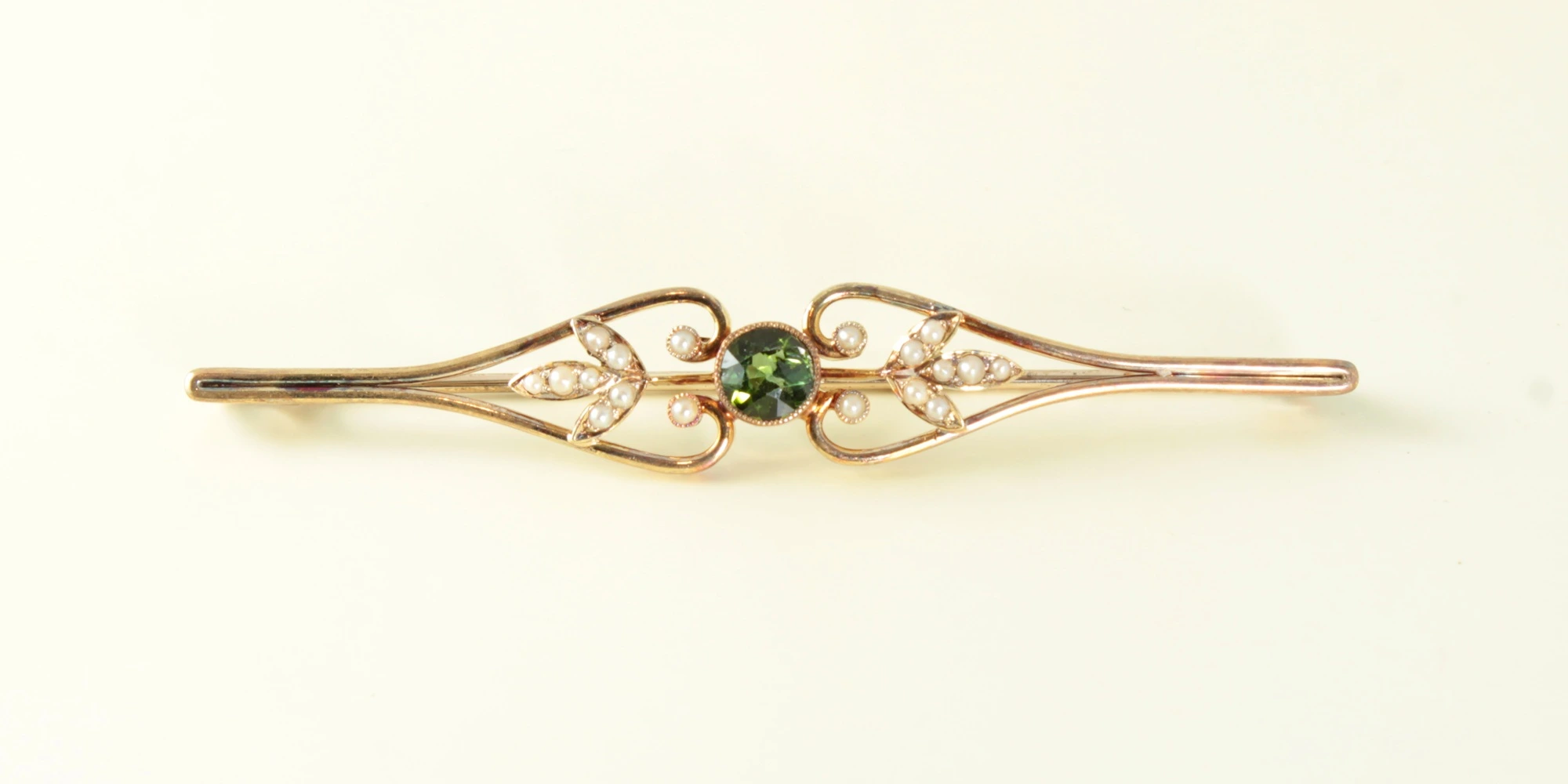
Tourmaline
The name Tourmaline is derived from the Sinhalese word “Turamali”, meaning “stone with mixed colours”. The gemstone merchants in Sri Lanka used this term to describe gems of mixed colours. When in 1703, Dutch merchants from the East India Company started importing these multi-coloured gems, they also adopted the name. Since this gemstone comes in almost every colour, the Dutch merchants noticed one unique property of the stone which helped to identify it from other gemstones. Tourmaline has pyroelectric properties, which is the ability to attract dust and ash, when heated or rubbed. Although they did not understand this property, they knew about it and used it to pull ash from their long tobacco pipes and so they called this gemstone “Aschentrekker” meaning “ash puller”, before it was officially named Tourmaline.
Tourmaline refers to a complex crystalline silicate mineral group, which contains related species and varieties. There are over 30 recognised species within this mineral group, outlined below are 12 of the most common varieties.
Tourmaline Varieties
- Achroite: This is a colourless or almost colourless variety of Elbaite and is quite rare. Chemical formula: Na(Li1.5Al1.5)Al6Si6O18(BO3)3(OH)3OH.
- Dravite: This variety is rich in magnesium and is typically brown, yellowish-brown or nearly black. Chemical formula: NaMg3Al6Si6O18(BO3)3(OH)3OH.
- Indicolite: This is a light to dark blue variety of Elbaite, frequently containing a greenish tint. It gets its colouration from trace amounts of iron. Chemical formula: Na(Li,Al)3Al6(Si6O18)(BO3)3(OH)4.
- Rubellite: This is a pink to red coloured variety of Elbaite, it gets its colour from trace amounts of manganese. Chemical formula: Na(Li,Al)3Al6(Si6O18)(BO3)3(OH)4.
- Schorl: This variety is rich in iron and is typically black and opaque. This is the most common variety, representing about 95% of all natural Tourmaline. Chemical formula: NaFe2+3Al6Si6O18(BO3)3(OH)3OH.
- Siberite: This is a red-violet to blue-voilet variety of Elbaite, it gets its colour from trace amounts of manganese (red) and iron (blue). Chemical formula: Na(Li,Al)3Al6(Si6O18)(BO3)3(OH)4.
- Verdelite: This is a green variety of Elbaite, it gets its colour from trace amounts of iron or titanium. Chemical formula: Na(Li,Al)3Al6(Si6O18)(BO3)3(OH)4.
- Buergerite: This variety is rich in iron and is typically dark brown to black. Chemical formula: NaFe3+3Al6Si6O18(BO3)3O3F.
- Elbaite: This variety is rich in lithium and is famous for producing nearly all the multicoloured gemstones within the Tourmaline group of minerals. Chemical formula: Na(Li1.5Al1.5)Al6Si6O18(BO3)3(OH)3OH.
- Liddicoatite: This variety is rich in calcium and is most famous for its colour zoning and its complex triangular patterns. Chemical formula: Ca(Li2Al)Al6Si6O18(BO3)3(OH)3F.
- Tsilaisite: This variety is rich in manganese and is quite rare, typically a yellow or greenish-yellow colour. Chemical formula: NaMn2+3Al6Si6O18(BO3)3(OH)3OH.
- Uvite: This variety is rich in calcium and magnesium and is typically a green or brown colour but can form in other colours. Chemical formula: CaMg3(Al5Mg)Si6O18(BO3)3(OH)3OH.
Formation
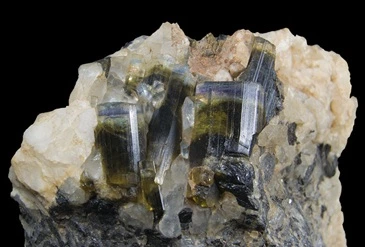 Tourmaline requires boron and silica-rich environments to form, which is typically found in granite pegmatites and in metamorphic rocks. The process begins as magma cools, elements such as boron, lithium, fluorine and other trace elements become highly concentrated within hot fluids. These hot mineral-rich fluids then collect or pool in fissures and cavities within the host rock. Where crystals will begin to slowly grow. This same process can occur in hydrothermal veins, when hot mineral-rich fluids are brought into cavities within the host rock, allowing the growth of massive crystals. Tourmaline can also form in metamorphic rock such as marble. During metamorphism, boron is introduced by its presence in sedimentary clay or from fluids. This then triggers the recrystallisation of the minerals into Tourmaline.
Tourmaline’s crystal lattice is large and complex, which can allow different elements to transition into its Y and Z structural sites. These elements, like iron, manganese, and lithium etc then absorb specific wavelengths of light. As a result, only the remaining wavelengths are able to pass through the crystal. For example, if an element absorbs all the red and yellow wavelengths, then only blue or green wavelengths will be able to pass through and so creating a blue or green gemstone. It is for this reason that Tourmaline comes in almost every colour possible.
Tourmaline is a pyroelectric mineral, which means that it has the ability to attract dust and small particles when it is heated or rubbed. As the gemstone is heated the atoms within it shift, causing one end to become positively charged and the other end to become negatively charged, producing static electricity. This property has many important uses in industrial applications, such as in temperature and pressure gauges. It is also used in air purification systems to attract and remove dust from the air.
Currently, Brazil is the world’s largest producer of Tourmaline. Other significant deposits are located in Mozambique, Afghanistan, Tanzania, Nigeria, and the United States.
Treatment
The vast majority of Tourmaline on the market has been treated and treatment is considered a standard industry practice. Having that said untreated specimens will always command a premium price.
- Heat Treatment: This process involves heating the gemstones to around 700°C, which will lighten dark stones or intensify pale coloured stones. It can also remove any brown tints the stone may have. This treatment is stable and permanent.
- Irradiation: This process involves exposing the gemstone to radiation, typically used to intensify the colour of pale pink or red stones. It can also be used to change yellow stones to orange. While this treatment is generally considered stable, these gemstones are sensitive to UV rays and heat, which can cause them to fade.
- Oil/Resin: This process involves filling any surface-reaching inclusions with oil or resin. This treatment will improve the stone’s clarity. It should be noted that this treatment is not permanent.
- Acid: This process involves using hydrofluoric acid or hydrochloric acid to remove dark stains from the stone. This treatment is typically followed by filling with a clear resin.
Durability
Tourmaline has a hardness rating of 7 to 7.5 on the Mohs scale. This makes it suitable for everyday wear. Although it has no cleavage, meaning there is not a plane of weakness within its structure, this gemstone can be brittle. As a result, it can chip or fracture from impacts.
- Sunlight: This gemstone is generally considered sunlight stable. However, irradiated stones are sensitive to prolonged exposure to UV rays, which will cause them to fade in colour.
- Heat: This gemstone is sensitive to thermal shock, sudden, rapid changes in temperature can cause it to fracture. Also very high temperatures can cause a colour change.
- Chemicals: This gemstone is considered resistant to mild household chemicals but it can be damaged by harsh chemicals such as bleach.
- Cleaning: The safest and most recommended way to clean your Tourmaline jewellery is with warm, soapy (mild) water and a soft toothbrush. Use the toothbrush gently to avoid catching the bristles in the jewellery settings, which can dislodge the gemstones. Since this gemstone is sensitive to thermal shock, ultrasonic and steam cleaners should not be used.
- Storage: Although this gemstone has an excellent hardness rating, it can still be scratched by harder gemstones such as Diamond. While at the same time, it can scratch softer gemstones such as Pearl. For this reason, it always recommended to store it in a separate compartment within your jewellery box or to place it in a soft cloth pouch.
Meaning and Healing Properties
Tourmaline symbolises protection, emotional balance and healing. Historically, the stone was seen as a powerful protective gemstone, with the ability to ward off evil spirits and curses. It was also often called the "Stone of Many Moods" and was believed to be a sensitive gemstone that was in tune with wearer's moods and that it could reflect this. The stone has also been credited with a number of healing properties. Since this is a pyroelectric mineral, it was said to have the ability to improve circulation and relieve joint or muscle pain. It was also said to help regulate the nervous system.
Chakra: Tourmaline comes in almost every colour, as such it is associated with all seven major chakras. Association with each chakra is primarily based on colour.
- Black is associated with the root chakra, which helps to promote stability, security and grounding.
- Orange is associated with the sacral chakra, which helps to promote creativity.
- Yellow is associated with the solar plexus chakra, which helps to promote confidence and personal empowerment.
- Pink/Green is associated with the heart chakra, which helps to promote love, compassion and emotional healing.
- Blue is associated with the throat chakra, which helps to promote communication and self-expression.
- Violet/Purple is associated with the third eye chakra, which helps to promote mental clarity.
- Colourless is associated with the crown chakra, which helps to promote spiritual connection.
Birthstone: Tourmaline is a modern alternative birthstone for October, symbolising protection, balance and compassion. The traditional birthstone for October is Opal.
Zodiac Astrology: Tourmaline is primarily associated with the star signs Libra and Scorpio. It is also associated with Capricorn.
Wedding Anniversary: Tourmaline is an alternative gemstone gift for the 8th wedding anniversary. Symbolising love, friendship and adaptability. The traditional gift for the 8th wedding anniversary is bronze.
History
The mining of Tourmaline and its uses has a very long history, dating back thousands of years. Although ancient people did have Tourmaline, it was frequently classified by colour. So Emerald, Green Tourmaline, and Peridot would all typically have been classed as either Emerald or simply "Green Gems". This of course created a lot of confusion and it wasn't until the 18th century that this gemstone was identified as a distinct mineral.
The earliest known mining took place in the Wadi El-Gemal region (Eastern Desert) of Egypt. Deposits of this gemstone were found in the famous Cleopatra Emerald mines. The Sinai Peninsula was also a source of the Dravite and Schorl varieties. The Egyptians widely used the stone in jewellery and as a protective amulet.
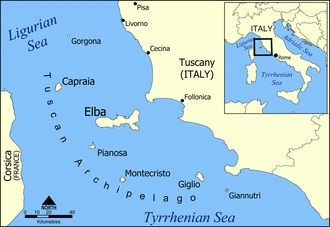 The ancient Greeks and the Romans sourced Tourmaline from the Western Coast of Italy and from the Isle of Elba, which the variety Elbaite is named after. They also imported the gemstone from Egypt and Sri Lanka. One of the earliest examples of its use is a 4th century BC intaglio carving of Alexander the Great, which is currently housed in the Ashmolean Museum in Oxford. The Romans believed Tourmaline was a powerful protective gemstone and wore it as a talisman. Although during this time the stone was misidentified, they were aware of its special properties. The Greek philosopher Theophrastus did describe the stone's ability to attract dust and small particles when it was heated.
During the middle-ages in Europe, the coloured varieties of this gemstone were largely misidentified, being classed generally by colour. For example, the crown of Saint Wenceslas was thought to contain a large 250 carat ruby, which was later found to be a Rubellite. The most widely available and the most recognised Tourmaline was the Schorl variety, which is black in colour. Schorl was mined alongside tin near the village of Zschorlan in Saxony, Germany. This black variety was widely believed to be a protective gemstone, particularly against evil spirits and sorcery. It was also said to ward off deceit, earning it the nickname "Stone of Truth". Since this gemstone was pyroelectric, medieval alchemists were fascinated by it. They saw it as being related to the legendary "Philosopher's Stone".
During the 1500s, Spanish Conquistadors did discover Tourmaline in Brazil and brought it back to Europe. However, at the time it was misidentified and called Brazilian Emerald or Brazilian Sapphire depending on the colour.
In the early 1700s, the Dutch East India Company began importing mixed bags of coloured gemstones from Sri Lanka (Ceylon). These bright and vibrant gemstones became very popular across Europe and were considered the height of fashion. The scientists of the day were captivated by their pyroelectricity and began to study these gems intensely, referring to them as "Ceylonese Magnets". By 1703, Dutch lapidaries had identified them as a distinct mineral and named them "Turamali" meaning stone of mixed colours in Sinhalese. This finally distinguished Tourmaline from other coloured gemstones such as Zircon and Topaz.
This new influx of Sri Lankan Tourmaline in the early Georgian Period, transformed jewellery styles and fashions. The Georgians had a strict dress code for which jewellery could be worn by day and which by evening. Diamonds were only considered appropriate for evening wear, while vibrant, colourful gemstones were considered day wear. Riviere necklaces of all matching colour gemstones or tastefully arranged multicoloured gemstones were considered the height of fashion. Since Tourmaline comes in virtually all colours, it was frequently used in Riviere necklaces which are iconic of this period. The foil-backing of these new gemstones was also a very popular technique, which maximised their brilliance.
In the early 1820s, high quality Tourmaline was discovered in Maine in the United States. This mine was to become the first commercial gemstone mine in America. It produced a consistent supply of high-quality green and red Tourmaline. In 1875, Tiffany & Co officially began selling Tourmaline jewellery, which started a "Craze" in both America and Europe for coloured gemstones.
Folklore
For the vast majority of its history, Tourmaline was misidentified. As such a lot of the folklore surrounding it, is mixed with other gemstones. Having that said ancient people were aware that some varieties of this gemstone were in fact a distinct mineral, such as Schorl. They were also aware of its pyroelectric properties, at least those varieties which they tested.
To the ancient Egyptians, the green varieties symbolised life and regeneration. The black varieties were believed to be a powerful protective gemstone, which held the ability to ward off evil and misfortune. As such they wore it as a protective amulet. They believed the pink and red varieties held the power to foster love and long-lasting friendships. The Egyptians believed that multicoloured Tourmaline was created by a rainbow. Their legend has it that Tourmaline traveled from the center of the earth to the sun. On its journey, it passed through a rainbow and absorbed its colours.
Greek Mythology: The ancient Greeks believed this gemstone to be a powerful protective talisman and would wear it to ward off evil spirits and misfortune. It was said to also grant the wearer mental clarity and it was used as an antidote to poison. The famous Greek philosopher and naturalist Theophrastus ( 371 - 287 BC), was the first person to record the pyroelectric properties of this gemstone. He describes a yellowish coloured gemstone which he called lyngurium, which had the ability to attract straw, small pieces of wood and small pieces of metal such as copper and iron when heated. This of course fascinated Greek scholars of the day. In Greek mythology, black Tourmaline was associated with Hecate, goddess and guardian of the underworld.
Roman Mythology: The ancient Romans associated black Tourmaline with Saturn, god of time, wealth, agriculture and liberation. It was seen as a powerful talisman against evil spirits and misfortune. It was also believed to sharpen the mind and grant the wearer clarity. Making it a very popular gemstone with intellectuals. The Romans also credited this gemstone with healing properties. They believed that wearing the stone helped to calm the nervous system and so reduce anxiety.
Medieval Europe: In medieval Europe, Schorl was seen as a powerful protective gemstone against sorcery, evil spirits and the evil eye. People would wear it for protection, they would also place the gemstone near doorways to stop evil from entering the house. Alchemists during this time were fascinted by the stone's pyroelectric properties. They believed the stone was related to the legendary philosopher's stone and would study it and use it in various experiments. Medieval physicians credited the stone with various healing abilities. It was said to have the ability to prevent death on some occasions. They also used it to dispel fear and alleviate grief. It was also said to aid peaceful sleep and that it could prevent nightmares.
In the Catholic Church, Tourmaline was used but like everywhere else at this time it was misidentified. As such the symbolism of this gemstone within the Catholic Church is largely missing.
Famous Tourmaline Jewellery
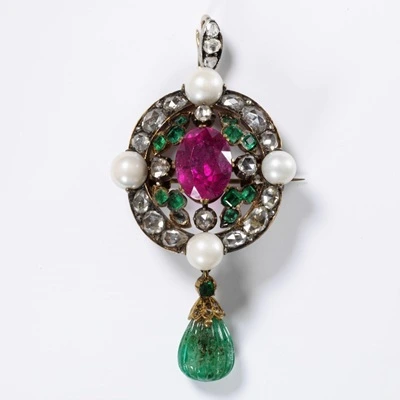
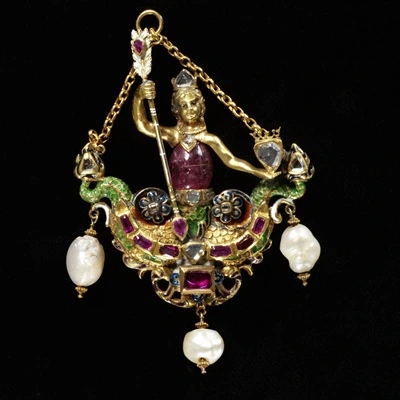
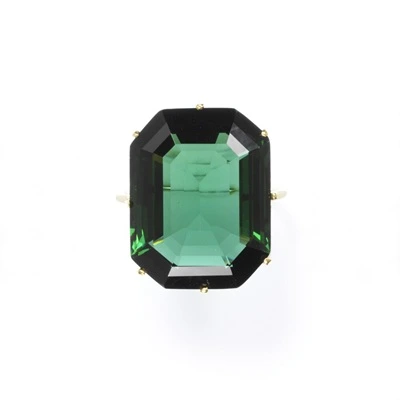
The above pieces of Tourmaline Jewellery are on display at the V&A Museum.
Tourmaline Gemological Data
Colour: Colourless, pink, red, brown, green, blue, violet, black, multicoloured.
Colour of Streak: White.
Mohs hardness: 7 – 7.5
Density: 2.82 – 3.32
Cleavage: Indistinct.
Fracture: Uneven, small conchoidal, brittle.
Crystal system: Trigonal, long crystals with triangular cross-section and rounded sides.
Transparency: Transparent to opaque.
Chemical composition: XY3Z6(T6O18)(BO3)3V3W, Borosilicate.
Refractive index: 1.614 – 1.666
Double refraction: -0.014 to -0.032
Pleochroism: Red Tourmaline; dark red, light red. Brown Tourmaline; dark brown, light brown. Green Tourmaline; dark green, yellow-green. Blue Tourmaline; dark blue, light blue.
Dispersion: 0.017 (0.009 - 0.011).
Fluorescence: Weak or none.
For Researchers and Journalists
Recommended Citation (MLA) Format:
Hoyne, John. "Tourmaline: Formation, History, Meaning, and Folklore." Carus Jewellery, n.d., https://carusjewellery.com/tourmaline/.
You can also get in touch with Carusjewellery.com on Facebook , where you may leave any comments or questions you may have about this article.
