
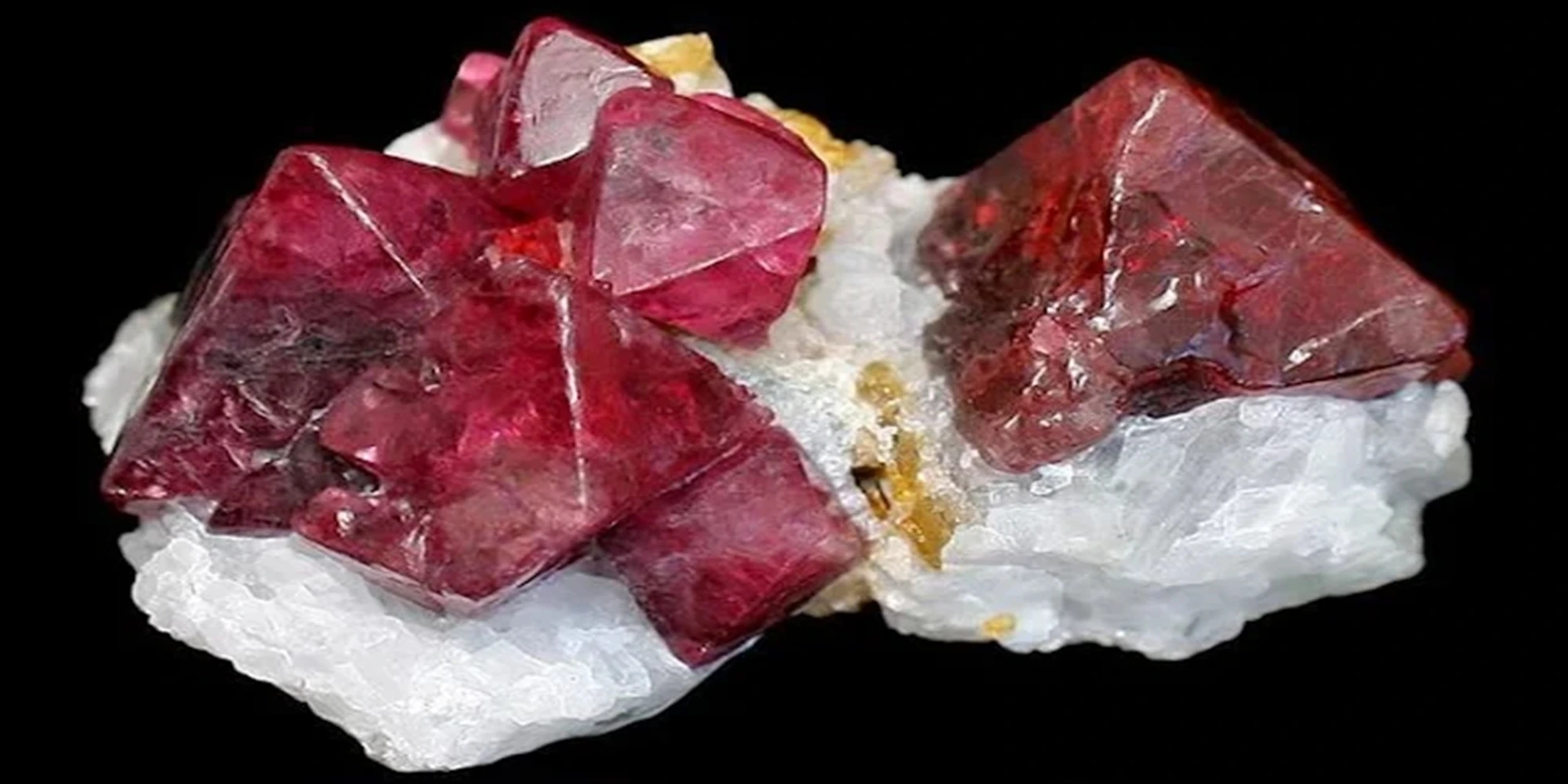
Spinel
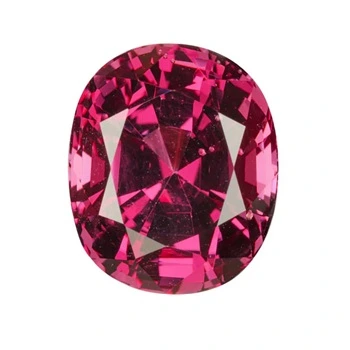
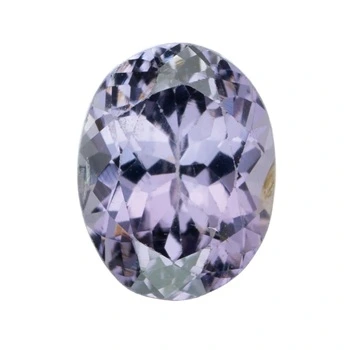
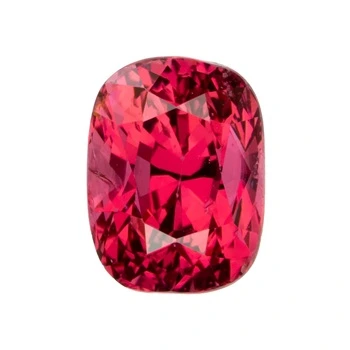
The name Spinel is generally thought to be derived from the Latin word “Spina”, which means “Thorn”. This is in reference to the sharp and pointed crystals, which are characteristic of this gemstone. The other possible origin of the name is from the Greek word “Spithon” meaning “Spark”, which refers to the stone’s natural fiery brilliance. The name Spinel is the term used to classify a whole group of related minerals. In this group of minerals, there are only a few which are classed as been of gemstone quality. While Spinel can come in all colours, gemstone quality varieties typically are red, orange, yellow, brown, blue, violet, purple, green, and black. With red being considered to be the most valuable. The colouring agents are iron, chromium, vanadium, and cobalt.
Varieties of Spinel:
- Flame Spinel: This is the commercial name for fiery orange to orange-red Spinel. In the past, this variety was commonly called Rubicelle.
- Balas Spinel: This variety was historically falsely called Balas Ruby, named after a region in Afghanistan. It is a pale red to a rose red in colour.
- Pleonaste: This variety is also called Ceylonite. It is a dark green to black opaque Spinel, containing iron.
- Cobalt Spinel: Quality examples of this variety can appear similar to fine Sapphires. It contains trace amounts of cobalt, which gives it its intense and vibrant blue colour. This variety is very rare and valuable, the world’s primary source is located in the Luc Yen district of Northern Vietnam.
- Hercynite: This variety is dark green to black in colour and contains iron.
- Gahnite: This variety is also known as Zinc Spinel. Its colour ranges from blue, violet or from dark green to black.
- Gahnospinel: This variety is between Spinel and Gahnite in composition. Its colour ranges from blue to dark blue or green and is coloured by the presents of iron.
- Picotile: This variety is also known as Chrome Spinel. It ranges in colour from brownish to dark green or black.
Formation: Spinel’s chemical composition is MgAI2O4 magnesium aluminium oxide. This gemstone can form in two different ways.
- Metamorphism: During tectonic activity, when continental plates collide immense pressure and heat is generated. Under such conditions, limestone or dolomite (the host rock) is transformed into marble. While at the same time magnesium, aluminium and oxygen crystallise into Spinel.
- Igneous Activity: Spinel can also form within mafic igneous rock such as peridotite. Magma which contains aluminium and magnesium, as it cools down, Spinel will crystallise. If magnesium is not present, then the aluminium oxide will crystallise as a corundum (Ruby & Sapphire). It is for this reason that Spinel is commonly found along side Ruby and Sapphire in the same deposit.
The main deposits are located in Myanmar (Burma), Cambodia, and Sri Lanka. The other significant deposits are located in Afghanistan, Australia, Brazil, Madagascar, Nepal, Nigeria, Tajikistan, Tanzania, and the United States.
Treatment: As a general rule, Spinel is not treated. It naturally has excellent clarity and vibrant colour, making treatment unnecessary. As with all other gemstones, untreated specimens are considered far superior and more valuable than a treated gemstone. There is however a number of treatments which can be applied and such be noted, even if rarely applied.
- Heat Treatment: Heat treatment can be applied, which will help to remove any brownish tones and submicroscopic inclusions. This will then improve the stone’s clarity and colour saturation. This heat treatment is permanent.
- Oil/Resin Filling: A coating of oil or wax can be applied to improve the stone’s clarity by filling any small cracks which reach the surface. This treatment is not permanent and will need to be reapplied from time to time. A polymer or epoxy resin can also be applied to fill small cracks, which is more durable. However extra care needs to be taken with a resin-filled stone as heat or ultrasonic cleaners can damage the resin.
- Surface Coatings: A very thin film of vaporised metal can be applied in a process called physical vapor deposition. This will enhance the stone’s colour. However, this treatment is not permanent as it can easily be scratched off or it will simply wear off over time from normal use.
Durability: Spinel has a hardness rating of 8 on the Mohs scale of hardness. Which makes this stone exceptionally durable and suitable for everyday wear. This stone’s cleavage is classed as indistinct, which means it has excellent toughness and as such is less prone to chipping or cracking from impacts.
- Sunlight: Spinel is sunlight stable and its colour will not fade even with prolonged sunlight exposure.
- Heat: Under normal conditions, Spinel is not sensitive to heat. However, very high temperatures such as a jeweller’s torch can change its colour. Permanent colour change will take place between 800°C and 1200°C. There is a temporary colour change which will take place between 100°C and 200°C.
- Chemicals: This gemstone is not sensitive to most household chemicals or detergents.
- Storage: Spinel is a relatively hard stone, with a rating of 8 on the Mohs scale. As such it can scratch other softer gemstones such as Opal or Pearl. While at the same time, harder gems such as Diamond can scratch it. So it is recommended to store this gemstone in a separate compartment in your jewellery box or to place it in a soft cloth pouch.
- Cleaning: The safest and most recommended method to clean your Spinel jewellery is to use warm soapy water and a soft toothbrush. Use the toothbrush gently to avoid catching the brushes bristles in your jewellery settings. The use of ultrasonic or steam cleaners is considered safe for this gemstone, providing it is untreated.
Meaning and Healing Properties
Spinel has always symbolised revitalisation, renewal and protection. This gemstone helps the wearer to revitalise and renew their energy by promoting recovery after stressful periods or were the wearer has experienced trauma. This stone is also believed to boost the wearer’s self-confidence and energise them to be able to achieve their goals in life. Throughout time, this stone has been used as a powerful protective talisman. It was said to shield the wearer from negative energy and protect against the “Evil Eye”. Historically, the “Evil Eye” was said to be a curse which was cast either voluntarily or involuntarily by an envious glance. Ancient people were very superstitious and lived in dread of curses.
This gemstone was credited with a number of healing properties. It was said to promote recovery after an illness and to help with fatigue through its power of revitalisation. It is also said to promote detoxification, improve metabolism and to reduce inflammation. The blue and violet varieties are said to help with sore throats and headaches.
Chakra: Since Spinel naturally occurs in all colours, it is associated with the seven chakras.
- Red/Black is associated with the root chakra, which helps to promote grounding and physical strength. This is Spinel’s primary association.
- Pink/Green is associated with the heart chakra, which helps to promote love, compassion and emotional healing.
- Blue is associated with the throat chakra, which helps to promote communication and expression.
- Dark Blue is associated with the third eye chakra, which helps to promote intuition.
- Yellow is associated with the solar plexus chakra, which helps to promote personal empowerment and intellect.
- Violet/Colourless is associated with the crown chakra, which helps to promote spirituality and wisdom.
- Orange is associated with the sacral chakra, which helps to promote creativity.
Birthstone: Spinel is the traditional birthstone for August, along with Peridot and Sardonyx.
Zodiac Astrology: Spinel is associated with the star signs Leo, Aries, Scorpio and Sagittarius.
Wedding Anniversary: Spinel is the traditional gemstone gift for the 22nd wedding anniversary, symbolising longevity and the persistent power of love.
History
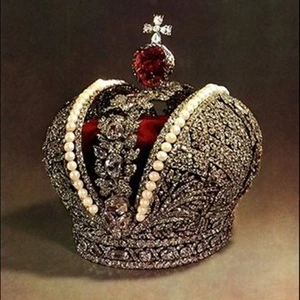 Both the mining and use of Spinel has a very long history, dating back over 2,000 years. The earliest known mining took place in the Badakhstan region which is located in the Hindu Kush mountains of present-day Afghanistan and Tajikistan. Archaeological evidence has dated mining here to the first century BC. This region produced vibrant red gemstones (Spinel) which historically were misidentified as ruby and became known as “Balas Rubies”. Ruby’s chemical composition is aluminium oxide, Spinel’s chemical composition is magnesium aluminium oxide. With both of these gemstones being so similar, they were classed as the same. Until 1783, when the mineralogist Jean Baptiste Louis Rome de Lisle developed a test to tell them apart. Following this discovery, it was then found that a number of famous rubies were in fact misidentified. The “Black Prince Ruby” in the English crown, the 352.54ct “Timur Ruby” in the English crown jewels, the 398.72ct ruby in Catherine the Great’s crown and the 500ct ruby “Samerian Spinel” in the Iranian crown jewels were all in fact Spinel.
Historically, the Mogok Valley in Myanmar was another important source. Where Spinel frequently forms along side ruby and sapphire within the same host rock, metamorphic limestone.
Spinel mining also has a long history in Sri Lanka, particularly in the Rathnapura region. Where the gemstone is mostly found in alluvial gravel deposits, using traditional small-scale pit mining. Sri Lanka is famous for producing a wide variety of different colour Spinel, including the highly prized Cobalt Spinel.
In 1987, Spinel, paricurlarly Cobalt Spinel was discovered in the Luc Yen district of Vietnam. Further significant new deposits were found in the Bai Buoi mine in Luc Yen in 2019. This variety is of exceptionally high quality, making Vietnam the world’s primary source.
In 1998, there was a major discovery of sapphire and ruby deposits in Ilakaka, Madagascar. These deposits also yielded large quantities of Spinel, making Madagascar a significant producer of purple and blue-grey Spinel.
In Tanzania during the late 1980s, Spinel was discovered in the Morogoro province. Deposits here produce neon pink and red varieties that appear to glow. In 2021, Cobalt Spinel was found near the Lukande village. Making Tanzania one of the major global producers of Spinel.
Folklore
Since Spinel’s chemical composition is so close to Ruby, historically people could not have known that they were different gemstones. They did however notice slight differences, which lead them to believe that Spinel was a variety of Ruby and so they called it “Balas Ruby”. As a result up until 1783, Spinel’s folklore is more accurately described as Balas Ruby, Rubicelle or Carbuncle folklore.
In ancient India, this stone (Saugandhika) was classed as a relative of ruby and called “Daughter of Ruby”. Orange to yellow varieties were called Rubicelle and were believed to make the wearer invincible and to provide courage in battle.
The name “Balas Ruby” originates from the Badakhshan region, where the stone was mined on the border of Tajikistan and Afghanistan. Legend has it that the stone was found there after an earthquake revealed the vibrant red stones in the white host rock. Local women collected the stones and tried to use them to dye their clothes. When this didn’t work, they threw them away calling them worthless. Where they remained until a jeweller recognised them.
Greek Mythology: The ancient Greeks called Spinel “Anthrax” which was their group term for all fiery red gemstones. They believed that this gemstone held an inner fire, since it appears to glow when viewed in sunlight. They believed red gemstones enhanced physical strength and courage. They were frequently engraved with the names of their gods or an image. These gemstones were engraved as part of a ritual and considered to have enhanced powers. In Greek mythology, red gemstones were associated with Aphrodite, goddess of love.
There was also widespread belief at the time that red gemstones could be used for medicinal purposes. They were used to treat hemorrhages, inflammation and to purify the blood. Red gemstones were also believed to be a powerful antidote to poison.
Roman Mythology: In ancient Rome, all vibrant red gemstones were classed as Carbunculus which means “little Coal”. They believed these gemstones were like pieces of coal, but which could not be consumed by fire. They claimed that the finer examples would even glow in low light. Pliny the Elder, wrote about Carbunculi as having the “leading position”. He also classifies these stones as being either male or female. With those having a more vibrant fire being male and those being paler as female.
In Roman mythology, Carbunculi were associated with Mars, the god of war. Carbunculi were believed to grant the wearer courage, strength and invulnerability on the battlefield. Like the ancient Greeks, the Romans believed these gemstones could be used to treat hemorrhages and to purify the blood. As well as being a powerful antidote to poison.
Medieval Europe: During the middle-ages in Europe, vibrant red gemstones were collectively called Carbuncles. Legend has it that a fine Carbuncle could produce its own light and was said to shine like a torch even in total darkness. Crusaders and knights would carry Carbuncles in the belief that they could grant them both invisibility and invincibility in battle. It was also widely believed that a Carbuncle could forewarn the wearer of approaching danger by turning black or growing dull. Carbuncles were commonly used as a powerful talisman, in the belief that they could ward off evil spirits. They were also believed to protect the wearer from sadness, anxiety and nightmares. For medicinal purposes, the older beliefs still persisted that these stones could stop hemorrhages and reduce inflammation. Some claimed at this time that Carbuncles could be used to reduce a fever or if needed to bring warmth to cold extremities.
Famous Spinel Jewellery
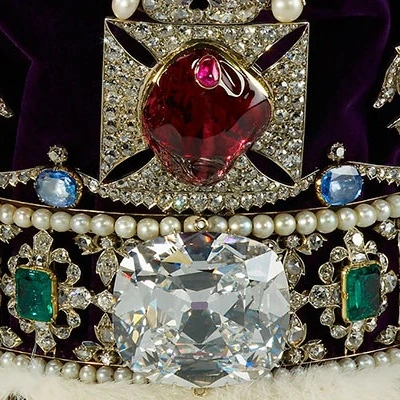
The Black Prince’s Ruby (Spinel).
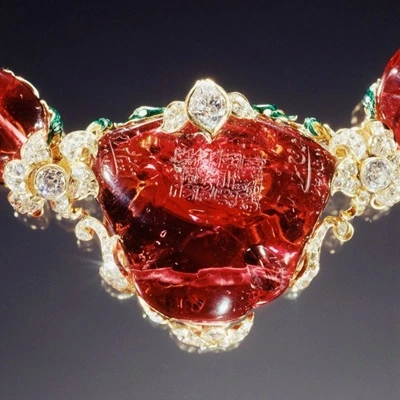
The Timur Ruby (Spinel).
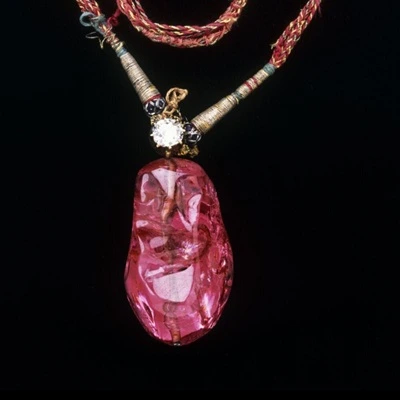
The Carew Spinel.
Spinel Gemological Data
Colour: Red, orange, yellow, brown, blue, violet, purple, green, black.
Colour of Streak: White.
Moh`s hardness: 8
Density: 3.54 – 3.63
Cleavage: Indistinct.
Fracture: Conchoidal, uneven.
Crystal system: Cubic, octahedron, twins, rhombic dodecahedron.
Transparency: Transparent to opaque.
Chemical composition: MgAI2O4 magnesium aluminium oxide.
Refractive index: 1.712 – 1.762
Double refraction: None.
Pleochroism: Absent.
Dispersion: 0.020 (0.011)
Fluorescence: Red Spinel: strong red, Blue Spinel: weak reddish, green.
For Researchers and Journalists
Recommended Citation (MLA) Format:
Hoyne, John. “Spinel: Formation, History, Meaning, and Folklore.” Carus Jewellery, n.d., https://carusjewellery.com/spinel/.
You can also get in touch with Carusjewellery.com on Facebook , where you may leave any comments or questions you may have about this article.
