
Topaz
The name Topaz is most likely derived from the island in the Red Sea, formerly called “Topazos”, now called Zabargad also known as St. John’s island. Historically, this island was a source of Peridot and not Topaz. In the past, the name Topaz was the term used to describe all yellow, golden-brown and green gemstones.
Topaz comes in a variety of colours, colourless, yellow, orange, red-brown, light to dark blue, pink-red, red, violet and light green. The most abundant variety is colourless, with the most common colour being yellow with a hint of red. The most valuable colour is pink to reddish-orange. This gemstone in its natural and pure form is colourless and called white Topaz. The colouring agents are iron and chromium. These trace elements along with structural defects in the crystal are responsible for the variations in colour.
Varieties and classifications of Topaz.
- Imperial Topaz is both a variety and a trade name. This variety is very rare and considered to be the most valuable. Its colour ranges from golden-orange to reddish-orange and pink. With reddish-orange to red being the most desirable.
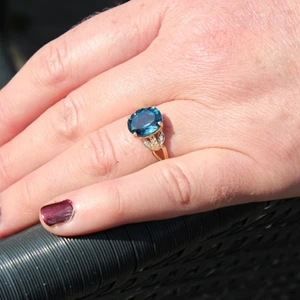
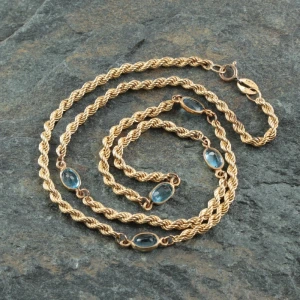
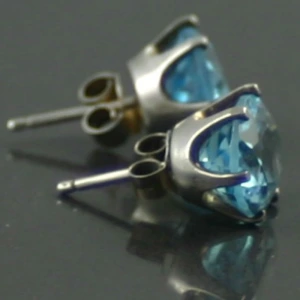
- Blue Topaz is a variety and is exceptionally rare in nature. The vast majority of blue Topaz on the market is produced from the colourless variety which has been irradiated and then heat-treated. It ranges in colour from Sky blue to Swiss blue to London blue.
- Mystic Topaz is a trade name used to describe a colourless stone to which iridescent colour was added. The process involves a very thin coating of vapourised metal being applied to the back of the stone. This creates a beautiful iridescent rainbow effect when the stone is viewed from the front. It should be noted that this treatment is not permanent.
- Precious Topaz is a trade name used to describe yellow-orange varieties. This trade term was historically used to distinguish “True” Topaz from Quartz, particularly Citrine.
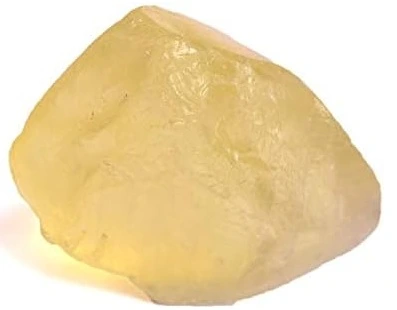 Formation: Topaz is composed of aluminium silicate that contains fluorine. It is the presence of fluorine that distinguishes it from other minerals such as quartz. Its formation requires that aluminium, silicon and fluorine all be present in high concentrations, which is a rare occurrence. The formation process typically takes place in one of three different geological events.
Igneous Rock: In igneous rock such as granite or rhyolite, gas pockets or cavities can form as the magma cools down. The volatile gas fluorine, along with the other minerals required, then collect or pool in these cavities. Where over time they will crystallise.
Pegmatites: Pegmatites are course-grained igneous rocks which are formed at the final cooling stage of magma. Pegmatites form from mineral-rich water, which has a high concentration of rare elements. This allows exceptionally large, high-quality Topaz crystals to form. Some of which can weigh hundreds of pounds.
Hydrothermal Veins: Topaz crystals can form from hot mineral-rich water as it circulates through the cracks or fissures in the host rock. In such veins, it is also common to find other gemstones such as Tourmaline and Fluorite, which also form under these conditions.
Currently, Brazil is the world’s dominant producer and the only commercial source of Imperial Topaz. Other significant deposits are located in Nigeria, Sri Lanka, Pakistan, Russia, United States, Mexico, Madagascar, Namibia, and Australia.
Treatment: Topaz in its natural form is often colourless and when it does have colour, it is usually not vivid but rather could be described as “muddy”. For this reason, the vast majority of Topaz (about 95%) on the market has been treated. Since treatment is an industry standard practice for this gemstone, treatment does not affect its value. With that said, naturally coloured untreated specimens will command a premium price simply because of their rarity.
- Irradiation: This is the standard method used to create blue topaz from colourless. The colourless gemstones are exposed to radiation, either electrons or neutrons, which change the crystal’s internal structure. This process will result in the stone turning Sky blue, Swiss blue or London blue, depending on the type of radiation used and for its duration. As a safety precaution all gemstones which receive this treatment are placed in quarantine until residual radiation levels are below strict safety levels. This treatment is permanent.
- Heat Treatment: This is normally the follow on treatment applied to stones which have been irradiated. The heat treatment refines the blue colour and stabilises it. Heat treatment can also be used to change brownish or yellowish stones into pink. This treatment is permanent.
- Surface Coatings: A very thin film of vaporised metal can be applied in a process called physical vapor deposition. This treatment is done to colourless stones to create “Mystic Topaz”, which produces an iridescent rainbow effect. It should be noted that this treatment is not permanent, as it can easily be scratched off or it will simply wear off over time from normal use.
- Diffusion: This treatment involves the gemstones being heated to extreme temperatures while in the presence of cobalt or titanium. The cobalt or titanium then penetrates the surface of the stone and so adds to or changes its colour. This treatment is stable and permanent but only on the stones surface. So for example, if the stone was to be chipped, the colourless interior would be revealed.
- Dyeing: While this gemstone can be dyed, it is rarely done so because Topaz is a dense and non-porous stone that does not absorb dye well. Unlike some other gemstones such as Agate and Turquoise which can be successfully dyed. This treatment is generally not considered permanent, as most dyes tend to fade over time from exposure to sunlight and from cleaning.
Durability: Topaz has a hardness rating of 8 on the Mohs scale. Which makes it suitable for everyday wear, with one note of caution. This gemstone’s cleavage is perfect, which means that the crystal structure has a grain or to put it another way, it has a plane of weakness within its structure. As such care should be taken to avoid hard impacts which can cause this gemstone to chip or crack. Overall this gemstone would be considered highly durable.
- Sunlight: Blue Topaz is sunlight stable. However, other varieties are sunlight sensitive and as such can fade in colour if exposed to sunlight for prolonged periods.
- Heat: This gemstone is sensitive to thermal shock. Sudden extreme changes in temperature can cause it to crack.
- Chemicals: This gemstone is moderately sensitive to household chemicals. As such, avoid allowing this gemstone to come into contact with harsh household cleaning agents.
- Storage: Although this stone has an excellent hardness rating of 8, it can still be scratched by harder gemstones such as Diamond and Sapphire. While at the same time, it can scratch softer gemstones such as Tanzanite and Opal. So it is best to store it separately or place it in a soft cloth pouch.
- Cleaning: The safest and most recommended way to clean your Topaz jewellery is with warm soapy (mild) water and a soft toothbrush. Be careful when using the toothbrush not to catch the bristles in your jewellery settings, as this can dislodge the gemstone(s). Never use ultrasonic or steam cleaners for this gemstone because it is sensitive to thermal shock and can crack.
Meaning and Healing Properties
Topaz symbolises love, strength and mental clarity. It is associated with helping to create deep emotional bonds, often representing love, fidelity and friendship. Historically, it was believed to grant the wearer increased physical strength and to even grant invisibility should the wearer be in danger and so blocking evil from seeing the wearer. The stone is also said to improve mental clarity, leading to improved focus and helping the wearer’s creativity. Blue Topaz in particular, is said to have a soothing effect on the wearer’s emotions and helps to promote self-expression.
In more recent times, this gemstone has frequently been called the “Stone of Potency”, in that it amplifies the wearer’s intentions and helps to manifest abundance. This gemstone has been credited with a number of healing properties. It is said to reduce stress and anxiety for the wearer and to promote emotional balance. It is also said to have medicinal properties, it aids digestion, improves vision and helps to relieve insomnia.
Chakra: Since Topaz is formed in different colours, it is associated with different chakras.
- Blue Topaz is primarily associated with the throat chakra, which helps to promote communication and self-expression. It is also associated with the third eye chakra, which helps to promote mental clarity and focus.
- Yellow Topaz is primarily associated with the solar plexus chakra, which helps to promote confidence and personal empowerment. It is also associated with the sacral chakra, which helps to promote creativity.
- Colourless Topaz is associated with the crown chakra, which helps to promote spiritual connection and enlightenment.
- Pink/Red Topaz is associated with the heart chakra, which helps to promote love, compassion and emotional healing.
- Purple Topaz is associated with the third eye and crown chakra, which helps to promote mental clarity and spiritual connection.
Birthstone: Topaz is the traditional birthstone for November, along with Citrine. Symbolising love, friendship and protection.
Zodiac Astrology: Topaz is primarily associated with the star sign Scorpio. It is also associated with the star sign Sagittarius.
Wedding Anniversary: Blue Topaz is the traditional gemstone gift for the 4th wedding anniversary. Imperial Topaz is the traditional gemstone gift for the 23rd wedding anniversary. The 44th wedding anniversary is known as the “Topaz Anniversary”, a term used to describe that entire year. Symbolising the resilience of love, which has lasted over four decades.
History
 Historically, the name Topaz was used to describe any yellow gemstone. For example, Peridot, Citrine, and Chrysoberyl, along with all other yellow gemstones, were called Topaz. This has caused a lot of confusion, with gemstones being misidentified. The name Topaz originates from the island of Topazos in the Red Sea, which is now called Zabargad or St. John’s island. As it turned out this island has never produced Topaz but rather Peridot, which has a yellowish to green colour. Pliny the Elder, did write about Topaz but it is believed that he was more likely describing Peridot or Chrysoberyl.
The correct identification of this gemstone was started in 1652, when Thomas Nicols a British author published a treatise on the history of gemstones. In his work, he attempts to address the historical misidentification of this gemstone with other yellow stones. However, it wasn’t until 1737 that Johann Friedrich Henckel formerly identified Topaz as the specific gemstone we know today. He was a German chemist and mineralogist who developed various tests such as heat tests and acid tests, to show the different results for different gemstones. He also noted the difference in hardness and density of different gemstones. Before this gemstones were identified by colour and the feel of the stone.
The earliest known documented mining of Topaz was in the Schneckenstein mine in the Erzgebirge mountains of Saxony in Germany. Henckel played a vital role in personally identifying the gemstone found at this mine. The Scheckenstein mine produced yellow to red-yellow Topaz and famously supplied the royal court. Production at the mine peaked in the 1730s and it was closed by 1796. By which time the deposit was largely depleted of fine-quality gemstone, what remained was of lower quality and reported to be quite brittle.
During the early 1730s, Topaz was discovered in the Ouro Preto region of Minas Gerais in Brazil. This deposit was truly massive and is estimated to be 6km wide and 25km long. The vast majority of gemstone produced from this deposit is of the colourless variety and in recent times is used to produce the highly prized blue Topaz. There is Imperial Topaz produced from this deposit but in relatively small quantities, estimated at about 0.5% of total output. In 1740, a huge 1,680ct colourless gemstone was found and mistakenly identified as a Diamond, and named the “Braganza Diamond”. It was sent to the Portuguese Crown Jewels, where it was correctly identified as Topaz. Today Brazil is the world’s largest producer of Topaz.
During the 19th century, Pink Topaz was discovered in the Ural Mountains in Russia. The stone produced here was a very rare, vibrant pink variety, which gets its colour from trace amounts of chromium. This stone was highly prized and ownership of it was restricted to the Imperial family and the royal court. Which actual led to its name “Imperial Topaz”. A name which stuck and made the stone synonymous with wealth and power. By the early 20th century, deposits in the Urals were largely considered depleted. Although small-scale mining of both colourless and the blue variety continues there to the present day.
Up until the 1960s, natural blue Topaz (typically pale blue) was very rare. However, in 1957 the mineralogist Frederick Pough perfected the irradiation and heat treatment process. Which turned the abundant colourless variety into different shades of blue, Sky blue, Swiss blue or London blue. By the mid 1970s, a huge quantity of blue Topaz flooded the market, making prices much more affordable.
Folklore
Historically, the name Topaz was used to describe all yellow gemstones, including Citrine, Chrysoberyl, and yellow Sapphire etc. Therefore, the folklore surrounding Topaz would be more accurately described as yellow gemstone folklore. It was not until 1737 that this gemstone was actually classified.
The ancient Egyptians associated yellow gemstones with Ra, the sun god and believed the stone was a gift from him due to its golden colour. They used the stone as a powerful amulet to protect them from darkness and the terrors of the night. The stone was also believed to be a powerful protective stone. Which could hide the wearer by making them invisible or grant them supernatural strength if they were in danger. They would use the stone for medicinal purposes as well. If the patient was suffering from a fever, the stone would be placed under the tongue to relieve the fever. In the case of skin conditions, the stone would be ground into a powder and mixed with oil before being applied to the affected area. This fine powder could also be used to infuse beverages. It was said to be an effective cure for madness, insomnia and asthma. It was also said to bring pain relief during childbirth if placed on the mother’s stomach.
Greek Mythology: The ancient Greeks called this gemstone “Topazion”, although it is quite likely they were referring to Peridot. They believed it was a powerful talisman which could grant the wearer physical strength and mental empowerment. Greek warriors would wear the gemstone to make them invulnerable in battle, they also believed it could make them invisible if they were in grave danger. Along with granting strength, it was said to have the ability to cool an angry heart and even to cool boiling water if placed in it.
They associated Topazion with Apollo, god of the sun, light and truth. The stone was said to dispel darkness of the mind and allow the wearer to see the truth. The gemstone was also said to have the ability to warn the owner. The gemstone would be placed near a plate of food or drink and would change colour or grow dull if the food or drink was poisoned and so warning the owner.
Roman Mythology: The Romans called this gemstone “Topazius”, although it is thought that they were referring to the gemstone Peridot which was also known as Chrysolite. They associated Topazius with Jupiter, king of the gods also known as “Sky Father”, who ruled over the heavens, light, thunder and lightning. Due to this connection with the king of the gods, Topazius was seen as a status symbol and as such was worn by high-ranking and wealthy individuals. The stone was said to grant wisdom and authority to the wearer. They believed the stone was very powerful and could be used for a number of purposes. Those undertaking journeys would wear the stone for protection against both robbery and accidents while on their journey. Topazius was said to be a cure for madness and could calm the wearer’s anger, resulting in the wearer becoming calm under pressure and improving mental clarity. The stone was also said to forewarn the wearer of danger, particularly of an assassination attempt by poisoning.
The stone was also used for medicinal purposes. It was soaked in wine for a few days, then the wine could be applied to the eyes, which was said to improve a person’s failing eyesight.
 Medieval Europe: During the middle-ages in Europe, the folklore surrounding this gemstone was still largely mixed up with the folklore surrounding all other yellow gemstones. Older beliefs still persisted during this time and the stone was widely believed to be a cure for madness, depression and to have the ability to calm anger. It was said to ward off the terrors of the night if placed under the sufferer’s pillow. They also believed that the stone could grant invisibility, particularly it could make a pious person invisible to the “Eyes of the Wicked”.
Saint Hildegard von Bingen (1098-1179) wrote quite a bit about gemstones in her work “Physica”. She talks about gemstones originating from the purity of the sun and that they were created and in existence before the fall of Lucifer. Lucifer was adorned with gemstones before his fall. After his fall, he suffered a total loss of beauty and splendor. For this reason, St Hildegard says he avoids all gemstones out of envy. Which makes gemstones in general a powerful protection against evil and demonic forces. She also goes on to describe the medicinal uses of Topaz. For example, it can be used to improve failing eyesight by infusing wine with the gemstone for 3 days and 3 nights, then applying it to the eyelids. She states the stone can be used to address behavioral issues such as anger, stupidity and indiscipline. She also recommends it as a cure for madness and emotional instability. She states that the stone is best worn around the neck to address these issues.
Famous Topaz Jewellery
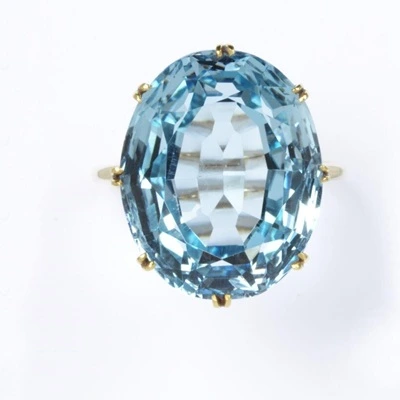
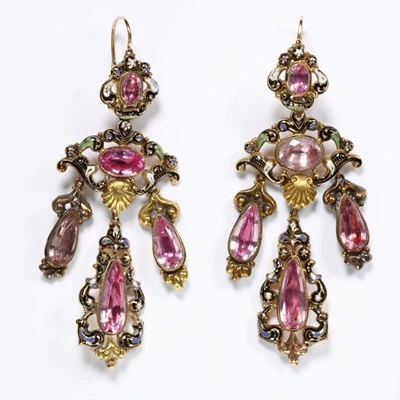
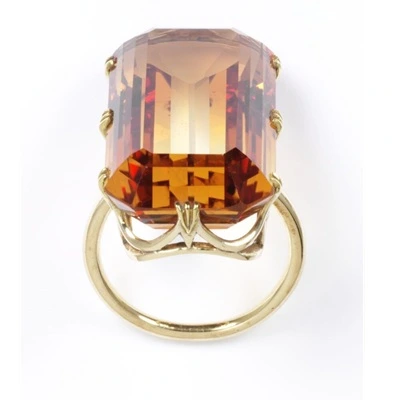
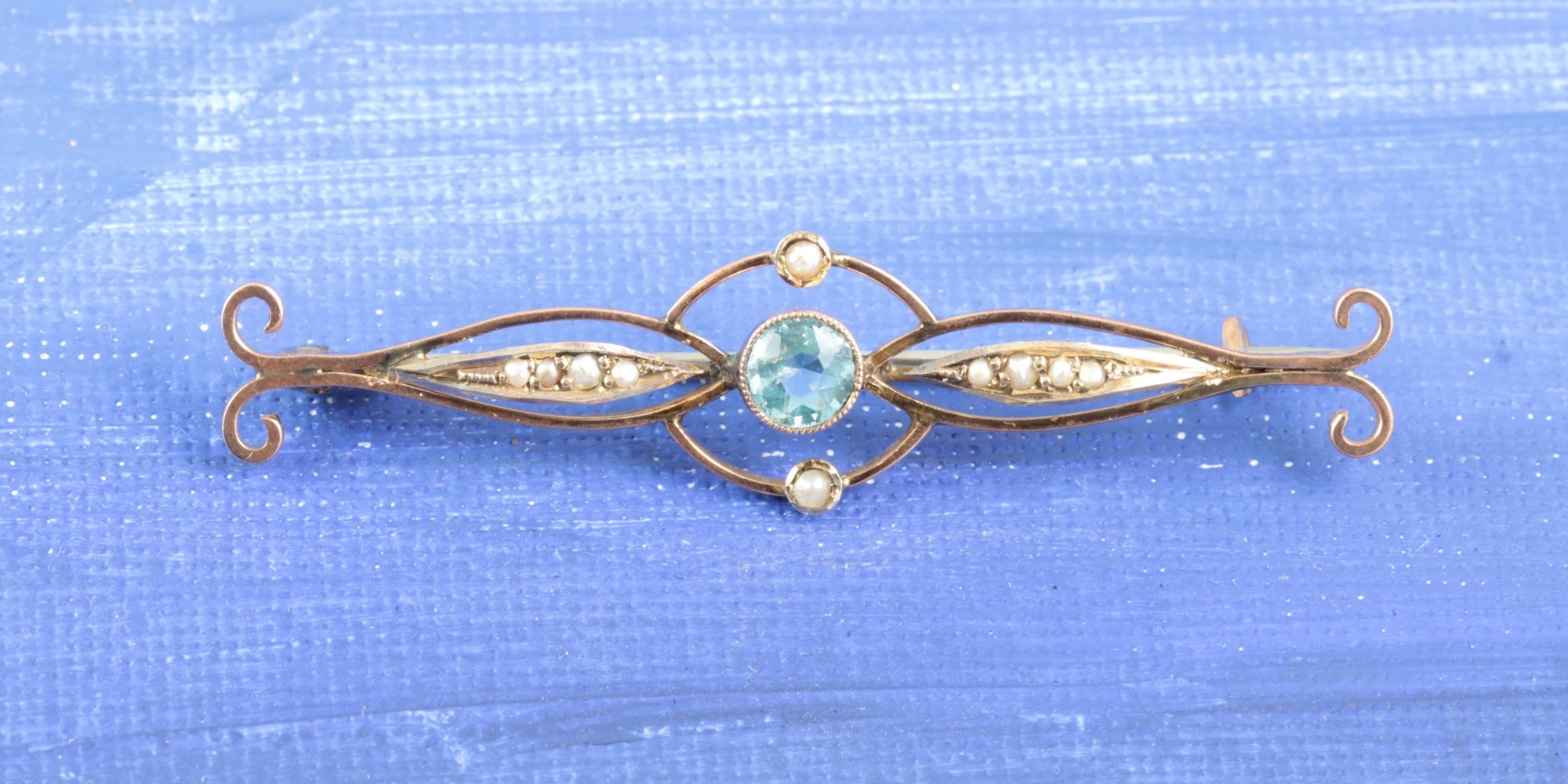
The above pieces of Topaz Jewellery are on display at the V&A Museum.
Topaz Gemological Data
Colour: Colourless, yellow, orange, red-brown, light to dark blue, pink-red, red, violet, light green.
Colour of Streak: White.
Mohs hardness: 8
Density: 3.49 – 3.57
Cleavage: Perfect.
Fracture: Conchoidal, uneven.
Crystal system: Orthorhombic, prisms with multi-faceted ends.
Dispersion: 0.014
Chemical composition: Al2[(F,OH)2|SiO4] aluminium silicate containing fluorine.
Transparency: Transparent, translucent.
Refractive index: 1.609 – 1.643
Double refraction: +0.008 to +0.016
Pleochroism:
- Yellow variety: lemon-honey, straw-yellow.
- Blue variety: light and dark blue.
- Red variety: strong; dark red, yellow, pink-red
Fluorescence:
- Pink variety: weak; brown.
- Red variety: weak; yellow-brown.
- Yellow variety: weak; orange-yellow.
- Blue/Colouress varieties: weak; yellow, greenish.
For Researchers and Journalists
Recommended Citation (MLA) Format:
Hoyne, John. “Topaz: Formation, History, Meaning, and Folklore.” Carus Jewellery, n.d., https://carusjewellery.com/topaz/.
You can also get in touch with Carusjewellery.com on Facebook , where you may leave any comments or questions you may have about this article.