
Tanzanite
Tanzanite was named by Henry Platt of Tiffany & Co in 1968. The scientific name of this gemstone is “Blue Zoisite”, but Henry decided on the name Tanzanite because it would be easier to market rather than using the scientific name. Henry thought that “Zoisite” sounded too much like “Suicide” and he feared for that reason people would not be inclined to purchase it. Zoisite is a mineral group, which is named after the collector Zois. This mineral was first found in the Sua-Alp mountains in Karnten, Austria in 1805. The mineral was originally called Saualpite, with gemstone quality varieties being discovered only recently. There are three gemstones part of the Zoisite mineral group, Tanzanite, Thulite, and Anyolite.
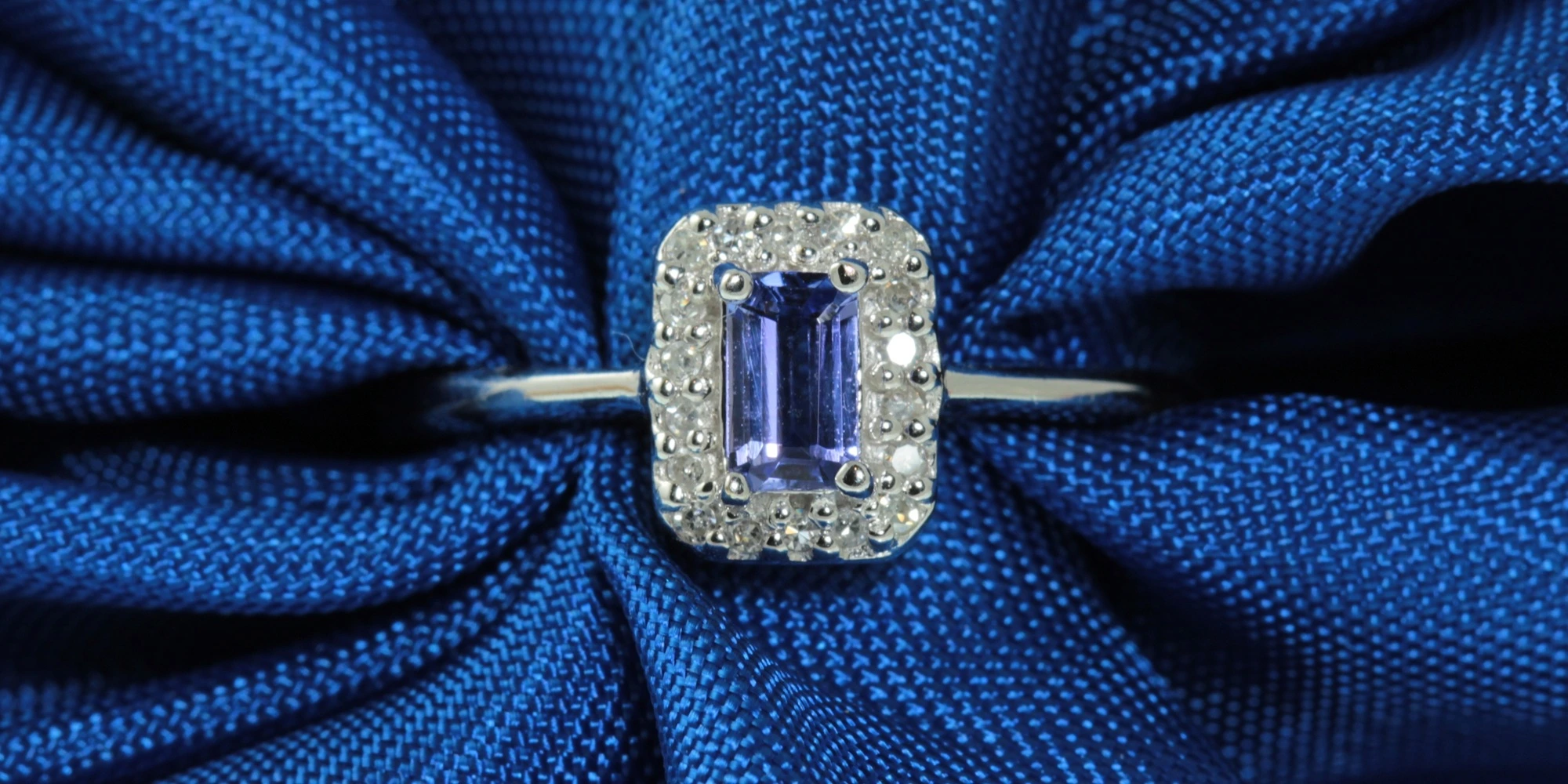
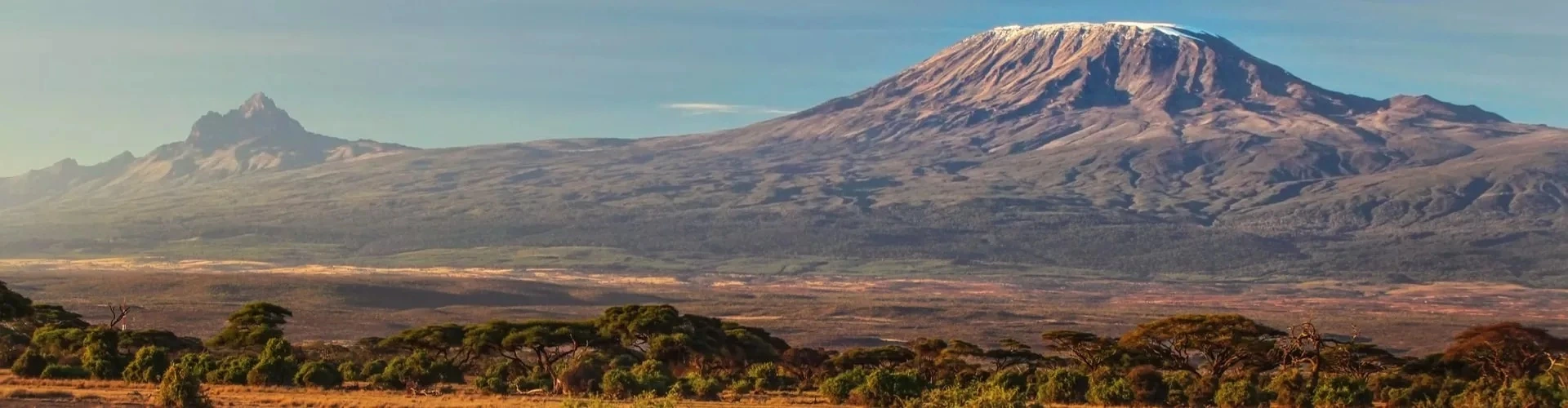
- Tanzanite: It is only found in Tanzania and fine examples are ultramarine to sapphire blue in colour. In artificial light, it appears more of an amethyst or violet colour. The most valuable colour is a pure deep royal blue with violet undertones, without any hint of green. Specimens with this vivid and intense colour saturation are quite rare, accounting for less than 1% of production. It was first discovered in 1967 in the Mererani Hills at the base of Mount Kilimanjaro.
- Thulite: This variety of Zoisite is a dense, opaque gemstone which is pink in colour. It is named after the island of Thule. Deposits are found in Australia, Namibia, Norway and North Carolina.
- Anyolite: This variety of Zoisite is green Zoisite stone with inclusions of black Hornblende and mostly opaque ruby. It can appear as contrasting colours of mottled green, black and red. It was first discovered in Tanzania in 1954.
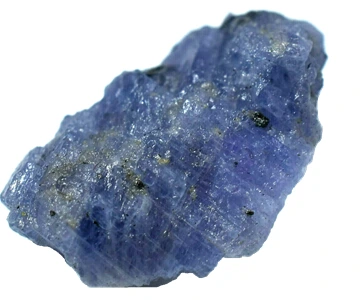 Formation: Tanzanite is only found in one location, the Mererani Hills of Northern Tanzania, near the base of Mount Kilimanjaro. The actual deposit is very small, it is approximately 4km long by 2km wide. This tiny deposit is the result of very rare conditions. Around 585 million years ago, there was a period of intense tectonic activity which resulted in the formation of the East African rift system. This tectonic activity produced very high temperatures and pressure. During this time, host rock containing aluminium and vanadium crystallised to form the Zoisite mineral. The blue-violet colour is caused by trace amounts of vanadium. The vast majority of Tanzanite is a brown colour when it forms and requires heat treatment of between 400°C to 500°C to remove the brown tones and reveal the pure blue colour. Occasionally, this heat treatment can happen naturally when stones near the surface are heated by wildfires, typically started by lightning strikes.
Since this single deposit is so small, it is predicated to be depleted in the next 10 to 20 years. Leading this gemstone to be called a “one-generation” gemstone.
Treatment: Virtually all Tanzanite gemstone is treated as a standard industry practice. Up to an estimated 99% of Tanzanite which is mined, is a brownish colour. To remove this brown colour, it is heat-treated.
- Heat Treatment: The gemstone is placed in a kiln and the temperature is raised slowly to between 370°C to 600°C for between 30 minutes to several hours. This process alters the oxidation state of the vanadium contained within the gemstone, removing the brown, yellow or green colour and revealing the vivid blue colour. Since this process is an industry standard practice, the value of the stone is not diminished. Heat treatment is permanent and stable.
- Oil/Resin: Although very rarely done, some specimens can have a surface coating of oil or wax applied. Which will fill any cracks or microscopic inclusions and so improve the stone’s clarity. This treatment is not permanent and will need to be reapplied from time to time. A surface coating of a polymer or resin can also be applied which is more durable. However, resin-treated gemstones are sensitive to heat and chemicals. Ultrasonic or steam cleaners can also damage resin-treated gemstones.
Durability: Tanzanite has a hardness rating of 6.5 to 7 on the Mohs scale. As such it is a relatively durable gemstone and it can be worn every day. Jewellery such as rings need extra care because this stone’s cleavage is perfect, meaning it can split or shatter from a hard impact. Jewellery which is more protected such as earrings and necklaces, could be worn more frequently.
- Sunlight: Tanzanite is sunlight stable and its colour will not fade even with prolonged exposure to UV rays.
- Heat: This gemstone is very sensitive to thermal shock. Sudden extreme temperature changes can cause it to crack.
- Chemicals: This gemstone is moderately sensitive to chemicals. As such you should avoid allowing this stone to come into contact with harsh household chemicals.
- Storage: While this gemstone is relatively hard, it can be scratched by other harder gemstones such as Diamond and in turn it can scratch softer gemstones such as Opal. Therefore, it is always recommended to keep your jewellery in separate compartments within your jewellery box or to place it in a soft cloth pouch.
- Cleaning: The safest method to clean your Tanzanite jewellery is with warm soapy (mild) water and a soft toothbrush. Use the toothbrush gently to avoid catching the brushes bristles in your jewellery settings. Ultrasonic or steam cleaners should never be used, as this gemstone is very sensitive to thermal shock.
Meaning and Healing Properties
Tanzanite symbolises transformation, spiritual awareness, and emotional balance. It is said to help the wearer to overcome past trauma, break old habits and to embrace a new life. For this reason, it is often called the “Stone of Transformation”. The stone is also linked with increasing the wearer’s spiritual awareness and helping with intuition. The stone also has a calming effect on the wearer, helping to soothe anxiety and relieve stress.
In Maasai culture in Tanzania, where the stone is found, it symbolises prosperity and good fortune. They use it as a traditional gift for a mother when a child is born, to celebrate motherhood.
Chakra: Tanzanite is primarily associated with the upper three chakras.
- Throat chakra, which helps to promote clear communication and self-expression.
- Third eye chakra, which helps to promote intuition and wisdom.
- Crown chakra, which helps to promote spiritual growth and higher consciousness.
Birthstone: Tanzanite is the traditional birthstone for December, along with Turquoise and Zircon. Since Tanzanite is a relatively new stone, having only been discovered in 1967. The American Gem Trade Association (AGTA) officially added it to the birthstone list in 2002, making it one of the traditional birthstones for December.
Zodiac Astrology: Tanzanite is primarily associated with the star sign Sagittarius. It is also linked to Capricorn, Pisces, Aries, Gemini, and Libra.
Wedding Anniversary: Tanzanite is an alternative gemstone gift for the 24th wedding anniversary. The traditional 24th wedding anniversary gemstone gift is Opal.
History
Tanzanite is often referred to as a “Modern Gemstone” since it was only discovered in 1967. This gemstone is found in only one location, in the Mererni Hills of Northern Tanzania near the base of Mount Kilimanjaro. The actual deposit itself is remarkably small, estimated at about 4km long by 2km wide.
According to local sources, Maasai herders first discovered the stone when they saw vibrant blue gemstones scattered around on the ground, after a wildfire. This gemstone is formed as a brownish colour and needs to be heated to reveal its vibrant blue-violet colour. The Tanzanian government officially recognises Jumanne Mhero Ngoma as the first person to discover the gemstone. However, Manuel d’Souza is credited with being the first person to register a legal mining claim for the gemstone and some sources mistakenly credit him with being the person who discovered it. Manuel at the time of filing his claim, believed the gemstone was in fact Sapphire. He did have the stone analysed by experts, who confirmed it was actually Blue Zoisite. Manuel then amended his mining claim.
In 1968, Henry Platt of Tiffany & Co recognised the stone’s potential as a rival to Sapphire. However, he was concerned that the stone’s name “Blue Zoisite” sounded too much like “Suicide” and with that name people would not be inclined to buy it. So he renamed it Tanzanite in honor of its country of origin. Henry then went on to launch a huge advertising campaign to promote the gemstone. The campaign ran with the phrase “The most beautiful blue stone discovered in 2,000 years” and famously stated that the stone could only be found in two places “in Tanzania and at Tiffany’s”.
In 1971, the Tanzanian government nationalised the mines. Later on they then divided up the deposit into four blocks (A, B, C, & D), this was to organise production between the large mining companies and the small-scale local artisanal miners. The Tanzanian government has also periodically tightened mining regulations to protect this important natural resource.
Folklore
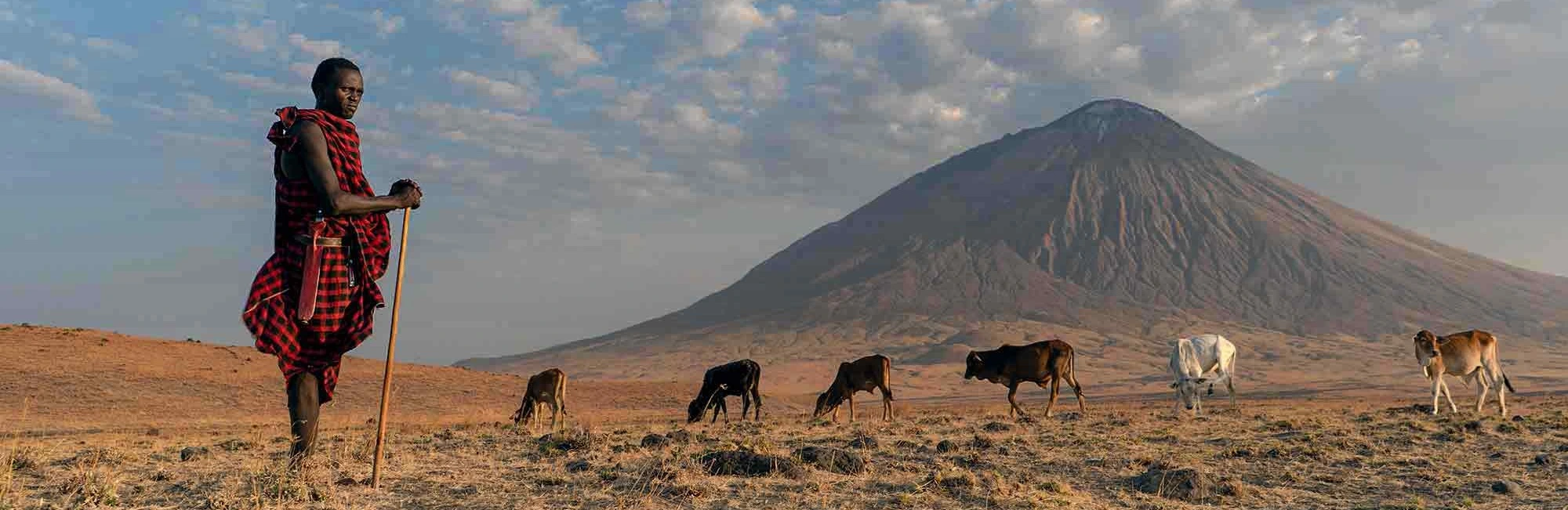
Since Tanzanite was only discovered in 1967, the folklore surrounding this gemstone is primarily from the Maasai people. Maasai legend has it that earth was brown and barren until it was struck by lightning. Which caused a wildfire that swept through the Mererani Hills. The Maasai herders later returned to the area and found that the previous brown stones had been transformed into vibrant blue stones. They believed that the lightning had come from heaven and as such the gemstone was a sacred gift from God.
There is another Maasai legend, which tells of a Queen named Ayanda. During a great drought, Queen Ayanda was led by a dream to a hidden lake at the base of Mount Kilimanjaro. When she looked into the lake, it was a deep violet-blue colour and as she touched the water a single drop fell onto her lap. Which crystallised into the very first Tanzanite gemstone.
Today the term “Ayanda Tanzanite” is used to describe vivid deep blue-violet varieties of the gemstone in honor of the legend.
To the Maasai people blue is a sacred colour symbolising the blue sky which produces life-giving rain. They associate the colour blue and this gemstone with prosperity, renewal and long life. It is traditionally given as a gift to mothers when a child is born. Maasai warriors also wear the gemstone as a talisman in the belief that it enhances courage and intuition.
Famous Tanzanites
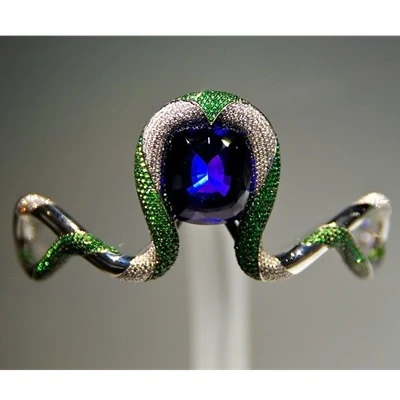
The Queen of Kilimanjaro, 242ct Tanzanite.

The Heart of the Ocean. In the movie Titanic, the famous blue diamond necklace was actually a tanzanite.
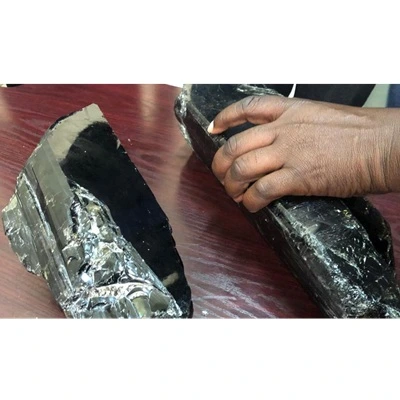
The mawenzi tanzanite, weighing 16,839 carats.
Tanzanite Gemological Data
Colour: Sapphire blue, amethyst, violet.
Colour of Streak: White.
Moh`s hardness: 6.5 – 7
Density: 3.35
Cleavage: Perfect.
Fracture: Uneven, brittle.
Crystal system: Orthorhombic; multifaced prisms, mostly striated.
Transparency: Transparent.
Chemical composition: Ca2AI3[O|OHISiO4|Si2O7] calcium aluminium silicate.
Refractive index: 1.691 – 1.700
Double refraction: +0.009
Pleochroism: Very strong; purple, blue, brown, or yellow
Dispersion: 0.030 (0.011)
Fluorescence: None.
For Researchers and Journalists
Recommended Citation (MLA) Format:
Hoyne, John. “Tanzanite: Formation, History, Meaning, and Folklore.” Carus Jewellery, n.d., https://carusjewellery.com/tanzanite/.
You can also get in touch with Carusjewellery.com on Facebook , where you may leave any comments or questions you may have about this article.