

Malachite
The name Malachite is most likely derived from the Greek word “Malache” meaning “Mallow” from mallow leaves which are a deep green colour. The name may also have derived from the Greek word “Malakos” which means “Soft”, since this gemstone is relatively soft. This gemstone ranges in colour from light-green to black-green, in a banding of light and dark layers. Malachite is composed of basic copper carbonate, with the colouring agent being copper. The most desirable colour is a vivid peacock green ranging to almost black-green, with a high contrast from light to dark within the banding. The banding pattern is also an important factor in a piece`s value. Concentric ring patterns called “Peacock`s Eye” are the most desirable.
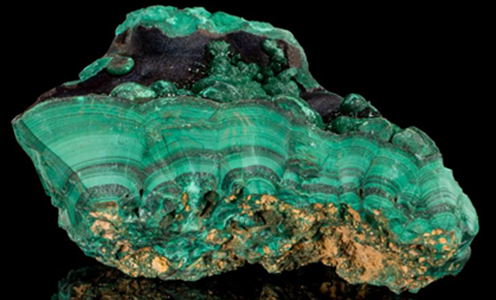 Formation: Malachite is a secondary mineral formed from copper sulfide ores, which were chemically weathered and oxidised. This generally occurs near the surface. The process starts with water containing dissolved carbon dioxide seeping through the host rock, which is commonly limestone. The water oxidises and dissolves the copper minerals and becomes a copper-enriched solution. This solution then collects in voids and cavities in the host rock, where Malachite precipitates. Historically the most significant deposits where in the Urals near Yekaterinbury in Russia. Today the Democratic Republic of the Congo is the largest producer. Other deposits are found in Australia, Chile, Namibia, Zimbabwe, and Arizona.
Treatment: Natural untreated Malachite gemstone is considered the most valuable, being prized for its natural beauty. However, this gemstone is relatively soft and can be quite porous. So there are a number of treatments which can be applied, particularly to lower quality examples.
Wax or Oil: Higher quality pieces can have a surface coating of wax or oil applied and buffed in. This treatment will fill any microscopic voids and improve the stone`s lustre. It should be noted that this treatment is temporary and may need to be reapplied occasionally.
Surface Coatings: A surface coating of epoxy resin can be applied to fill any surface cracks or imperfections. This will improve the stone`s appearance and add a protective layer.
Polymer Impregnation: Some lower-quality pieces can be quite porous. These can be impregnated with a polymer or resin, which will fill the stone`s pores adding structural strength and a protective layer to the surface.
Dyeing: Dyeing is a treatment which is not normally used. However, some lower-quality pieces can be dyed to improve their overall appearance.
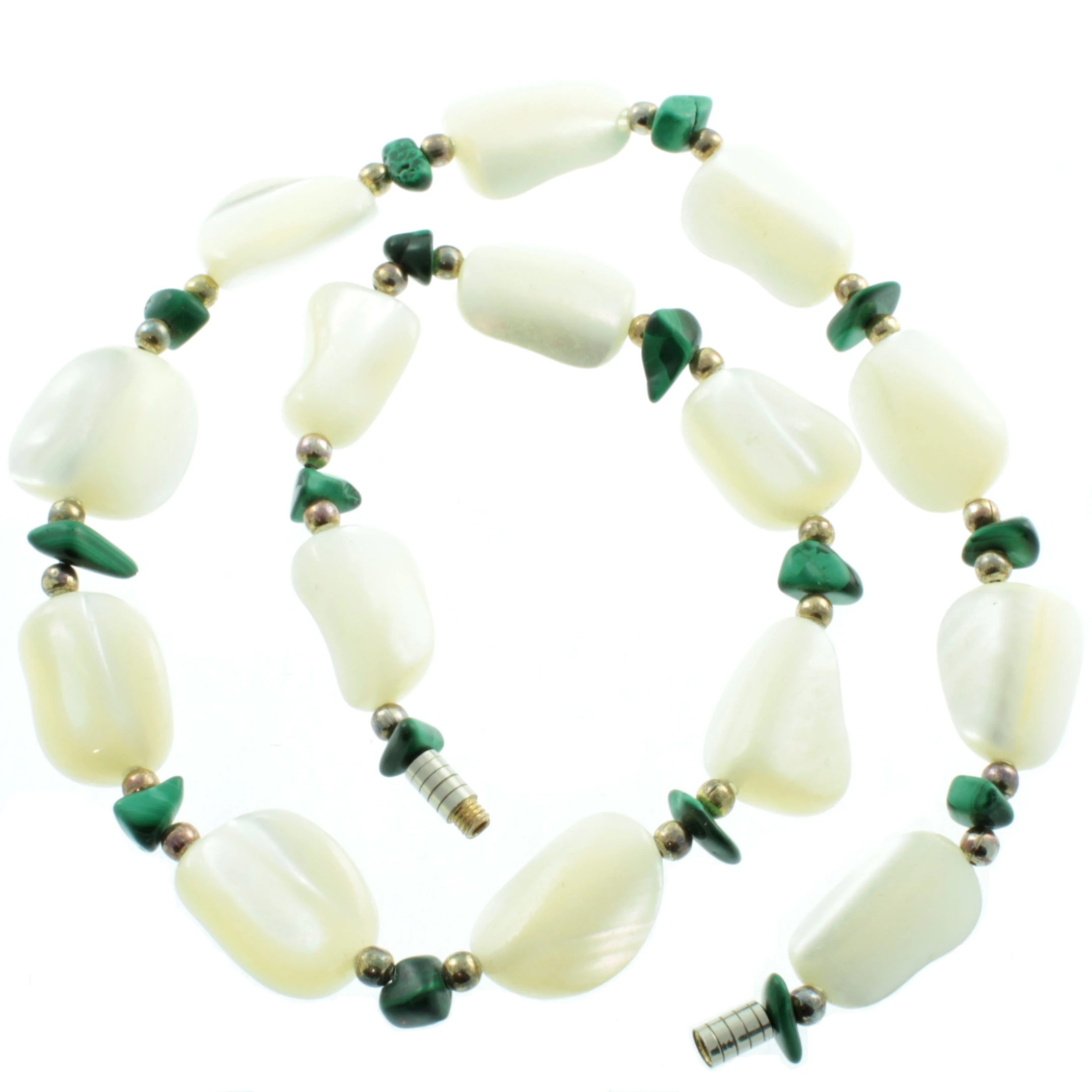
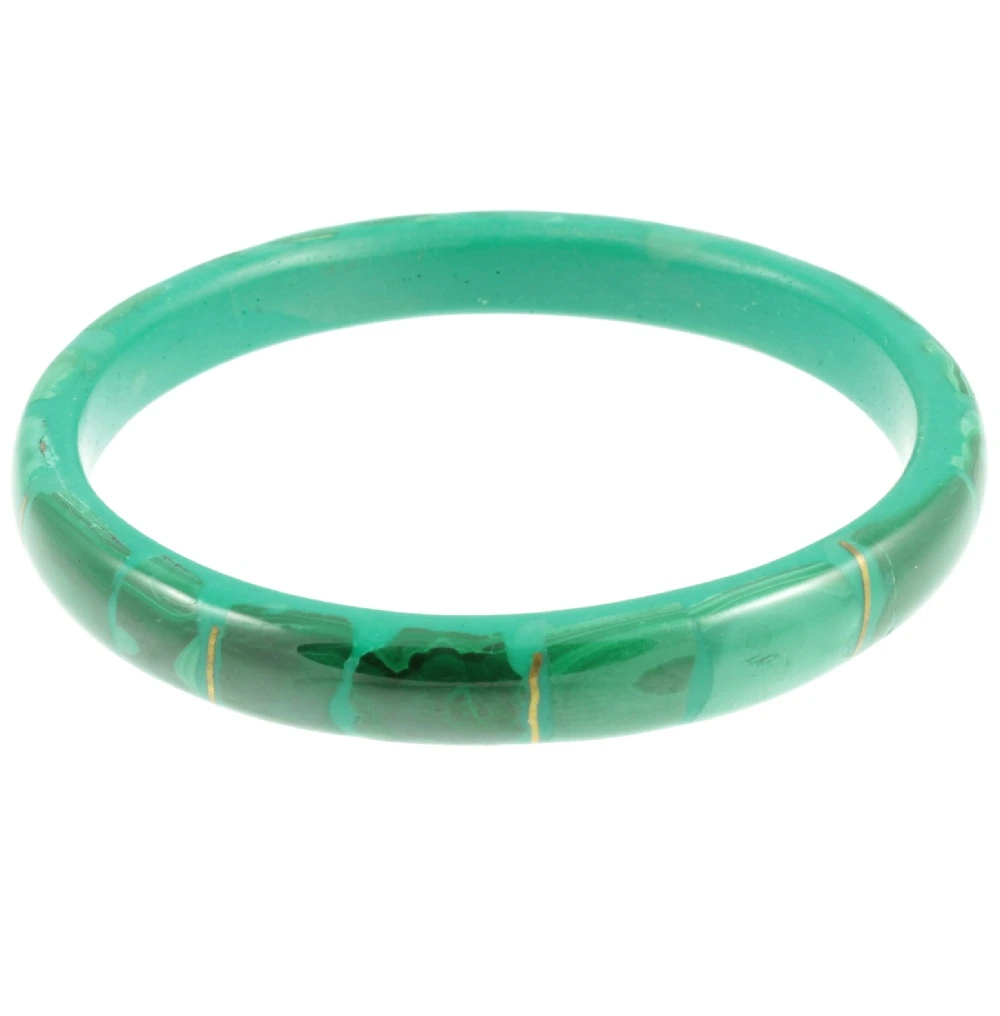
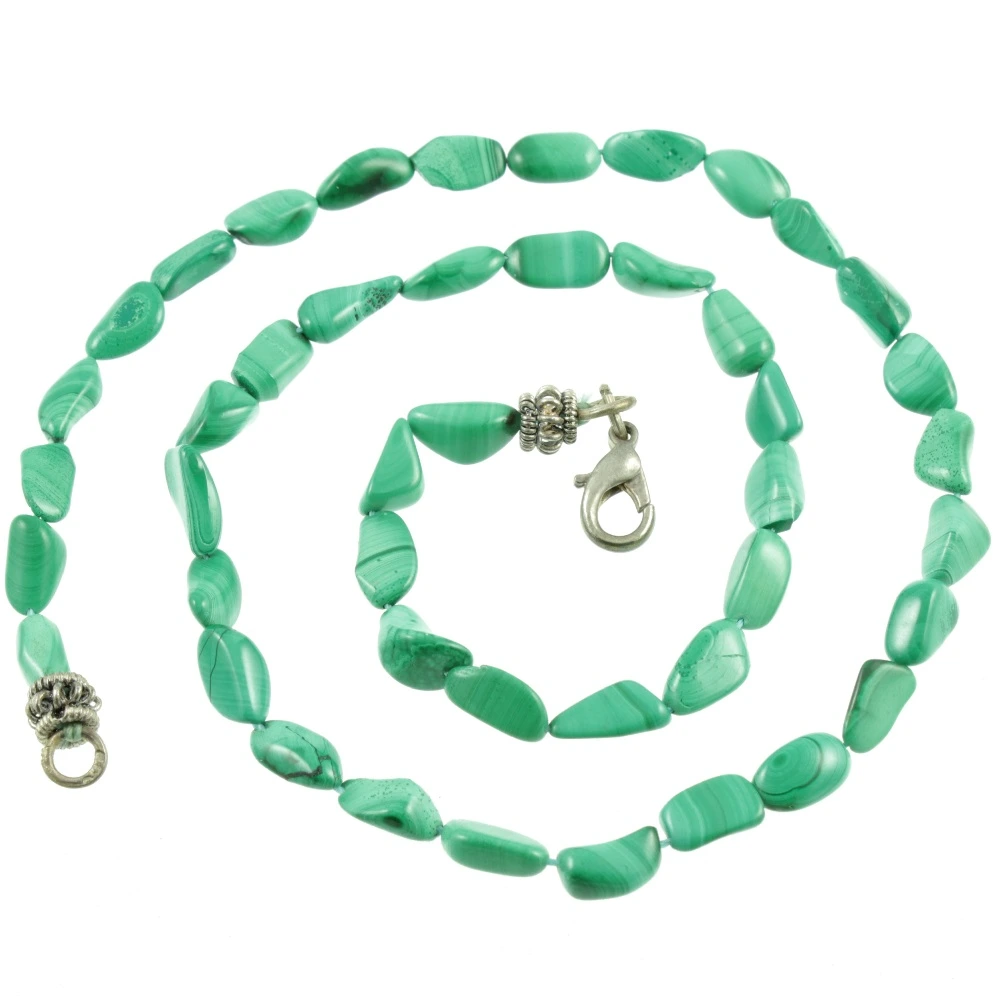
Durability: Malachite has a hardness rating of 3.5 to 4 on the Mohs scale, which makes it a relatively soft gemstone. As such it is best suited to occasional wear rather than for everyday wear. This is especially the case for rings and bracelets, which are subjected to frequent impacts. More protected jewelllery such as earrings and necklaces could be worn on a regular basis.
This gemstone is sunlight sensitive so prolonged exposure should be avoided and it such be stored in a cool, dark place when not in use. Malachite is also sensitive to acids and hot water, even mild cleaning products can cause it to fade. As such when cleaning this gemstone it is recommended to only wipe it gently with a damp soft cloth.
Heat can cause this gemstone to fade, so care should be taken to store it away from any direct sources of heat. It is also recommended to store this gemstone in a soft cloth pouch to prevent it from being scratched by other jewellery.
Meaning and Healing Properties
Malachite symbolises growth, fertility and protection. The stone is also widely considered to be the “Stone of Transformation”. It has historically been called the “Merchant`s Stone”, attracting good luck and prosperity in business. It was said that merchants would keep a piece of Malachite with their money in the belief that it could increase their wealth.
The stone was also said to have a number of medicinal benefits. It was said to detoxify the liver and boost the immune system. It was sometimes referred to as the “Midwife Stone” as it was used to alleviate labour pains and to enhance fertility.
Chakra: Malachite`s primary association is with the heart chakra, helping to promote love, compassion and empathy. It is also associated with the solar plexus which promotes personal empowerment and the throat chakra which promotes communication.
Birthstone: Malachite is not a traditional birthstone. It can be used as an alternative birthstone for April and May. April`s traditional birthstone is Diamond and May`s traditional birthstone is Emerald.
Zodiac Astrology: Malachite`s primary association is with the star sign Taurus. It is also associated with the star signs Scorpio, Capricorn and Libra.
Wedding Anniversary: Malachite is an alternative gemstone for the 13th wedding anniversary. The traditional 13th wedding anniversary gemstone is Citrine.
History
Malachite has a very long history dating back thousands of years. The earliest known mining took place in the Sinai Peninsula about 4,000 BC. It is thought people were mining copper ore Malachite to smelt and make copper tools with. The ancient Egyptians highly prized the gemstone to them it symbolised life, growth and fertility. Their eternal paradise in the afterlife is described as “Fields of Malachite”. The stone was more than just symbolic to the ancient Egyptians. They would grind the stone into a fine powder and use it as a pigment for paintings in their tombs and they also used it to make eyeshadow, known as udju.
In Britain, about 1700 BC Malachite was being mined at the Great Orme mines, located in Llandudno, North Wales. This Malachite was primarily smelted to make copper. Later on however, it was used to make jewellery, decorative objects and to make green pigments. It rose to the height of its popularity during the Victorian period.
In ancient Greece and Rome, the gemstone was extensively used in jewellery and as a decorative stone. The Temple of Antems at Ephesus, was elaborately decorated with Malachite.
During the middle-ages in Europe, this gemstone`s primary use was as a pigment, called “Verdetto della Magna” which means green from Germany. This pigment was used by famous artists such as Raphael and Giovanni.
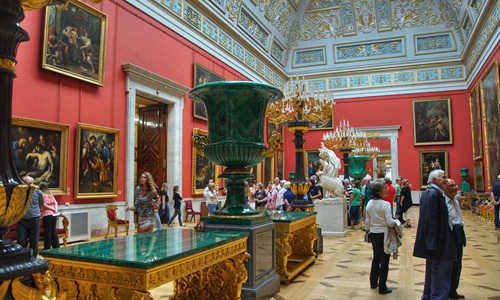 Malachite was mined in the Urals in Russia since the Bronze Age. It was typically small-scale localised mining for much of its history. However, in the late 18th Century, there were two major deposits discovered one in Gumyoshenskoye and the other in Mednorudyanskoye. These discoveries led to large-scale mining from around 1803 and onwards. In 1836, a single block of high-quality Malachite weighing an estimated 260 tons was found at the Demiddoff mine. This was the largest block of Malachite ever discovered. In fact it was so large that it needed to be broken into smaller pieces to remove it from the mine. A fragment of this massive find is currently on display at the mining museum in St. Petersburg, it is estimated to weigh 1.5 tons. Vast quantities of Malachite mined in the Urals was used to decorate churches and palaces throughout Russia. One of the most famous examples of this can be seen in the stunning Malachite room in the Winter Palace in St. Petersburg. From about 1850 onwards, mining in the Urals started to decline and by the 1870s commercial mining had ceased completely as deposits became depleted.
Today the majority of the world`s Malachite is produced in the Democratic Republic of the Congo.
Folklore
Malachite throughout its history has symbolised growth, fertility and protection. In ancient Egypt, the colour green was associated death and resurrection. It was also associated with life and fertility. They believed that the afterlife was an eternal paradise, which they called “fields of Malachite”. This eternal paradise was similar to their current lives but with no pain or suffering. They also used this stone to make a green pigment, which was used as a paint and an eyeshadow. They associated the stone with Hathor, godddess of joy and love, and with Osiris, god of the underworld.
Greek Mythology: The ancient Greeks associated Malachite with Artemis, goddess of the hunt and the wilderness. The temple of Artemis in Ephesus located in modern-day Turkey was elaborately decorated with this gemstone. They believed the stone held powerful protection from evil spirits, particularly for children to whom it was given to wear.
The Greeks had a number of beliefs about Malachite. It was said that the stone could forewarn of impending danger by breaking into pieces. It was also said that if a person were to drink from a vessel made of the stone. Then that person would be able to understand animals.
Roman Mythology: The Romans associated this stone with Juno, goddess of marriage, women and childbirth. Juno`s favorite animal was the peacock, and since Malachite often contains concentric circles, the Romans called it the “Peacock Stone”. They believed the stone held the power to protect the wearer from evil spirits and lightning strikes. It was commonly placed in cradles with infants and given to children to wear as a necklace, in the belief that it would protect them from evil and harm. Malachite was extensively used by the Romans in jewellery, as a decorative stone and as a pigment for paint.
Medieval Europe: The primary use of Malachite during the middle-ages was as a pigment for paint, it was also used as a pigment in plaster. It produced a vibrant green colour often called “Mineral Green” or “Mountain Green”. However, it was an expensive pigment when compared to plant-based pigments and as such was reserved for high-end works of art.
There was widespread belief at the time that the stone could be used for medicinal purposes, particularly to alleviate stomach ailments. It was also believed to protect against contagious diseases.
 In the Catholic Church, it was widely used as a pigment to illustrate manuscripts and in paintings. It was also highly prized as a decorative stone and used to make altars, church columns and religious objects. A stunning example of which is the Altar of the Assumption in St. Paul`s Basilica in the Vatican, made from Malachite gifted from the Russian Tsar Nicholas I. Belief in the stone`s power of protection, particularly for children continued in Medieval Europe from Roman times. With pregnant women wearing Malachite crosses for protection, both for themselves and their unborn children.
Famous Malachite
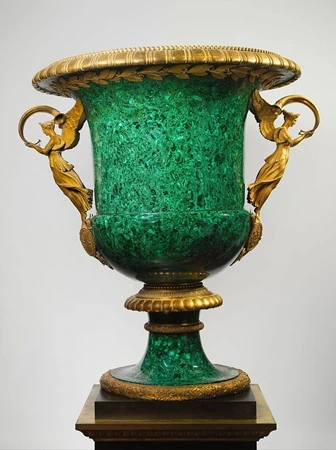
Monumental vase
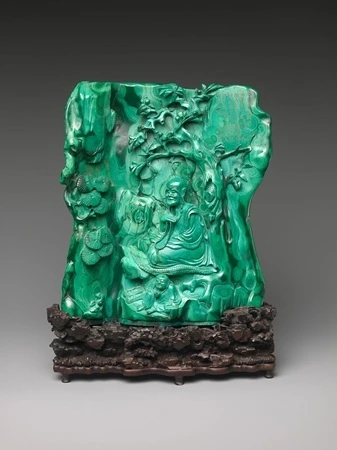
Seated luohan with a servant
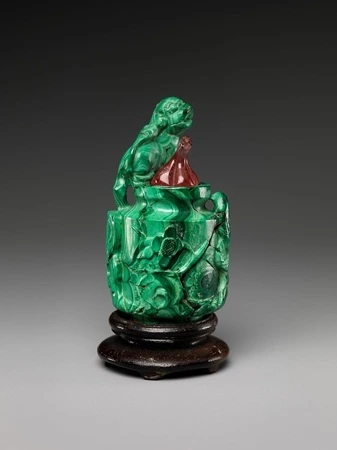
Snuff bottle with lion
The above pieces of Malachite are on display at The Metropolitan Museum of Art.
Malachite Gemological Data
Colour: Light-green to black-green, banded.
Colour of Streak: Light green.
Moh`s hardness: 3.5 – 4
Density: 3.25 – 4.10
Cleavage: Perfect.
Fracture: Splintery, scaly.
Crystal system: Monoclinic.
Transparency: Translucent to opaque.
Chemical composition: Cu2[(OH)2|CO3] basic copper carbonate.
Refractive index: 1.655 – 1.909
Double refraction: -0.254
Pleochroism: Absent.
Dispersion: None.
Fluorescence: None.
For Researchers and Journalists
Recommended Citation (MLA) Format:
Hoyne, John. “Malachite: Formation, History, Meaning, and Folklore.” Carus Jewellery, n.d., https://carusjewellery.com/malachite/.
You can also get in touch with Carusjewellery.com on Facebook , where you may leave any comments or questions you may have about this article.
