London Assay Office Hallmarks
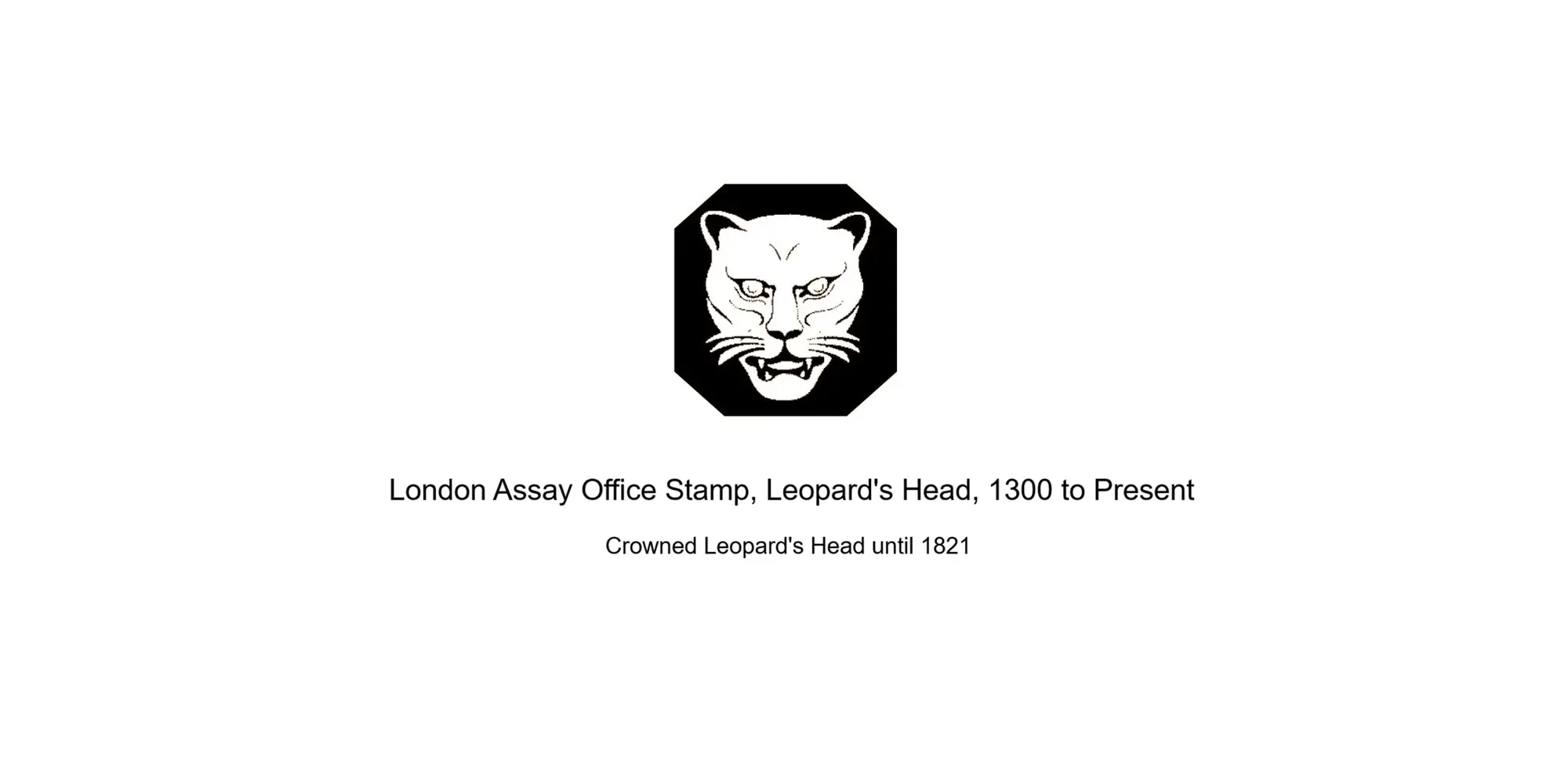
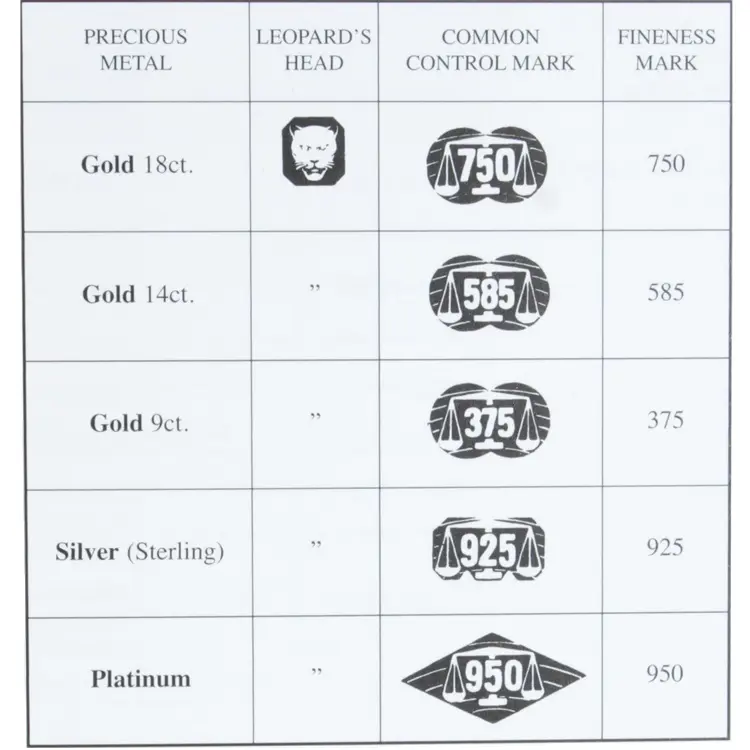
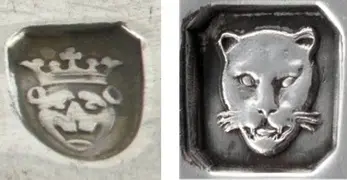 The leopard’s head stamp is the town mark and it has been in continuous use by the London Assay Office since 1300. It is actually one of the oldest continuously used trademarks in the world and represents one of the earliest forms of consumer protection. In 1478, after the Goldsmith’s Hall was established, a crown was added to the leopard’s head to show items that were hallmarked at the hall. In 1822, this crown was removed to simplify the mark. Originally, the leopard’s head stamp was used as a guarantee of fineness. However, over time this transitioned to the town mark. To show that an item was assayed at the London Assay Office.
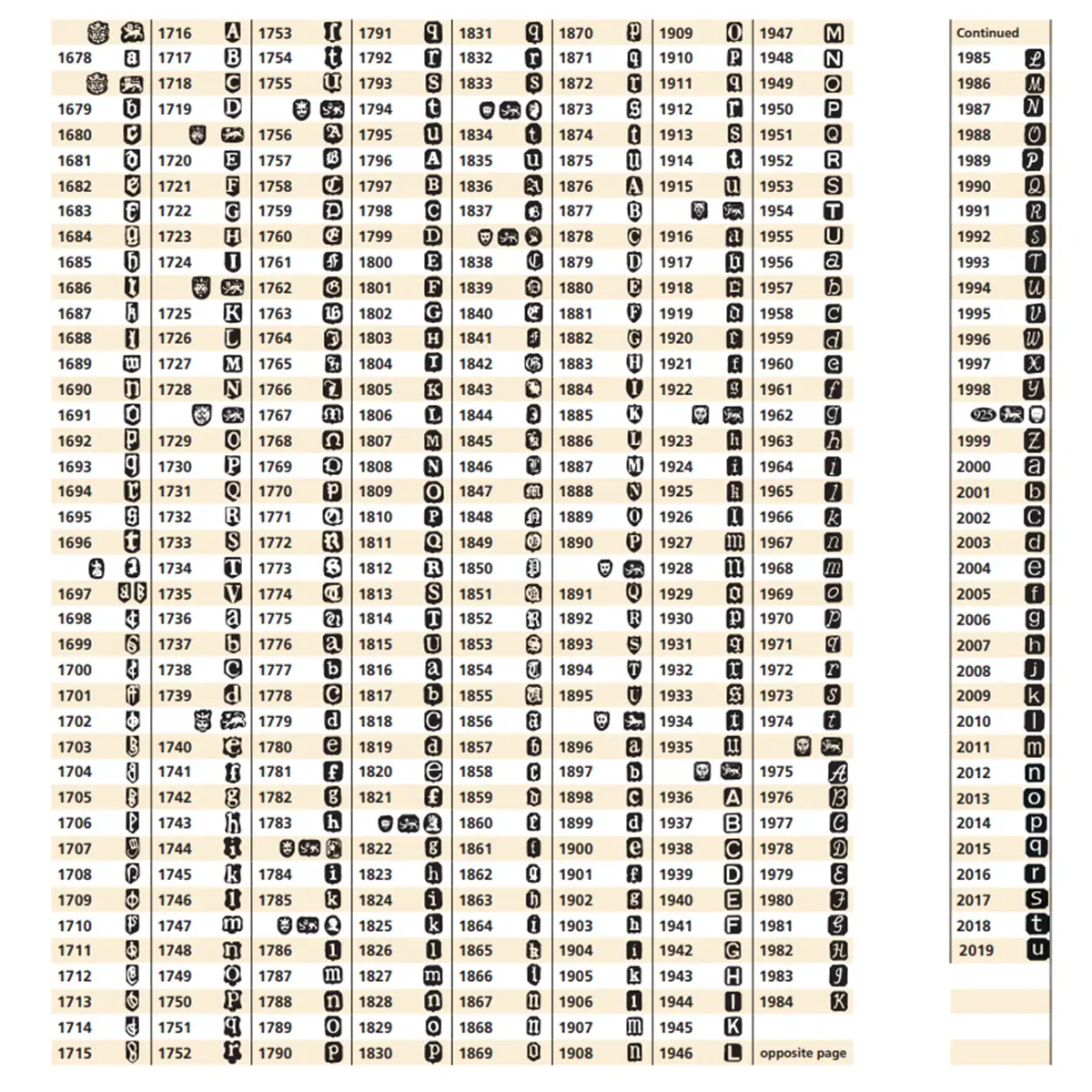
London Assay Office Date Letter Chart from 1678 to 2019
Millesimal Fineness Marks
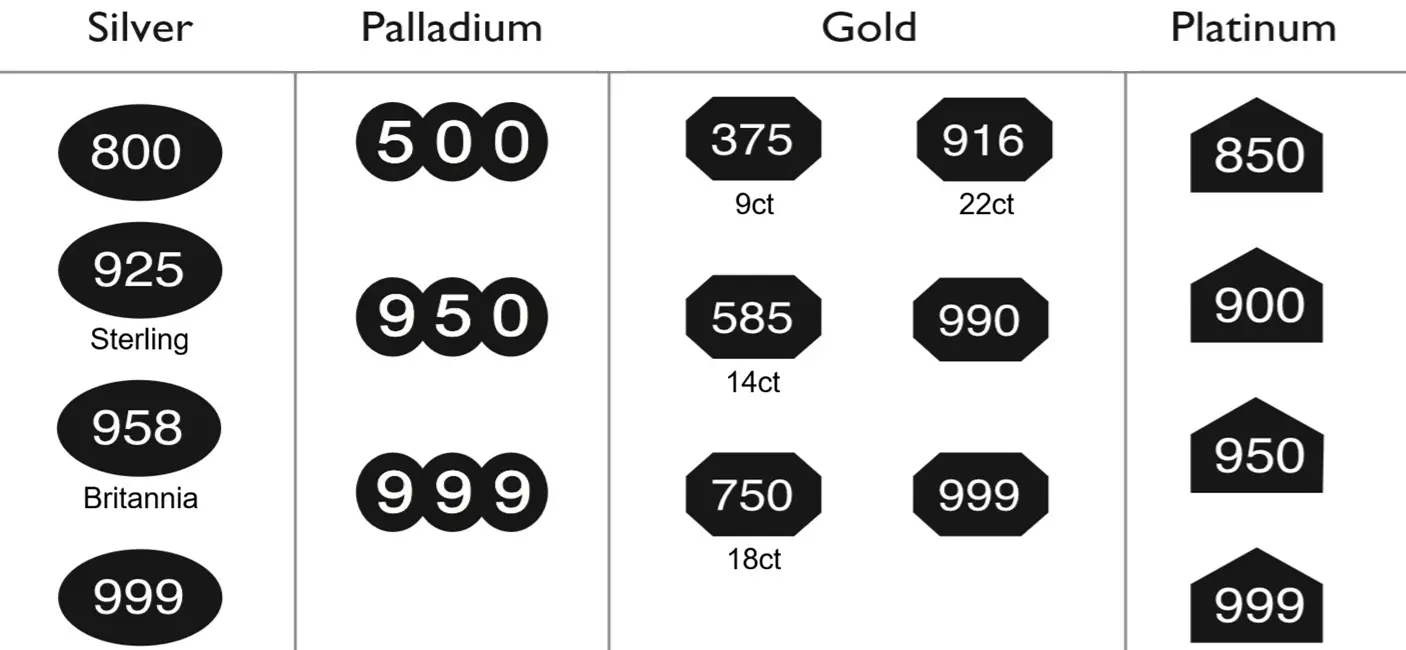
Traditional Fineness Mark
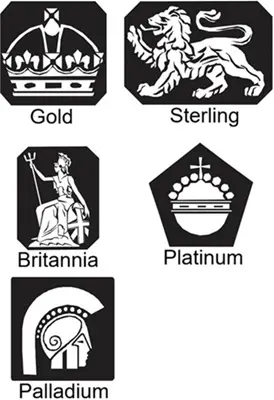
Convention Hallmarks
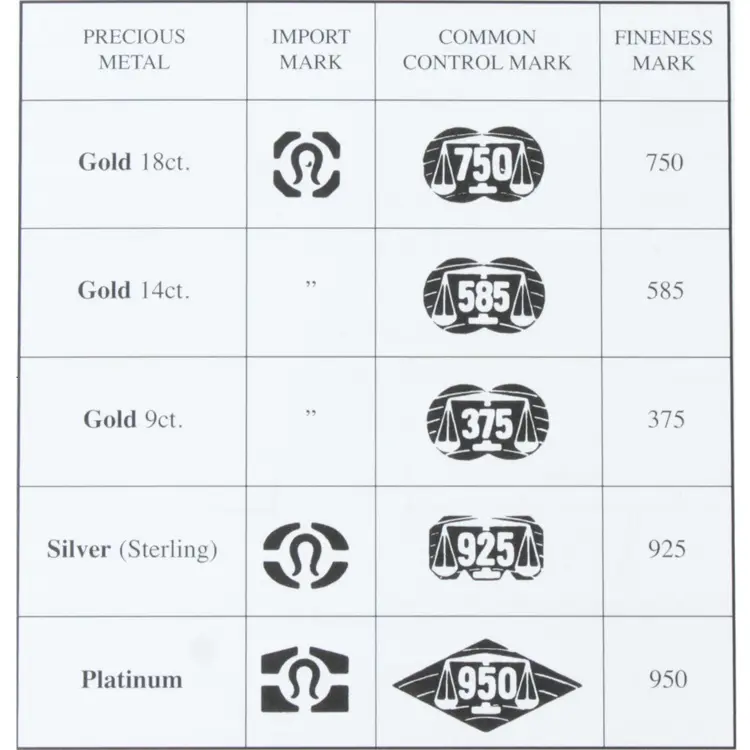
Import Hallmarks
History
In 1300, King Edward I enacted a law which required all gold and silver to be tested and stamped before it could be sold. Between 1300 and 1327, the “Wardens Of The Craft” were responsible for carrying out these tests. The wardens of the craft were elected from the Guild of Goldsmiths in London and they would travel to each goldsmith or silversmith. Where they would carry out their inspections in their workshops. Once an item passed their inspection, they would then stamp it with the Leopard’s Head Stamp.
In 1327, King Edward III granted a Royal Charter to the Guild of Goldsmiths in London. This charter gave the Guild the authority to enforce standards within the trade. In 1339, the Guild acquired a site at Foster Lane in London and established their hall. In 1363, King Edward III issued a decree requiring all makers to register their unique mark and to use it so that an item could be traced back to the maker.
In 1478, the date letter was introduced. The date letter was originally used to trace an item back to the overseeing assayer. There was a different chief assayer elected each year and to combat the problem of assayers taking bribes to pass substandard items, the date letter could be used to identify the assayer in charge at the time. It was also in this year that jewellers were required to bring their items to the Guild’s hall for inspection. It is from this practice of bringing items to the hall that we get the name “Hallmark”, which literally means mark of the hall.
In 1544, the Lion Passant Stamp was introduced for sterling silver (92.5% pure).
In 1697 to 1720, the Britannia Standard (95.8% pure) was introduced. This was to stop jewellers from melting down silver coins to make jewellery.
In 1784 to 1890, the Sovereign’s Duty Stamp was introduced to show that the tax on the item had been paid. This tax was introduced on precious metals to help pay the debt from the American War of Independence.
In 1822, the crown above the leopard’s head was removed.
This Article is part of our comprehensive guide to Jewellery Hallmarks.
For Researchers and Journalists
Recommended Citation (MLA) Format:
Hoyne, John. “London Assay Office Hallmarks & Date Letters 1678 to 2019.” Carus Jewellery, n.d., https://carusjewellery.com/london-assay-office-hallmarks/.
You can also get in touch with Carusjewellery.com on Facebook , where you may leave any comments or questions you may have about this article.